Distinct Symptom Profiles and Outcomes of Respiratory Pathogens in Young US Children: Insights From a 2019-2025 Cohort Study
Highlight
This extensive birth cohort study from Cincinnati, Ohio, spanning 2019 to 2025, provides a granular view of respiratory pathogen symptomatology and clinical outcomes in healthy infants and children. Key findings include increased respiratory distress with influenza A, RSV, human metapneumovirus, and SARS-CoV-2 among infants compared to older children; marked differences in symptom patterns between influenza A and B; high rates of asymptomatic infections; and notable gastrointestinal symptoms accompanying respiratory illnesses.
Study Background
Acute respiratory illnesses (ARIs) remain a leading cause of morbidity among young children worldwide, often resulting in a spectrum of clinical symptoms and significant healthcare utilization. Despite the commonality of these infections, comprehensive longitudinal surveillance characterizing individual respiratory pathogens and their distinct symptom profiles in early childhood has been limited. Such data are critical to improve clinical management, guide public health strategies, and identify children at risk for more severe disease manifestations.
Study Design
The study was conducted within a prospective longitudinal birth cohort of healthy infants and children in Cincinnati, Ohio, from November 2019 through August 2025. Weekly mid-turbinate nasal swabs paired with biweekly symptom surveys allowed for precise temporal linkage between detected respiratory pathogens and symptom development. Pathogen detection was performed using multiplex assays, including the Luminex NxTAG Respiratory Pathogen Panel and Flu SC2 assay, enabling differentiation among multiple viral respiratory agents. To analyze pathogen-specific symptom profiles without confounding effects, co-infections were systematically excluded.
Key Findings
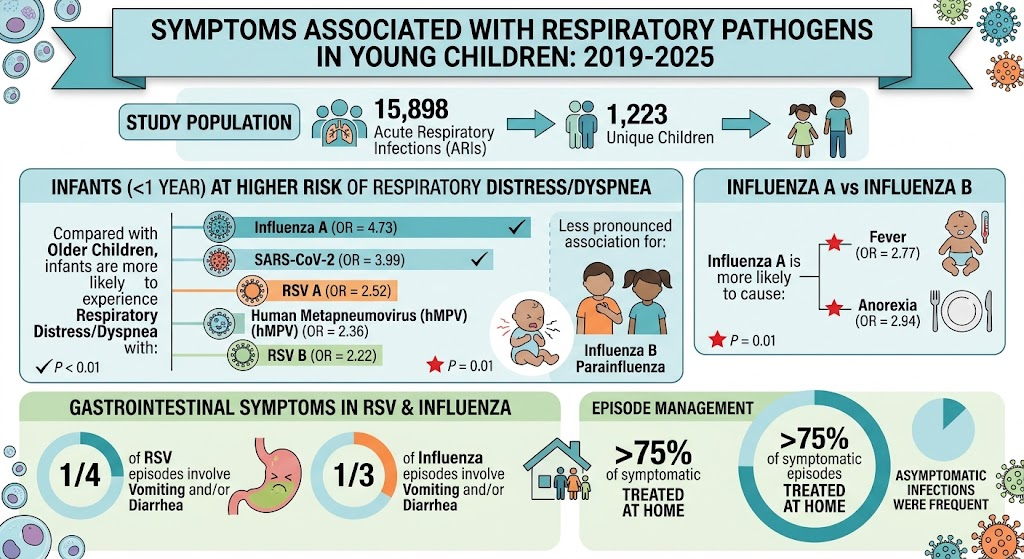
A total of 15,898 ARI episodes were documented from 1,223 unique children, representing a robust sample for evaluating symptomatology across early life stages. Significant observations include:
- Increased Respiratory Distress in Infants: Infants exhibited markedly higher odds of respiratory distress or dyspnea when infected with influenza A (OR = 4.73), RSV A (OR = 2.52), RSV B (OR = 2.22), human metapneumovirus (OR = 2.36), and SARS-CoV-2 (OR = 3.99) compared to older children (all P < 0.01). This pattern was not observed for influenza B or parainfluenza infections, suggesting age-specific pathogen virulence or host response variability.
- Healthcare Utilization: The elevated respiratory distress correlated with increased hospital and emergency department visits in infants for these pathogens, indicating clinically significant disease impact.
- Differential Symptoms Between Influenza A and B: Influenza A infections were more strongly associated with fever (OR = 2.77, P = 0.01) and anorexia (OR = 2.94, P = 0.01) than influenza B, highlighting clinically relevant symptomatic distinctions that may inform diagnosis and treatment decisions.
- Asymptomatic Infections: High frequency of asymptomatic respiratory infections was observed, underscoring the potential for silent spread and the limitations of symptom-based surveillance alone.
- Gastrointestinal Manifestations: Vomiting and/or diarrhea accompanied approximately one-quarter of RSV and one-third of influenza episodes, emphasizing the need for clinicians to recognize gastrointestinal symptoms as part of respiratory viral illness presentations in children.
- Home Management: Over 75% of symptomatic episodes were managed at home without requiring formal medical attention, reflecting the generally self-limited nature of many ARIs in this population.
Expert Commentary
This study significantly advances our understanding of how respiratory viral infections manifest in early childhood. The stratification of symptom profiles by pathogen and age provides valuable context for clinicians managing pediatric ARIs. The association of certain viruses with more severe respiratory distress in infants supports heightened vigilance and potential prioritization of these pathogens for preventive interventions. Furthermore, the differences noted between influenza A and B could contribute to more nuanced clinical assessment and management strategies.
However, there are limitations inherent in observational cohort designs, including potential reporting biases in symptom surveys and the regional nature of the cohort limiting generalizability. Additionally, exclusion of co-infections, while methodologically justified for symptom clarity, may underestimate clinical complexity in real-world presentations.
Conclusion
This comprehensive longitudinal study elucidates the heterogeneity of respiratory pathogen symptomatology and outcomes in young children. Identifying why some infants experience severe symptoms while others remain asymptomatic could inform targeted therapies and prevention efforts. Recognition of gastrointestinal symptoms associated with respiratory viruses further broadens the clinical spectrum of pediatric ARIs. Continued research integrating immunologic and genetic factors may unlock new approaches to mitigate the burden of respiratory infections in childhood.
Funding and ClinicalTrials.gov
Funding details were not specified in the source abstract. The study registration information is not provided.
References
- Payne DC, Xu H, Burrell AR, et al. Symptoms Associated With Respiratory Pathogens in Young Children: 2019-2025. Pediatrics. 2026 Aug 1;158(2). PMID: 42503419.
- Falsey AR, Walsh EE. Respiratory syncytial virus infection in adults. Clin Microbiol Rev. 2000 Oct;13(3):371-84.
- Simon AK, Hollander GA, McMichael A. Evolution of the immune system in humans from infancy to old age. Proc Biol Sci. 2015 Apr 22;282(1821):20143085.
- Mansbach JM, Piedra PA, Teach SJ, et al. Prospective study of viral etiology and hospital length of stay during acute respiratory infection in young children. J Infect Dis. 2009 Oct 1;200(7):1098-104.
This article was created using several editorial tools, including AI, as part of the process. Human editors reviewed this content before publication.