We use cookies

Our website uses essential cookies and, with your consent, additional cookies to measure performance and improve our services. Cookie Policy.

You can change your choice at any time.

MMedXYNews
HomeVideos
MedXY AI/MedXY News/Section: Family Medicine & Nutrition

Berberine - Uses, benefit and Side Effects
MedXY Editorial Team•Aug 30, 2026•Family Medicine & Nutrition
Berberinedihydroberberine

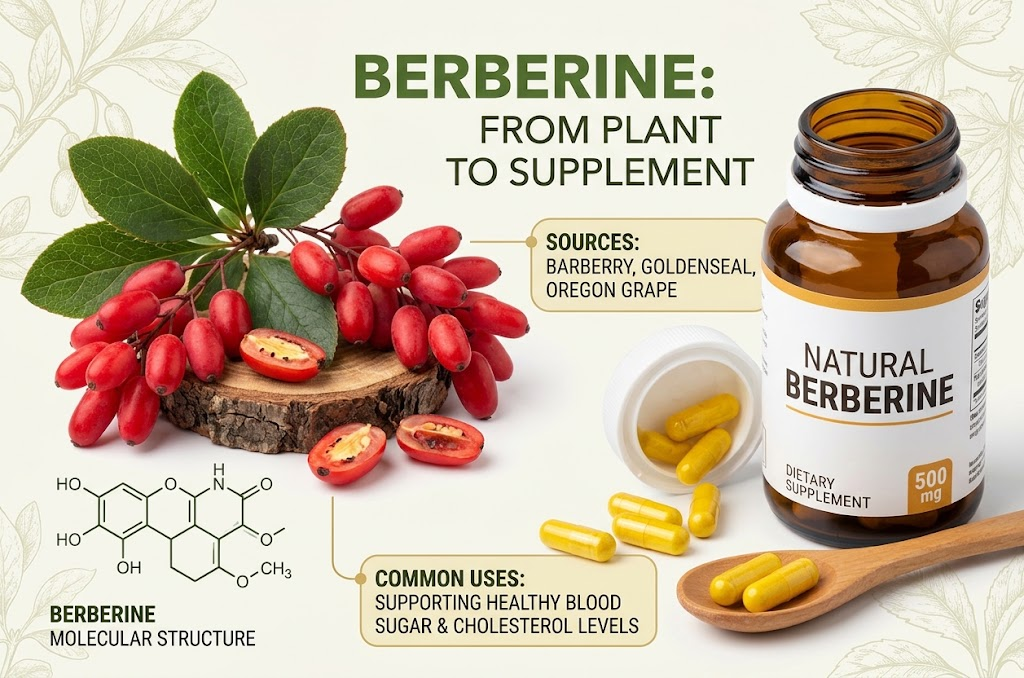
Berberine is a naturally occurring chemical compound extracted from various plants within the Berberis genus, including goldenseal, barberry, and Oregon grape. Available as an over-the-counter dietary supplement in forms such as berberine hydrochloride (HCl), phytosome, and sulfate, it is widely explored for several health applications.

Key Uses & Potential Benefits

Although the FDA has not reviewed berberine for safety or effectiveness and its exact mechanisms remain an area of ongoing research, it is believed to act as an antioxidant. Common reasons individuals use berberine include:

  • Blood Sugar Management: Commonly taken to support healthy blood sugar levels and assist with diabetes management.

  • Cholesterol Control: Used with the goal of helping to lower blood cholesterol levels.

  • Weight Management: Frequently taken as a supplement to support weight loss efforts.

Common Side Effects

Berberine can cause mild to moderate gastrointestinal discomfort, depending on the dosage and individual sensitivity. Typical side effects include:

  • Nausea and upset stomach

  • Constipation or diarrhea

Serious Risks & Allergic Reactions

While less frequent, severe allergic reactions can occur. Immediate medical attention is required if you experience symptoms such as breathing difficulties, swelling of the face, lips, throat, or tongue, severe skin rash, hives, or a racing heartbeat.

Crucial Warnings & Precautions

Infants & Children: Berberine is unsafe for infants as it can lead to kernicterus, a serious brain condition caused by elevated bilirubin levels.

  • Pregnancy & Breastfeeding: Due to potential risks to fetal development and infant safety, berberine should be avoided during pregnancy and while nursing.

  • Medication Interactions: Berberine can alter how the body metabolizes other drugs. Always consult a healthcare provider before combining berberine with prescription or OTC medications.

More articles

Berberine Improves Lipid Profiles and Inflammation but Fails to Reduce Visceral and Liver Fat in MASLD

Dihydroberberine: Enhanced Absorption and Emerging Therapeutic Potential Based on Recent Clinical and Mechanistic Insights

Recent Advances in Dihydroberberine Research: Pharmacokinetics, Mechanisms, and Clinical Potential

Berberine Ursodeoxycholate (HTD1801): A Promising Oral Therapy for Type 2 Diabetes with Multifaceted Metabolic Benefits

HTD1801 Shows Promising Histologic Improvement in Metabolic Dysfunction-Associated Steatohepatitis: Insights from Preclinical and Phase 2 Clinical Studies

Berberine and Cinnamon Synergy: A Promising Adjunct Therapy for Improving Glycemic Control and LDL Cholesterol in Type 2 Diabetes

Berberine Demonstrates Long-Term Prevention of Colorectal Adenoma Recurrence: A Six-Year Follow-Up Study

The benefits and side effects of berberine supplement


Disclaimer: Berberine is a dietary supplement and is not intended to diagnose, treat, cure, or prevent any disease. Always speak with a healthcare professional before starting any new supplement.

This article was created using several editorial tools, including AI, as part of the process. Human editors reviewed this content before publication.

Related articles

Open language-specific specialty feeds and department pages.

Berberine Improves Lipid Profiles and Inflammation but Fails to Reduce Visceral and Liver Fat in MASLDThe BRAVO randomized clinical trial demonstrates that while 1 g/d of berberine significantly lowers LDL-C and hs-CRP in individuals with obesity and MASLD, it does not impact visceral adipose tissue area or liver fat content over a six-montJan 24, 2026Dihydroberberine: Enhanced Absorption and Emerging Therapeutic Potential Based on Recent Clinical and Mechanistic InsightsDihydroberberine demonstrates superior absorption compared to berberine, suggesting enhanced pharmacological properties. Recent studies highlight its potential in metabolic and inflammatory diseases, warranting further clinical exploration.Oct 4, 2025Recent Advances in Dihydroberberine Research: Pharmacokinetics, Mechanisms, and Clinical PotentialThis review synthesizes the latest 5-year evidence on dihydroberberine, highlighting improved bioavailability over berberine, mechanistic insights from metabolic and network pharmacology studies, and its promising clinical applications in mOct 4, 2025
Loading comments...
MedXY briefing

Get the free newsletter

Evidence-led clinical news, trends, and analysis—delivered to your inbox.

Ask MedXY AI

Most popular

Intimate Health
Five Benefits for Women Continuing Sexual Activity After Menopause
Intimate Health
Why Some Women Have a Strong Sex Drive—And Why Men Shouldn't Worry About It
Nursing & care
How often should a couple have sex?
Intimate Health
Classic Intimacy Recommendations: How to Help Women Reach Orgasm and Enjoy Mutual Pleasure
Intimate Health
What Makes a Woman "Physiologically Addicted" Is Never Money, But These Two Relationship Qualities
© 2026 MedXY
Contact usAbout usPrivacy PolicyMedXY story
Berberine and Cinnamon Synergy: A Promising Adjunct Therapy for Improving Glycemic Control and LDL Cholesterol in Type 2 Diabetes
A 12-week randomized controlled trial demonstrated that supplementation with berberine plus cinnamon significantly lowers fasting blood sugar, HbA1c, and LDL cholesterol in patients with type 2 diabetes, offering potential for improved card
Oct 4, 2025
Berberine Demonstrates Long-Term Prevention of Colorectal Adenoma Recurrence: A Six-Year Follow-Up StudyBerberine shows sustained efficacy and safety in reducing colorectal adenoma recurrence and neoplasm occurrence after polypectomy, providing new directions for secondary prevention of colorectal cancer.Oct 4, 2025