Video Games and Human Health: A Narrative Review With Special Emphasis on Active and Motion-Controlled Video Games
MedXY editors
Abstract
Video gaming should not be treated as a single health exposure. Conventional sedentary video games, cognitively oriented games, therapeutic “serious games,” and active video games or exergames produce substantially different physiological and behavioral effects. Sedentary gaming is characterized by very low energy expenditure and, when prolonged or excessive, may contribute to unfavorable energy balance, sleep disruption, sympathetic activation, and displacement of physical activity. By contrast, exergames—games in which body movement is detected through cameras, motion sensors, balance boards, wearable sensors, cycling devices, or immersive virtual reality—can elicit light-to-moderate and sometimes vigorous physical activity. Evidence from randomized trials and meta-analyses suggests that exergaming can improve physical activity, cardiorespiratory fitness, body mass index (BMI), waist circumference, blood pressure, selected metabolic biomarkers, balance, mobility, and some aspects of cognition.
The strength of evidence, however, varies substantially by outcome. Evidence is relatively strong for energy expenditure, physical activity, fitness, balance, and selected rehabilitation outcomes; moderate for adiposity and cardiometabolic risk factors; promising but heterogeneous for mild cognitive impairment and dementia; preliminary for systemic inflammation; and currently insufficient for conclusions regarding cancer incidence, recurrence, cardiovascular events, dementia incidence, or mortality. In oncology, exergaming has primarily been investigated as supportive exercise rehabilitation rather than as an antitumor intervention. Overall, exergaming appears most useful as an engaging method of replacing sedentary time and delivering exercise, rather than as a fundamentally distinct biological treatment.
1. Why the distinction between sedentary gaming and exergaming matters
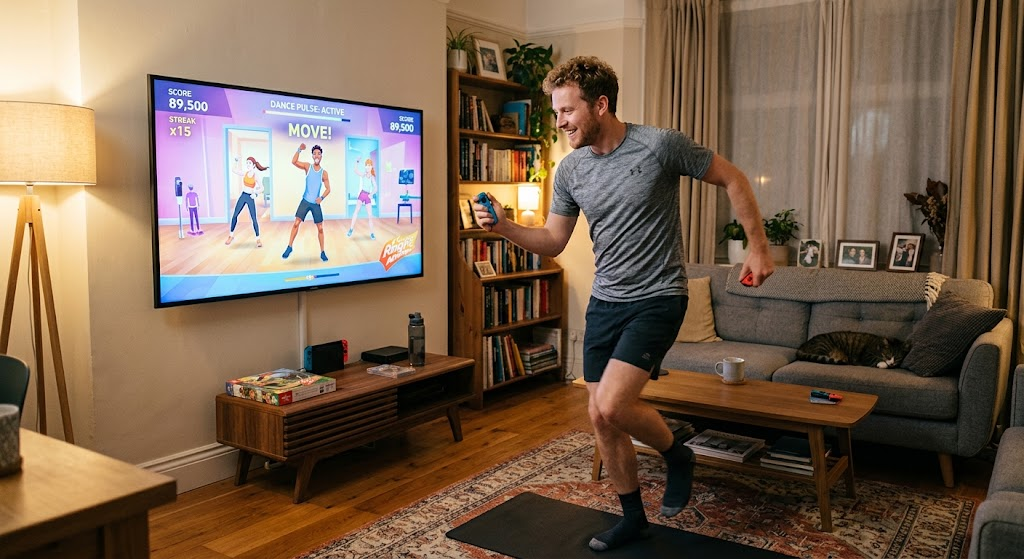
A conventional video game is usually performed seated and requires relatively little skeletal-muscle activity. In contrast, active video games (AVGs), exergames, motion-controlled games, and body-sensing games require substantial physical movement to control the game. Examples include Nintendo Wii/Wii Fit, Xbox Kinect, Dance Dance Revolution, Just Dance, VR boxing, VR cycling, stepping games, balance-board games, and rehabilitation systems combining visual feedback with whole-body movement.
Physiologically, this distinction is critical. Conventional gaming may raise heart rate and sympathetic nervous activity because of psychological arousal while producing little additional energy expenditure. Active gaming raises heart rate for a different reason as well: muscular activity and metabolic demand. In children, active-input games have produced approximately a 224% increase in energy expenditure compared with sedentary screen activities, with heart rates around 130 beats/min in some games—compatible with moderate-intensity exercise. In older adults, a systematic review of 16 studies involving 527 participants found a mean intensity of approximately 2.7 METs, with average heart rate around 108 beats/min, indicating predominantly light-to-moderate exercise.
Thus, health effects should ideally be conceptualized as:
gaming effect = game content/arousal + sedentary displacement or physical activity + duration/timing + dietary behavior + social/psychological context + individual susceptibility.
This framework explains why apparently contradictory findings in the literature can all be valid.
2. Overall evidence by health domain
Health domain | Conventional sedentary gaming | Active/motion-controlled gaming | Current evidence |
|---|---|---|---|
Energy expenditure | Very low; only slightly above sitting | Usually light–moderate, occasionally vigorous activity | Strong |
Physical activity/fitness | May displace exercise when prolonged | Can increase MVPA and fitness | Moderate–strong |
Obesity/adiposity | High exposure associated with slightly higher BMI; diet and sleep partly mediate association | Small but significant improvements in BMI/zBMI/body fat in many trials | Moderate |
Glucose/HbA1c | Indirect risk through sedentary behavior/obesity | Some RCTs show improved HbA1c, especially in sedentary adults/T2DM | Moderate but heterogeneous |
Lipids | No clear direct chronic effect | Possible improvement; inconsistent across trials | Low–moderate |
Systemic inflammation | Insufficient direct evidence | CRP/TNF-α/adipokine changes reported in very small studies | Preliminary |
Blood pressure | Acute gaming can increase BP and sympathetic activation | Exercise programs can reduce SBP in some populations | Moderate for intermediate outcomes |
MI/stroke/CVD mortality | No convincing evidence of independent causal effect | No evidence yet for prevention of hard CVD endpoints | Insufficient |
Arrhythmia | Rare gaming-triggered events in genetically susceptible children | Exercise intensity should be individualized in high-risk patients | Rare but clinically important |
Cancer incidence/recurrence | No convincing direct evidence | Not established as cancer prevention/treatment | Insufficient |
Cancer rehabilitation | — | May improve endurance, fatigue, QoL and exercise adherence | Promising |
Cognition in healthy people | Certain games improve attention/spatial processing; broad “IQ” transfer uncertain | Physical + cognitive dual-tasking may provide additional benefit | Mixed/moderate |
MCI/dementia | Cognitive games alone have mixed results | Multiple meta-analyses show cognitive improvement, but certainty remains limited | Promising, heterogeneous |
Stroke/Parkinson disease | — | Useful adjunct for balance, gait and rehabilitation | Moderate |
Sleep | Excessive or arousing bedtime gaming associated with later/poorer sleep | Timing still matters; vigorous late-night exergaming may also be arousing | Moderate |
3. Children and adolescents
3.1 Sedentary gaming, energy intake and obesity
The association between ordinary video gaming and childhood obesity appears real but small and behaviorally mediated rather than uniquely caused by the game itself.
A large UK Millennium Cohort analysis followed 16,376 children. Each one-standard-deviation increase in video-game use at age five was associated with a small increase in BMI SD score at age 14. Irregular bedtimes and sugar-sweetened beverage consumption partially mediated the association. This suggests that gaming may contribute to obesity through a behavioral package involving sleep, beverages, snacking, and sedentary time rather than through a direct metabolic effect.
Experimental evidence supports an energy-intake mechanism. Chaput et al. randomized 22 normal-weight adolescent boys to one hour of seated gaming versus seated rest. Gaming modestly increased energy expenditure but subsequently increased food intake even more, producing a net 163-kcal positive energy balance. Heart rate, systolic and diastolic blood pressure, sympathetic tone, and mental workload also increased. Interestingly, participants did not report greater hunger, suggesting that eating may be driven by behavioral or stress-related mechanisms rather than homeostatic appetite.
Therefore, prolonged conventional gaming may contribute to childhood adiposity through at least four pathways: physical inactivity, non-homeostatic eating, sugar-sweetened beverages/snacking, and displacement/delay of sleep.
3.2 Active video games in childhood obesity
The picture changes considerably with exergaming.
A 2026 systematic review and meta-analysis encompassing 39 randomized trials and 3,232 children and adolescents found that AVGs significantly reduced zBMI, BMI, and percentage body fat, although body weight itself did not significantly change. Benefits were more apparent in adolescents, participants older than approximately 11 years, larger studies, and interventions lasting more than 12 weeks.
A 2023 meta-analysis specifically involving overweight children and adolescents found that seven pooled RCTs produced a significant reduction in BMI z-score of −0.09, although absolute body weight and BMI reductions did not reach statistical significance.
Similarly, a meta-analysis of overweight/obese adolescents reported a reduction in BMI percentile of approximately 1.77 percentage points and a reduction in total cholesterol of about 11 mg/dL, although only five RCTs and 195 participants were included.
A network meta-analysis concluded that AVGs increase moderate, moderate-to-vigorous, and vigorous physical activity and can reduce BMI and body fat; notably, rhythmic/dance games appeared among the most effective approaches for BMI reduction.
These results suggest that body-sensing gaming may be particularly attractive for young people who otherwise spend substantial time on screens: rather than attempting only to remove gaming, one can potentially convert some screen time from sedentary to physically active behavior.
4. Metabolism, obesity and diabetes
4.1 Acute energy metabolism
Active gaming clearly increases immediate energy expenditure. In adolescents, Kinect-based active gaming increased energy expenditure by approximately 145% compared with resting or seated gaming. However, this acute increase did not translate into measurable changes in total energy expenditure over the subsequent 24 hours or three days, demonstrating the importance of behavioral compensation.
This is a crucial distinction: an exergame session can physiologically qualify as exercise, but a 30-minute exergame does not automatically create a 24-hour energy deficit. People may subsequently sit more, eat more, or reduce other physical activity.
4.2 Childhood cardiometabolic markers
A recent systematic review/meta-analysis of children and adolescents with overweight or obesity included six RCTs and 191 participants. Exergaming significantly reduced BMI, waist circumference, and systolic blood pressure, but pooled effects were not significant for diastolic pressure, percentage body fat, fasting glucose, triglycerides, total cholesterol, LDL-C, or HDL-C. Some age and training-frequency subgroups showed lipid improvements, but these analyses were based on limited data.
This illustrates an important evidence pattern: anthropometric and functional effects are considerably more reproducible than changes in biochemical biomarkers.
4.3 Type 2 diabetes
Exergaming has also been tested as a therapeutic exercise tool in type 2 diabetes.
In a randomized controlled trial involving 220 patients with type 2 diabetes, 12 weeks of autonomous Wii Fit Plus use improved metabolic control, physical activity, body weight and quality of life. HbA1c decreased approximately from 7.1% to 6.8% in the intervention group.
In the Wii Heart Fitness trial, 283 sedentary adults were assigned to supervised exercise videogaming, standard exercise, or control. After 12 weeks, exergame participants performed approximately 30 min/week more moderate-to-vigorous activity than the standard-exercise group and 85 min/week more than controls. They also showed greater reductions in cholesterol, HbA1c, and percentage body fat.
However, pooled results across diabetes-oriented game interventions are less impressive than individual positive trials. A 2024 systematic review/meta-analysis found a clear increase in physical activity but no statistically significant pooled improvement in HbA1c, fasting glucose, body weight, or lipids.
The best interpretation is therefore that exergaming can be an effective exercise-delivery and adherence strategy, particularly for previously sedentary patients, but should not be considered intrinsically superior to adequately dosed conventional exercise.
5. Inflammation and immune-metabolic signaling
This is one of the least mature areas of the exergaming literature.
One mechanistic study examined sedentary women undertaking one month of Xbox Kinect Just Dance training. Investigators reported substantial reductions in CRP, TNF-α, leptin, resistin, free fatty acids, triglycerides and several anthropometric measures.
The magnitude of some reported changes was unusually large—for example CRP reportedly fell by approximately 85%—and the study involved a very small sample. These findings should therefore be regarded as hypothesis-generating rather than established evidence that exergaming has a unique anti-inflammatory effect.
A small randomized study of older women comparing exergaming with conventional exercise found that both modalities altered inflammatory profiles and neurobiological markers such as BDNF while improving cognition; the study did not demonstrate that exergaming possesses a specific anti-inflammatory advantage over traditional exercise.
At present, the biologically plausible interpretation is that any anti-inflammatory benefit of exergaming is probably mediated principally by exercise, reductions in adiposity, improved insulin sensitivity, and possibly improved cardiorespiratory fitness, rather than by gaming per se.
For future trials, hs-CRP, IL-6, TNF-α, adiponectin, leptin, insulin resistance, and immune-cell phenotyping would be valuable prespecified endpoints.
6. Cardiovascular health
6.1 Sedentary gaming and autonomic activation
A systematic physiological review identified 51 studies examining cardiovascular and biochemical responses to gaming. Heart rate, blood pressure, glucose and cortisol were commonly studied, and the available heart-rate-variability evidence suggested increased sympathetic nervous-system activity during gaming. The authors emphasized substantial heterogeneity and insufficient evidence for firm long-term cardiovascular conclusions.
The distinction between an acute cardiovascular response and chronic cardiovascular disease is essential. An exciting game can transiently increase heart rate and blood pressure, but this does not establish that normal gaming independently causes hypertension, myocardial infarction or stroke.
Very prolonged gaming may nevertheless be physiologically undesirable. In an exploratory study of nine healthy men undergoing two 18-hour gaming sessions, investigators observed loss of the normal nocturnal fall in blood pressure and heart rate. The sample was extremely small, so long-term cardiovascular implications remain uncertain.
6.2 Rare arrhythmia risk
A clinically important but rare phenomenon has been described in genetically susceptible children.
An international case series/systematic review identified 22 children aged 7–16 years with suspected or documented ventricular arrhythmias occurring during electronic gaming. Six had cardiac arrest and four died. Most subsequently proved to have underlying arrhythmogenic disease, particularly catecholaminergic polymorphic ventricular tachycardia or long-QT syndrome.
This does not imply that gaming poses meaningful sudden-death risk to healthy children. Rather, syncope, seizure-like episodes, palpitations or unexplained collapse occurring during emotionally intense gaming should prompt cardiac evaluation, particularly for inherited channelopathies.
6.3 Cardiovascular benefits of exergaming
Active gaming may improve cardiovascular risk primarily because it functions as exercise. The Wii Heart Fitness RCT demonstrated improvements in physical activity, body fat, cholesterol and HbA1c among sedentary middle-aged adults.
In children with overweight/obesity, pooled RCT evidence demonstrates a reduction in systolic blood pressure, although evidence for diastolic BP and lipids is less consistent.
In established heart failure, the large international HF-Wii trial enrolled 605 patients. Home-based Nintendo Wii exergaming was feasible; unadjusted six-minute walk distances favored the intervention at several follow-up points, although interpretation was complicated by baseline differences and statistical adjustment. Importantly, the study demonstrated feasibility and relative safety rather than convincing evidence that exergaming modifies heart-failure prognosis.
There is currently no adequate evidence that exergaming reduces myocardial infarction, stroke, hospitalization or cardiovascular mortality independently of the known benefits of exercise.
7. Cancer
The relationship between video games and cancer needs particularly careful interpretation.
7.1 Cancer causation
Current research does not provide convincing evidence that conventional video gaming itself causes cancer, nor does it demonstrate that exergaming prevents cancer incidence or recurrence.
Long-term excessive sedentary behavior, obesity and metabolic dysfunction are established risk factors for several cancers, so excessive sedentary gaming could theoretically contribute indirectly if it promotes these conditions. But this is fundamentally different from demonstrating a gaming-specific carcinogenic effect.
7.2 Exergaming during and after cancer treatment
The useful oncology literature concerns rehabilitation and supportive care.
A 2023 systematic review included 21 publications representing 17 exergaming interventions in cancer patients ranging from 3 to 93 years of age and encompassing breast, lung, prostate, hematologic and other malignancies. Active gaming improved endurance, quality of life, cancer-related fatigue and self-efficacy. Effects on strength, physical function and depression were mixed, and pooled evidence did not demonstrate consistent improvements in overall physical-activity level, body composition or anxiety. Compared with standard physiotherapy, physiological benefits were usually similar or smaller, whereas psychological acceptability and benefits were often similar or greater.
An earlier systematic review similarly concluded that exergaming was feasible and generally acceptable among cancer patients, with encouraging findings for balance, function, strength, fatigue, emotion, cognition and pain, but the studies were too heterogeneous and small to establish definitive efficacy.
Therefore, the strongest oncology proposition is not “exergames fight tumors.” It is that they may help patients exercise during or after treatment, reduce fatigue, improve function and increase rehabilitation engagement.
8. Cognition in healthy children and adults
Video games have often been claimed to improve attention, reaction time, visuospatial cognition, working memory and executive function. The scientific literature is genuinely mixed.
A well-known meta-analysis of action video games reported approximately g = 0.34 for cognitive improvements in intervention trials and stronger effects for top-down attention and spatial cognition. However, the authors also estimated that publication bias may have inflated published effects by approximately 30%.
In contrast, Sala, Tatlidil and Gobet analyzed hundreds of comparisons and concluded that video-game training produces small or null effects on broad cognitive ability and that evidence for far transfer—improvement in generalized cognitive ability rather than performance on closely related trained tasks—was lacking.
A more recent meta-analysis of 63 studies and 2,079 participants found a smaller but statistically significant overall cognitive-training effect of approximately g = 0.25, with game design features influencing effectiveness.
The most defensible conclusion is therefore:
Video games can train specific cognitive processes, particularly visuospatial attention, perceptual decision-making and task-specific executive operations, but evidence that ordinary gaming broadly increases intelligence or general cognitive ability is weak.
9. Older adults, cognitive aging, MCI and dementia
This is one of the most interesting potential applications of exergaming because body-sensing games combine physical exercise + sensory processing + executive control + visuospatial processing + dual-task coordination.
9.1 Healthy older adults
A meta-analysis of randomized trials found that exergaming significantly improved overall executive function in older adults, with an overall standardized effect of approximately 0.35, including improvements in inhibition, task switching and updating.
A 2024 systematic review/meta-analysis further found that the effectiveness of cognitive exergaming depended on training characteristics. Standing/stepping activities, motor-cognitive integration, exercise intensity and training context influenced outcomes, suggesting that games requiring genuine whole-body cognitive-motor interaction may be more beneficial than minimally active games.
Neurobiological studies provide intriguing but preliminary evidence of increased BDNF, altered neurovascular coupling and structural/functional brain adaptations after exergaming. A 2025 systematic review emphasized that the number of imaging and biomarker studies remains small and methodological limitations prevent strong mechanistic conclusions.
9.2 Mild cognitive impairment
The effect appears larger in selected MCI populations.
A 2024 meta-analysis of 11 studies involving 526 older adults with MCI found improvements in MoCA and several executive/memory measures following exergaming.
Another meta-analysis included 20 RCTs and 1,152 participants with MCI or dementia. Among people with MCI, VR-based exergaming produced an estimated standardized improvement of 0.67 in global cognition, with reported benefits in immediate and delayed recall, working memory and verbal fluency. Among dementia participants, global cognition improved by approximately 0.38 SD. Longer interventions tended to have greater effects.
However, these optimistic findings must be reconciled with the 2024 Cochrane Review, which judged the certainty of evidence for MCI and dementia to be very low because trials were small, heterogeneous and often at risk of bias. Benefits were more apparent against passive controls than against active physical-exercise comparators. Evidence for activities of daily living and unsupervised home safety was especially limited.
Therefore, exergaming is promising for cognitive impairment, but it is premature to say that it prevents Alzheimer disease or slows neuropathological progression.
The particularly important unanswered research question is whether long-term dual-task exergaming can reduce conversion from MCI to dementia, rather than merely improving cognitive test scores over several weeks or months.
10. Neurological disease and rehabilitation
Body-sensing games are especially well suited to neurological rehabilitation because they provide repetitive practice, immediate visual/auditory feedback, adjustable difficulty and motor-cognitive dual tasks.
For chronic stroke, a systematic review including 32 RCTs found small but significant improvements in balance (SMD ≈0.25), lower-limb functional mobility (≈0.29) and functional independence (≈0.41), supporting exergaming as an adjunct to conventional physiotherapy.
Across neurological disorders including stroke, Parkinson disease, multiple sclerosis, MCI/early Alzheimer disease and traumatic brain injury, a meta-analysis of 41 studies and 1,223 patients found a moderate improvement in balance (Hedges g ≈0.43). Higher training frequency was associated with greater benefit.
For Parkinson disease, recent RCT meta-analyses show improvements in balance, gait and sometimes quality of life. However, an overview of systematic reviews found that much of the earlier evidence was low or very low quality and could not demonstrate with confidence that exergaming is superior to conventional physiotherapy.
Consequently, exergaming should currently be viewed primarily as a rehabilitation amplifier and adherence technology, rather than a replacement for therapists.
11. Sleep
Sleep is one of the clearest potential adverse pathways of excessive conventional gaming.
A 2024 systematic review of 26 adult studies found that excessive gaming was associated with poorer sleep quality and later sleep timing, whereas casual or habitual use was not consistently harmful. Experimental studies suggested that stimulating games immediately before bed can delay sleep onset and alter sleep organization.
A meta-analysis of problematic gaming involving more than 51,000 participants reported shorter sleep duration, roughly twice the odds of poor sleep quality, increased daytime sleepiness and more sleep problems among problematic gamers.
In children and adolescents, a 2026 umbrella review covering 84 reviews concluded that media use generally has a negative relationship with sleep, although certainty ranges from very low to strong because much of the literature remains cross-sectional and relies on subjective sleep measures.
This issue applies partly to exergaming as well: exercise can support sleep health, but highly stimulating or vigorous immersive gaming immediately before bedtime may still delay sleep.
12. Age-specific interpretation
Children and adolescents
For young people, conventional gaming becomes medically concerning mainly when it displaces sleep, physical activity, outdoor activity or healthy eating. Moderate gaming itself should not automatically be treated as pathogenic.
Active gaming is especially promising in this population because engagement is high and energetic games can reach moderate or vigorous exercise intensity. Evidence for improvements in BMI, adiposity and fitness is strongest among overweight/obese adolescents and with interventions lasting longer than approximately 12 weeks.
Young adults
Young healthy adults generally have less metabolic disease, making disease biomarkers difficult to improve. Exergaming can nevertheless increase exercise volume, particularly among otherwise inactive people. Benefits will depend heavily on whether gaming adds physical activity or merely replaces another form of exercise.
Middle-aged adults
This may be an especially attractive preventive-health population. Sedentary middle-aged adults with obesity, prediabetes or type 2 diabetes have sufficient cardiometabolic risk for measurable improvements, while still generally having the physical capacity to perform vigorous dance, boxing or cycling games. RCTs showing reductions in HbA1c, adiposity and cholesterol are encouraging.
Older adults
The most compelling benefits shift from weight management toward balance, fall prevention, mobility, cognition, dual-task performance and social/behavioral engagement. Most exergames in older adults operate at light-to-moderate intensity, which is appropriate for many users but may be inadequate as the sole source of aerobic conditioning.
Frail or neurologically impaired older adults
Safety, supervision and individualization become more important. Potential problems include falls, dizziness, cybersickness, musculoskeletal injury and excessive cardiovascular demand. Most clinical trials have been conducted in supervised settings; evidence for completely unsupervised home use in frail patients remains less certain.
13. What kinds of active games are most likely to produce health benefits?
The literature suggests that merely labeling a product an “active game” is insufficient. Physiological dose varies enormously.
Games involving dance/rhythm, boxing, running, stepping, cycling or repeated large lower- and upper-body movements are considerably more likely to achieve moderate-to-vigorous intensity than balance-only, yoga, bowling or fine-movement games. In pediatric network meta-analysis, rhythmic dance games ranked particularly well for BMI reduction.
For metabolic and cardiovascular health, the important variables are therefore:
exercise intensity × session duration × frequency × adherence × training duration.
For neurological and cognitive outcomes, another dimension becomes important:
physical challenge × cognitive challenge × sensorimotor coordination × adaptive difficulty.
The theoretically most interesting next generation of health-oriented exergames would therefore combine aerobic exercise with executive tasks, memory, visuospatial navigation, decision-making and adaptive difficulty rather than simply adding motion control to an ordinary game.
14. Major methodological limitations of the existing literature
The current literature has several recurrent limitations. Trials are generally short—often four to 12 weeks—and sample sizes are frequently small. Different studies use dramatically different games, hardware, exercise intensity, frequency, endpoints and control interventions. Many studies compare exergaming with no intervention, which tends to produce larger effects than comparison with properly dosed conventional exercise. Blinding is usually impossible, and participants volunteering for gaming trials may be unusually receptive to technology.
Another major issue is novelty decay. A new game can initially generate excellent adherence, but long-term engagement may fall as novelty disappears. Studies lasting several years are needed to determine whether exergaming sustainably alters behavior.
Finally, most studies measure surrogate outcomes such as BMI, MoCA, balance scores, HbA1c or six-minute walk distance. Very few evaluate major clinical endpoints such as incident diabetes, myocardial infarction, stroke, dementia, cancer recurrence, institutionalization or mortality.
15. Overall conclusions
The health effect of video games cannot appropriately be described as simply “good” or “bad.”
Conventional prolonged sedentary gaming can contribute to an unfavorable behavioral environment: prolonged sitting, lower physical activity, acute sympathetic activation, increased food intake in some settings, later bedtimes and poorer sleep. These pathways may contribute indirectly to obesity and cardiometabolic disease. However, evidence that ordinary gaming independently causes chronic cardiovascular disease, cancer or neurodegenerative disease is currently insufficient.
Active or motion-controlled gaming is biologically different. Properly designed exergames can deliver genuine exercise and appear capable of improving physical activity, fitness, BMI, waist circumference, systolic blood pressure and selected metabolic parameters. In older and neurological populations, evidence is particularly promising for balance, mobility and motor rehabilitation.
The most scientifically interesting potential advantage of exergaming may not be higher energy expenditure alone. It is the ability to combine physical exercise, cognitive stimulation, sensorimotor integration, immediate feedback, adaptive difficulty and behavioral reinforcement in the same intervention. This combination may be particularly relevant to healthy aging, MCI, dementia prevention research, stroke rehabilitation and Parkinson disease.
At present, however, evidence supports exergaming primarily as an adjunct or alternative method of delivering exercise, not as a replacement for adequate aerobic/resistance training or established medical treatment.
References
Krarup KB, Krarup HB. The physiological and biochemical effects of gaming: A review. Environmental Research. 2020;184:109344. doi:10.1016/j.envres.2020.109344.
Chaput JP, Visby T, Nyby S, et al. Video game playing increases food intake in adolescents: a randomized crossover study. American Journal of Clinical Nutrition. 2011;93(6):1196-1203. doi:10.3945/ajcn.110.008680.
Gribbon A, McNeil J, Jay O, et al. Active video games and energy balance in male adolescents: a randomized crossover trial. American Journal of Clinical Nutrition. 2015. doi:10.3945/ajcn.114.105528.
Ho RST, Chan EKY, Liu KKY, Wong SHS. Active video game on children and adolescents' physical activity and weight management: A network meta-analysis. Scandinavian Journal of Medicine & Science in Sports. 2022. doi:10.1111/sms.14176.
Hernandez-Martinez J, Perez-Carcamo J, Melki H, et al. Effects of Exergaming on Morphological Variables, Biochemical Parameters, and Blood Pressure in Children and Adolescents with Overweight/Obesity: A Systematic Review with Meta-Analysis of Randomized Controlled Trials. Children. 2025;12(1):29. doi:10.3390/children12010029.
Bourke M, Patterson L, Di Nardo F, Whittaker P, Verma A. Active video games and weight management in overweight children and adolescents—systematic review and meta-analysis. Journal of Public Health. 2023;45(4):935-946. doi:10.1093/pubmed/fdad115.
França C, Ashraf S, Marques A, et al. Effects of Exergaming on Physical Fitness of Youth with Overweight and Obesity: A Systematic Review with Meta-Analysis. Games for Health Journal. 2025;14(4):251-264. doi:10.1089/g4h.2024.0192.
Effects of playing with active video games on anthropometric indices and nutritional behaviors among children and adolescents: a systematic review and meta-analysis of randomized controlled trials. 2026. Thirty-nine RCTs; n=3,232.
Kempf K, et al. Autonomous exercise game use improves metabolic control and quality of life in type 2 diabetes patients—a randomized controlled trial. BMC Endocrine Disorders. 2013;13:57. doi:10.1186/1472-6823-13-57.
Bock BC, Dunsiger SI, Ciccolo JT, et al. Exercise Videogames, Physical Activity, and Health: Wii Heart Fitness: A Randomized Clinical Trial. American Journal of Preventive Medicine. 2019;56(4):501-511. doi:10.1016/j.amepre.2018.11.026.
Yao WQ, et al. Effects of game-based interventions on physical activity and metabolic outcomes in diabetes: systematic review and meta-analysis. JMIR Serious Games. 2024;12:e43574. doi:10.2196/43574.
Effects of exergaming on cardiovascular risk factors and adipokine levels in women. Journal of Physiological Sciences. doi:10.1007/s12576-017-0581-5.
Lawley CM, Tester M, Sanatani S, et al. Life-threatening cardiac arrhythmia and sudden death during electronic gaming: An international case series and systematic review. Heart Rhythm. 2022;19(11):1826-1833. doi:10.1016/j.hrthm.2022.08.003.
Jaarsma T, et al. Effects of exergaming on exercise capacity in patients with heart failure: results of an international multicentre randomized controlled trial. European Journal of Heart Failure. 2021. doi:10.1002/ejhf.1754.
Peyrachon R, Rébillard A. Effects of Active Video Games in Patients With Cancer: Systematic Review. JMIR Cancer. 2023;9:e45037. doi:10.2196/45037.
Tough D, et al. The feasibility, acceptability and outcomes of exergaming among individuals with cancer: a systematic review. BMC Cancer. 2018;18:1151. doi:10.1186/s12885-018-5068-0.
Sala G, Tatlidil KS, Gobet F. Video game training does not enhance cognitive ability: A comprehensive meta-analytic investigation. Psychological Bulletin. 2018;144(2):111-139. doi:10.1037/bul0000139.
Bediou B, Adams DM, Mayer RE, Tipton E, Green CS, Bavelier D. Meta-analysis of action video game impact on perceptual, attentional, and cognitive skills. Psychological Bulletin. 2018;144(1):77-110. doi:10.1037/bul0000130.
Smith ET, Basak C. A game-factors approach to cognitive benefits from video-game training: A meta-analysis. PLoS ONE. 2023;18(8):e0285925. doi:10.1371/journal.pone.0285925.
Jiang J, Guo W, Wang B. Effects of exergaming on executive function of older adults: a systematic review and meta-analysis. PeerJ. 2022;10:e13194. doi:10.7717/peerj.13194.
Manser P, Herold F, de Bruin ED. Components of effective exergame-based training to improve cognitive functioning in middle-aged to older adults—A systematic review and meta-analysis. Ageing Research Reviews. 2024;99:102385. doi:10.1016/j.arr.2024.102385.
Cai X, Xu L, Zhang H, et al. The effects of exergames for cognitive function in older adults with mild cognitive impairment: a systematic review and meta-analysis. Frontiers in Neurology. 2024;15:1424390. doi:10.3389/fneur.2024.1424390.
Exergaming and cognitive functions in people with mild cognitive impairment and dementia: a meta-analysis. npj Digital Medicine. 2024. doi:10.1038/s41746-024-01142-4.
Voinescu A, Papaioannou T, Petrini K, Stanton Fraser D. Exergaming for dementia and mild cognitive impairment. Cochrane Database of Systematic Reviews. 2024;9:CD013853. doi:10.1002/14651858.CD013853.pub2.
Attoh-Mensah E, Bel JF, El Ayoubi K, et al. Neurobiological effects of exergame interventions in older adults with or without a neurocognitive disorder: A systematic review. Neurobiology of Aging. 2025;154:47-61. doi:10.1016/j.neurobiolaging.2025.06.009.
Effects of exergaming on functional outcomes in people with chronic stroke: A systematic review and meta-analysis. Journal of Advanced Nursing. doi:10.1111/jan.15125.
Exergames for balance dysfunction in neurological disability: a meta-analysis with meta-regression. 41 studies, n=1,223.
Hernandez-Martinez J, et al. Exergaming Compared to Conventional Physical Exercise Interventions on Health Status in Older People with Parkinson's Disease: A Systematic Review with Meta-Analysis of Randomized Controlled Trials. Medicina. 2025;61(11):2001. doi:10.3390/medicina61112001.
De Rosa O, Baker FC, Barresi G, Conte F, Ficca G, de Zambotti M. Video gaming and sleep in adults: A systematic review. Sleep Medicine. 2024;124:91-105. doi:10.1016/j.sleep.2024.09.015.
Kristensen JH, et al. Problematic Gaming and Sleep: A Systematic Review and Meta-Analysis. Frontiers in Psychiatry. 2021. doi:10.3389/fpsyt.2021.675237.
This article was created using several editorial tools, including AI, as part of the process. Human editors reviewed this content before publication.