Highlights
Venetoclax plus azacitidine (Ven/Aza) demonstrates promising efficacy and safety in younger adults with non-favorable-risk AML regardless of fitness for intensive chemotherapy (IC).
Meta-analyses indicate high remission rates, measurable residual disease (MRD) negativity, and substantial rates of hematopoietic stem cell transplantation (HSCT) after Ven/Aza in this population.
Direct randomized comparisons show Ven/Aza achieves superior event-free survival and lower toxicity versus traditional induction chemotherapy in fit younger AML patients, challenging existing treatment paradigms.
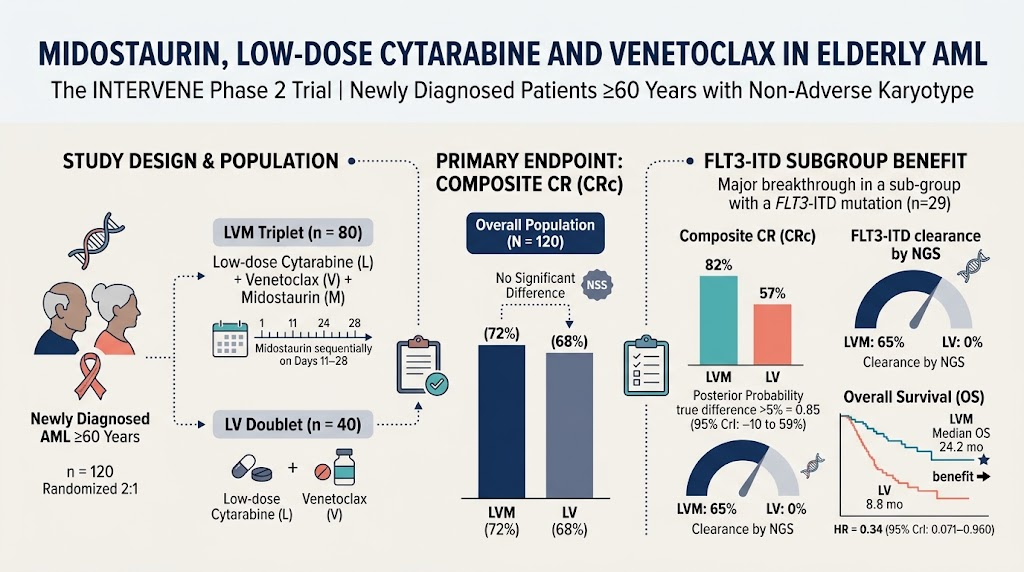
While combination triplet regimens involving FLT3 inhibitors show promising remission depth in specific subgroups, randomized validation against Ven/Aza doublets remains necessary.
Background
Acute myeloid leukemia (AML) primarily affects older adults but also presents significant therapeutic challenges in younger adults, particularly those with non-favorable-risk disease. Historically, intensive induction chemotherapy (“7+3” regimens) followed by consolidation or allogeneic hematopoietic stem cell transplantation (HSCT) has been the treatment mainstay for fit younger patients. However, IC is associated with high toxicity and morbidity. Venetoclax, a BCL-2 inhibitor, combined with hypomethylating agents (HMAs) such as azacitidine, was initially approved for elderly or unfit AML patients due to its favorable efficacy and safety profile. The emerging interest in extending Ven/Aza to younger, IC-eligible AML patients stems from the need to balance efficacy with quality of life and reduced toxicity, as well as optimizing outcomes including MRD negativity and transplant success.
Key Content
Clinical Trial Evidence in Younger Adults
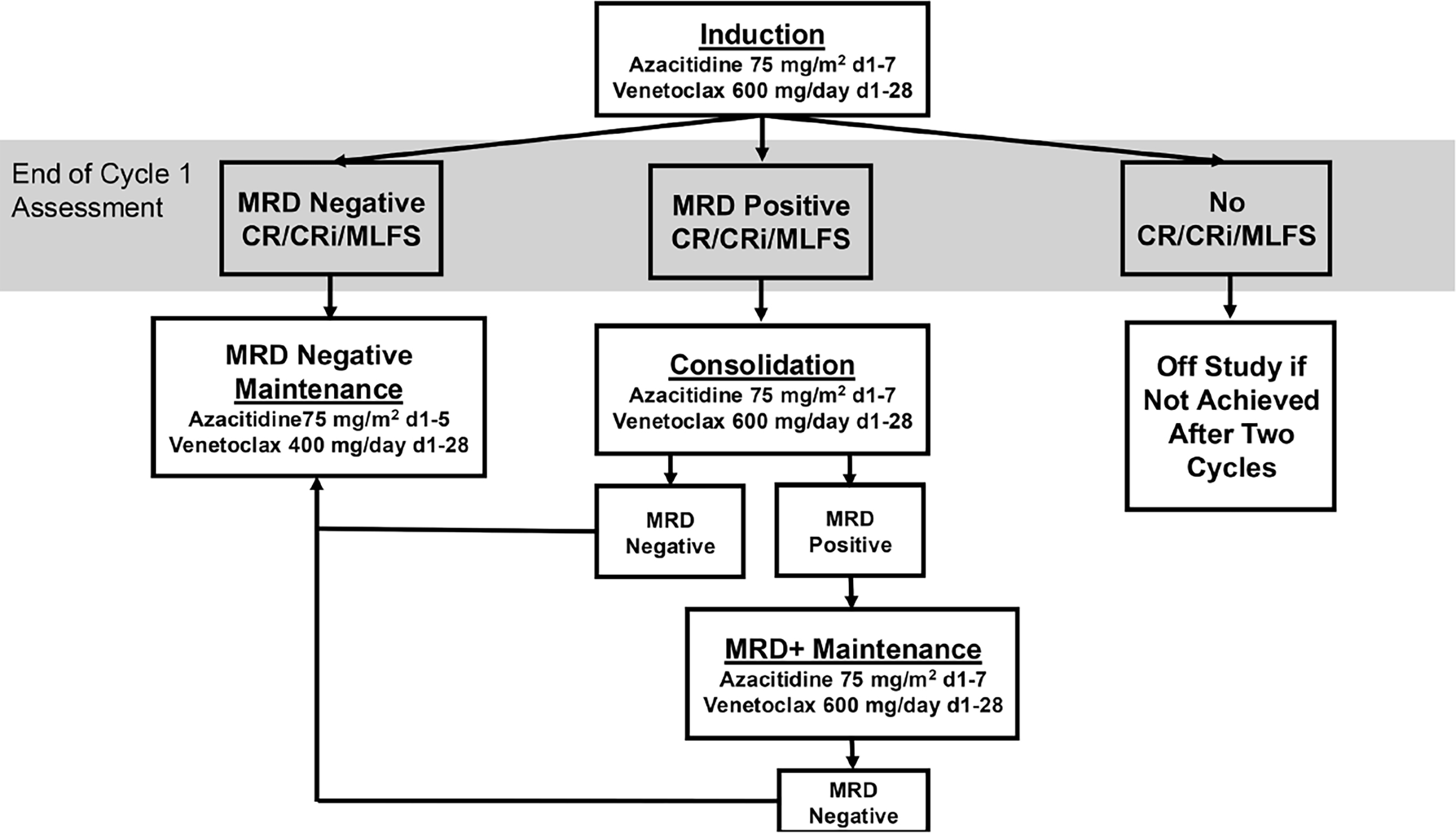
A pivotal non-randomized trial (Jiang et al., 2026) investigated Ven/Aza in younger (≤60 years), newly diagnosed AML patients with non-favorable-risk disease, independent of their fitness for IC (NCT03573024). Venetoclax was dose escalated to 600 mg daily for 28 days, while azacitidine was administered at 75 mg/m2 on days 1-7 of a 28-day cycle. Among 36 enrolled patients (median age 49), the overall response rate (ORR) was 69%, with a complete remission (CR) rate of 53%. MRD negativity was achieved in 68% of responders. Notably, 53% of patients bridged to allogeneic stem cell transplant (ASCT), and the median progression-free survival (PFS) and overall survival (OS) had not been reached at median 2.9 years follow-up. Compared to IC-matched historical controls, Ven/Aza demonstrated significantly improved ORR (69% vs. 44%, p=0.0495), ASCT rates (53% vs. 28%, p=0.0290), and PFS (not reached vs. 60.8 months, p=0.007), accompanied by reduced hospitalization, transfusion, and infectious complications. This trial supports the feasibility and enhanced clinical outcomes of Ven/Aza in younger patients beyond historically frail or unfit populations.
Meta-Analysis Supporting Hypomethylating Agent Plus Venetoclax in Younger AML
A 2026 systematic review and meta-analysis (PMID 41914434) including eight studies (2 RCTs, 2 phase 2, 4 real-world) comprising 429 patients with median age 54 years evaluated HMA plus venetoclax in younger AML. Findings revealed a pooled CR/CRi rate of 66% (95% CI 48%-85%) and MRD-negative rate of 69% (95% CI 49%-90%). The pooled 1-year overall survival was 75%, exceeding population registry benchmarks (~62%). Event-free survival at 1 year was 59%. Notably, 66% proceeded to HSCT. These results endorse HMA/Ven as an effective induction for selected younger patients, yielding high-quality remissions with MRD negativity and enabled transplant.
Randomized Comparison with Intensive Chemotherapy
The landmark phase 2 PARADIGM trial (PMID 42685316) randomized previously untreated AML adults eligible for induction chemotherapy to Ven/Aza versus standard IC. Patients with core binding factor fusions, FLT3 or NPM1 mutations (unless ≥60 years) were excluded. Among 172 patients (median age 64), Ven/Aza yielded a significantly longer median event-free survival (14.5 vs. 6.2 months, HR 0.57, p=0.002), reduced rates of grade 3+ infections (28% vs 41%), and lower hemorrhage incidence. While median OS data await further maturation, these results challenge the primacy of IC in induction-eligible patients and suggest Ven/Aza offers at least comparable if not superior efficacy with a better safety profile.
FLT3-Mutated AML: Emerging Triplet Regimens and Comparative Evidence
FLT3-mutated AML historically carries poor outcomes, especially with monotherapy HMA. Venetoclax plus HMA doublets improve remission rates (67% CRc vs 36% with AZA alone), but randomized survival benefits remain under evaluation. Retrospective and prospective studies suggest promising remission depths (CR/CRi 93%-96%) and durable survival (median OS up to 38.5 months) with triplets comprising HMA, venetoclax, and FLT3 inhibitors such as gilteritinib. However, randomized comparisons directly contrasting triplets with Ven/Aza doublets are lacking, emphasizing the need for prospective validation before widespread adoption in frontline younger AML cohorts.
Oral Regimens and Pharmacologic Enhancements
Phase 1/2 trials examine all-oral formulations (CC-486 plus venetoclax) achieving comparable leukemia stem cell targeting and response, facilitating outpatient management. Pharmacologic boosting of venetoclax with CYP3A4 inhibitors (e.g., cobicistat) allows dose reductions with maintained efficacy. Additionally, adjunctive therapies like rosuvastatin may enhance efficacy by reducing T-cell exhaustion within the tumor microenvironment, with acceptable safety profiles in older/unfit patients, potentially translatable to younger cohorts.
Toxicity Profile and Safety Considerations
Across multiple studies, Ven/Aza regimens exhibit manageable toxicities: grade 3/4 neutropenia in 40-50%, febrile neutropenia in ~30-40%, and anemia and thrombocytopenia variably reported. Compared with IC, these regimens reduce hospitalization and transfusion needs while improving quality of life. The feasibility of bridging to transplant is critical, with many patients successfully undergoing HSCT as consolidation.
Expert Commentary
The accumulating evidence positions venetoclax plus azacitidine as a compelling frontline therapeutic option in younger adults with AML who traditionally would be considered IC candidates, particularly in high-risk, non-favorable-risk subgroups. Improved event-free survival and comparable or superior remission rates challenge existing dogma favoring IC. The tolerability profile and reduced healthcare utilization further support this shift. Importantly, achievement of MRD negativity and successful transition to HSCT underpin durable remission strategies.
Despite encouraging data, several challenges persist. The lack of large-scale, phase 3 randomized trials exclusively in younger populations tempers definitive guideline shifts. The clinical heterogeneity of AML, including molecular subtypes such as FLT3-ITD, NPM1 mutations, and TP53 aberrations, necessitates personalized therapy. Triplet regimens incorporating targeted agents offer biological plausibility and early remission depth but lack robust comparative data. Safety in younger patients, especially regarding prolonged cytopenias and potential impact on transplant timing, requires careful longitudinal evaluation.
Mechanistically, venetoclax targets BCL-2-dependent leukemia stem cells, synergizing with HMAs that modulate epigenetic landscapes and promote apoptosis. Optimizing venetoclax pharmacokinetics with P450 inhibitors or adjunctive agents such as statins may enhance anti-leukemic immunity by alleviating T-cell exhaustion, representing translational advances poised for clinical integration.
Conclusion
Venetoclax plus azacitidine represents a major advance expanding from unfit elderly to younger adults with acute myeloid leukemia, including those traditionally managed with intensive chemotherapy. Current evidence from meta-analyses, randomized trials, and real-world cohorts demonstrates high remission quality, favorable survival outcomes, and acceptable toxicity, supporting reconsideration of standard induction paradigms. Future research priorities include large randomized trials in younger patients, exploration of molecularly targeted triplet regimens, and optimization of oral and pharmacologic formulations to enhance efficacy and quality of life. Integration of biomarker-driven treatment selection and translational insights will refine individualized AML therapy across age and fitness spectra.
References
Jiang X, Lu Y. Venetoclax plus azacitidine in younger adults with acute myeloid leukemia beyond historical comparisons. Haematologica. 2026 Oct 15. PMID: 42876302.
Kadia TM et al. Venetoclax and azacitidine for younger acute myeloid leukemia patients independent of fitness for intensive chemotherapy. Haematologica. 2026;111(9):2957-2965. PMID: 41742869.
DiNardo CD et al. Azacitidine-Venetoclax or Induction Chemotherapy for Acute Myeloid Leukemia. N Engl J Med. 2026 Sep 3;395(9):845-858. PMID: 42685316.
Jiang X et al. Hypomethylating agents plus venetoclax in younger acute myeloid leukemia: Meta-analysis of a shifting treatment paradigm. Cancer. 2026 Apr 1;132(7):e70372. PMID: 41914434.
Metzeler KH et al. Venetoclax-Based Regimens in Newly Diagnosed FLT3-Mutated Older or Unfit Acute Myeloid Leukemia: Systematic Review and Meta-Analysis. Hematol Oncol. 2026 Sep;44(5):e70257. PMID: 42800061.
Erba HP et al. A phase 1/1b study of the all-oral regimen CC-486 and venetoclax in acute myeloid leukemia. Blood Adv. 2026 Oct 13;10(19):6666-6674. PMID: 42498285.
Pei S et al. Pharmacological boosting of azacitidine/venetoclax in acute myeloid leukemia. Blood Neoplasia. 2026;3(2):100218. PMID: 42007248.