Updated Federal Regulation: How the Pregnant Workers Fairness Act (PWFA) Changes Care and Counseling in Obstetrics
Introduction and Context
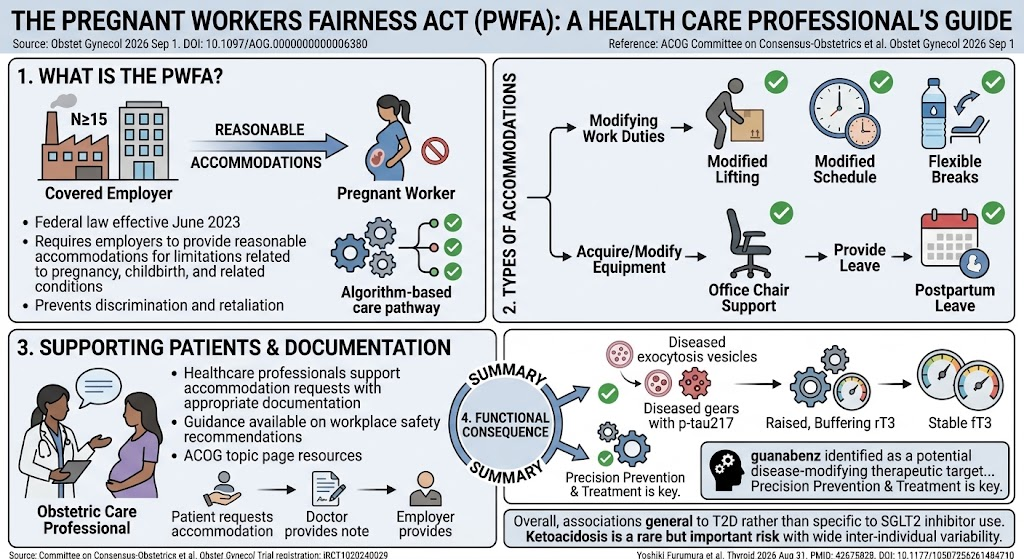
Working outside the home during pregnancy is common and—most of the time—safe. Until recently, however, pregnant and postpartum workers did not have a single, clear federal right guaranteeing reasonable workplace accommodations for limitations related to pregnancy, childbirth, and related medical conditions. The Pregnant Workers Fairness Act (PWFA), enacted to take effect in 2023 and increasingly interpreted and enforced through federal guidance and litigation, fills that gap. In September 2026 the American College of Obstetricians & Gynecologists (ACOG) Committee on Clinical Consensus–Obstetrics published an updated Committee Statement summarizing the law, clarifying supporting documentation expectations, and articulating practical steps obstetric clinicians can take to help patients obtain safe and equitable workplace accommodations (ACOG, 2026). This article synthesizes that Committee Statement, places it in legal and clinical context, and translates core recommendations into day-to-day practice.
Why this matters now: The PWFA changes the default interaction between pregnant patients and employers. Clinicians are now front-line facilitators: their documentation, counseling, and early recognition of work-related risks can materially affect maternal and fetal health, patients’ employment continuity, and equity for workers who often lack bargaining power.
Sign in free to continue reading
Create or use your MedXY account to unlock the complete article.
This article was created using several editorial tools, including AI, as part of the process. Human editors reviewed this content before publication.