We use cookies

Our website uses essential cookies and, with your consent, additional cookies to measure performance and improve our services. Cookie Policy.

You can change your choice at any time.

MMedXYNews
HomeVideos
MedXY AI/MedXY News/Tag: primary prevention
MedXY News
EnglishTag

primary prevention

Ask MedXY AI
type 2 diabetesclinical trialheart failureimmunotherapyobesitycardiovascular riskatrial fibrillationbiomarkerscritical careclinical trialsHypertensionartificial intelligenceCardiologyoncologypublic healthtype 1 diabetesdiabetesMortalityAlzheimer's diseasecardiovascular diseasebreast cancerepidemiology

Latest news

Tag

Beyond Standard Risk Factors: High-Sensitivity C-Reactive Protein as a Critical Driver of Cardiovascular Risk Prediction
Cardiologycardiovascular riskhsCRP

Beyond Standard Risk Factors: High-Sensitivity C-Reactive Protein as a Critical Driver of Cardiovascular Risk Prediction

By MedXY|Jan 5, 2026

Recent large-scale studies demonstrate that high-sensitivity C-reactive protein (hsCRP) is a potent, stable predictor of cardiovascular events, even in individuals without traditional risk factors. Despite its clinical utility in improving


High Early Risk of Sudden Cardiac Arrest in Newly Diagnosed Cardiomyopathy: Insights from the German SCD‑PROTECT Wearable Defibrillator Registry
Cardiologycardiomyopathyprimary prevention

High Early Risk of Sudden Cardiac Arrest in Newly Diagnosed Cardiomyopathy: Insights from the German SCD‑PROTECT Wearable Defibrillator Registry

By MedXY|Nov 29, 2025

The nationwide SCD‑PROTECT study (n=19,598) found substantial early risk of sustained VT/VF in newly diagnosed ischaemic and non‑ischaemic cardiomyopathy; wearable cardioverter‑defibrillators (WCDs) delivered life‑saving therapy with low in

Aspirin in the Healthy Elderly: ASPREE’s Clear Message — No Benefit, Higher Bleeding, and Unexpected Cancer Signal
CardiologyAspirinbleeding risk

Aspirin in the Healthy Elderly: ASPREE’s Clear Message — No Benefit, Higher Bleeding, and Unexpected Cancer Signal

By MedXY|Nov 28, 2025

ASPREE randomized ~19,000 older adults to low‑dose aspirin or placebo. Over ~4.7 years, aspirin did not improve disability‑free survival or reduce cardiovascular events, increased major bleeding, and showed a surprising rise in cancer‑relat

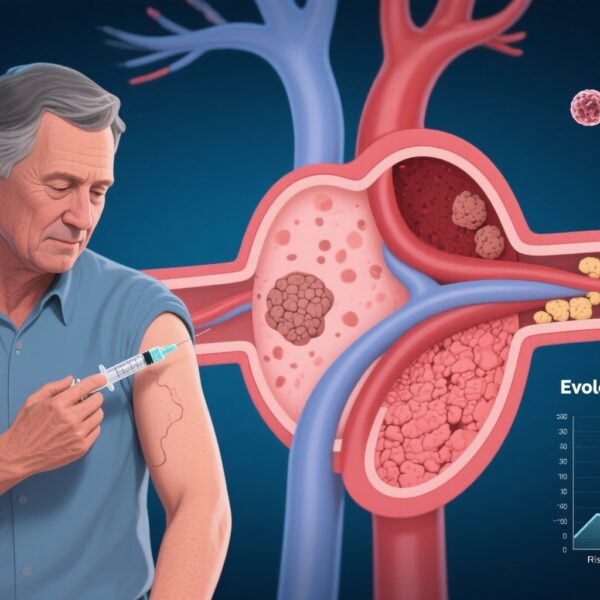
Evolocumab Prevents First Major Cardiovascular Events in High‑Risk Patients without Prior MI or Stroke
CardiologyEvolocumabMACE

Evolocumab Prevents First Major Cardiovascular Events in High‑Risk Patients without Prior MI or Stroke

By MedXY|Nov 13, 2025

In VESALIUS-CV, evolocumab reduced first major adverse cardiovascular events by ~25% (HR 0.75) versus placebo in patients with atherosclerosis or diabetes without prior myocardial infarction or stroke, with modest absolute risk reductions a

Coronary CT Angiography Modestly Improves Prediction of First Coronary Events Beyond Risk Scores and CAC
CardiologyCCTAcoronary artery calcium

Coronary CT Angiography Modestly Improves Prediction of First Coronary Events Beyond Risk Scores and CAC

By MedXY|Nov 10, 2025

In a Swedish cohort of 24,791 adults aged 50–64, adding CCTA-derived measures of coronary atherosclerosis to pooled cohort equations and coronary artery calcium score modestly improved prediction of first coronary events over ~8 years.

PCSK9 Inhibition Prevents First Major Cardiovascular Events: VESALIUS‑CV trial
Cardiologycardiovascular outcomesEvolocumab

PCSK9 Inhibition Prevents First Major Cardiovascular Events: VESALIUS‑CV trial

By MedXY|Nov 9, 2025

In the VESALIUS‑CV trial, evolocumab reduced first major adverse cardiovascular events by 25% (3‑point MACE) and 19% (4‑point MACE) versus placebo over 4.6 years in patients with atherosclerosis or diabetes and no prior MI or stroke.

Clonal Hematopoiesis in Older Adults: Implications for Cardiovascular Risk, Bleeding, and Aspirin Use
CardiologyAspirinbleeding risk

Clonal Hematopoiesis in Older Adults: Implications for Cardiovascular Risk, Bleeding, and Aspirin Use

By MedXY|Oct 15, 2025

This study reveals that clonal hematopoiesis of indeterminate potential (CHIP) in adults aged 70+ does not increase cardiovascular risk but is associated with heightened bleeding risk. Aspirin showed no additional benefits or harms for thos

Ask MedXY AI

Most popular

Intimate Health
Five Benefits for Women Continuing Sexual Activity After Menopause
Intimate Health
Why Some Women Have a Strong Sex Drive—And Why Men Shouldn't Worry About It
Nursing & care
How often should a couple have sex?
Intimate Health
Classic Intimacy Recommendations: How to Help Women Reach Orgasm and Enjoy Mutual Pleasure
Intimate Health
What Makes a Woman "Physiologically Addicted" Is Never Money, But These Two Relationship Qualities
© 2026 MedXY
Contact usAbout usPrivacy PolicyMedXY story