We use cookies

Our website uses essential cookies and, with your consent, additional cookies to measure performance and improve our services. Cookie Policy.

You can change your choice at any time.

MMedXYNews
HomeVideos
© 2026 MedXY
Contact usAbout usPrivacy PolicyMedXY story
MedXY AI/MedXY News/Tag: cardiovascular risk
MedXY News
EnglishTag

cardiovascular risk

Ask MedXY AI
type 2 diabetesclinical trialheart failureimmunotherapyobesitycardiovascular riskatrial fibrillationbiomarkerscritical careclinical trialsHypertensionartificial intelligenceCardiologyoncologypublic healthtype 1 diabetesdiabetesMortalityAlzheimer's diseasecardiovascular diseasebreast cancerepidemiology

Latest news

Tag

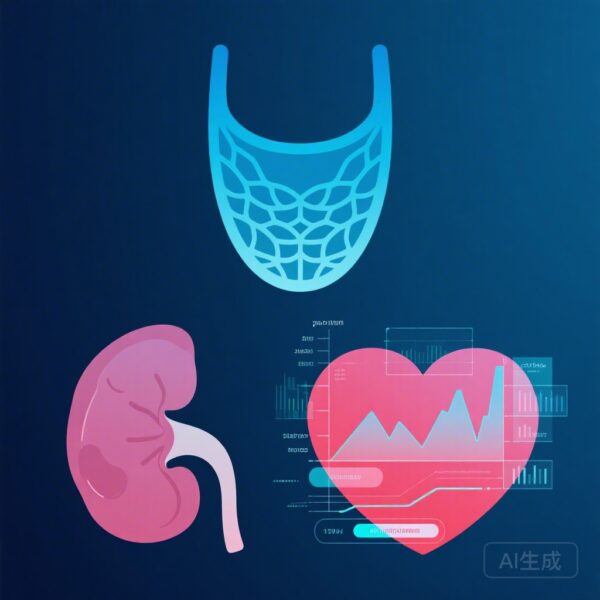
Prolonged TSH Suppression in Postmenopausal Thyroid Cancer Patients Linked to Worse Cardiovascular and Quality-of-Life Outcomes
Cardiologycardiovascular riskdifferentiated thyroid cancer

Prolonged TSH Suppression in Postmenopausal Thyroid Cancer Patients Linked to Worse Cardiovascular and Quality-of-Life Outcomes

By MedXY|Apr 30, 2026

Study finds long-term TSH suppression in postmenopausal women with thyroid cancer correlates with poorer cardiovascular health, reduced quality of life, and increased osteoporosis risk compared to controls.


Glucagon-Like Peptide-1 Receptor Agonists and Vascular Protection: Mitigating Systemic and Ocular Risks in High-Risk Type 2 Diabetes
Clinical Updatescardiovascular riskGLP-1 RA

Glucagon-Like Peptide-1 Receptor Agonists and Vascular Protection: Mitigating Systemic and Ocular Risks in High-Risk Type 2 Diabetes

By MedXY|Apr 27, 2026

A large-scale cohort study demonstrates that GLP-1 RAs significantly reduce macrovascular and microvascular complications, including proliferative retinopathy and retinal vein occlusion, in patients with pre-existing diabetic retinopathy.

44% of Women with HDP Develop Chronic Hypertension Within 10 Years: Missed Opportunities in Postpartum Care
Cardiologycardiovascular riskchronic hypertension

44% of Women with HDP Develop Chronic Hypertension Within 10 Years: Missed Opportunities in Postpartum Care

By MedXY|Apr 23, 2026

A French cohort study reveals 44% of women receiving postpartum antihypertensives after HDP develop chronic hypertension within 10 years, signaling urgent gaps in long-term cardiovascular risk monitoring.

Even ‘Elevated’ Blood Pressure Raises Dementia Risk: Insights from 2.8 Million Adults Over 8 Years
Cardiologyblood pressurecardiovascular risk

Even ‘Elevated’ Blood Pressure Raises Dementia Risk: Insights from 2.8 Million Adults Over 8 Years

By MedXY|Apr 15, 2026

A landmark South Korean study of 2.8 million adults reveals that both elevated blood pressure and hypertension significantly increase dementia risk, particularly vascular dementia, with stronger effects observed in midlife adults and women.

AI-Enhanced ECG Screening Pinpoints Atrial Fibrillation Risk in Older Adults: Key Insights from VITAL-AF Trial
Cardiologyartificial intelligenceatrial fibrillation

AI-Enhanced ECG Screening Pinpoints Atrial Fibrillation Risk in Older Adults: Key Insights from VITAL-AF Trial

By MedXY|Apr 15, 2026

A VITAL-AF trial analysis reveals that combining ECG-based artificial intelligence with clinical risk scores significantly improves atrial fibrillation screening efficiency. The study demonstrates that high-risk individuals benefit most fro

Longer Wait, Higher Risk? How Timing of Hypertensive Disorder Diagnosis Shapes Women’s Cardiovascular Future
Cardiologycardiovascular riskexpectant management

Longer Wait, Higher Risk? How Timing of Hypertensive Disorder Diagnosis Shapes Women’s Cardiovascular Future

By MedXY|Apr 14, 2026

New research reveals that longer latency between hypertensive disorder of pregnancy diagnosis and delivery correlates with subtle inflammatory and lipid changes in young mothers, suggesting subclinical cardiovascular risk elevation years af

Why Exercise Blood Pressure Alone May Miss Cardiovascular Risk—and What Combining It With Fitness Reveals
Cardiologyaerobic fitnesscardiovascular risk

Why Exercise Blood Pressure Alone May Miss Cardiovascular Risk—and What Combining It With Fitness Reveals

By MedXY|Apr 13, 2026

The EXERTION study of 12,743 individuals demonstrates that exercise systolic blood pressure relative to aerobic fitness (SBP/METPeak) is a powerful predictor of cardiovascular events, whereas exercise BP alone provides no prognostic value.

Efficacy of Blood Pressure-Lowering Pharmacotherapy in Isolated Diastolic Hypertension: A Systematic Synthesis of Evidence
CardiologyBP Loweringcardiovascular risk

Efficacy of Blood Pressure-Lowering Pharmacotherapy in Isolated Diastolic Hypertension: A Systematic Synthesis of Evidence

By MedXY|Apr 13, 2026

This review synthesizes recent evidence, including a landmark 2026 meta-analysis, showing that blood pressure-lowering therapy provides similar cardiovascular benefits in patients with isolated diastolic hypertension compared to those with

Redefining Gout Management: Cardiovascular Risk Reduction via Treat-to-Target Urate-Lowering Therapy
Cardiologycardiovascular riskgout

Redefining Gout Management: Cardiovascular Risk Reduction via Treat-to-Target Urate-Lowering Therapy

By MedXY|Mar 28, 2026

Achieving serum urate targets <6 mg/dL (or <5 mg/dL) through Treat-to-Target (T2T) protocols significantly reduces major adverse cardiovascular events in gout patients, particularly those at high baseline risk.

Beyond Calcium: Postoperative Hypoparathyroidism Linked to Long-term Renal and Cardiovascular Risks in Thyroid Cancer Survivors
Diabetes & Endocrinologycardiovascular riskhypoparathyroidism

Beyond Calcium: Postoperative Hypoparathyroidism Linked to Long-term Renal and Cardiovascular Risks in Thyroid Cancer Survivors

By MedXY|Mar 22, 2026

A nationwide cohort study reveals that permanent postoperative hypoparathyroidism significantly increases the risk of renal insufficiency, nephrolithiasis, and major adverse cardiac events in thyroid cancer patients, highlighting the need f

Mapping the Plasma Proteome to Predict Venous Thromboembolism: Evidence from Multi-Cohort Proteomic Profiling and Causal Inference
Cardiologybiomarkerscardiovascular risk

Mapping the Plasma Proteome to Predict Venous Thromboembolism: Evidence from Multi-Cohort Proteomic Profiling and Causal Inference

By MedXY|Mar 18, 2026

This review synthesizes cutting-edge findings from multi-ethnic longitudinal cohorts using high-throughput proteomics to identify novel biomarkers and causal pathways for venous thromboembolism, moving beyond traditional clotting factors.

One-Hour Plasma Glucose: A Vital Predictor of Cardiometabolic Risk in Women with PCOS
Diabetes & Endocrinologycardiovascular riskGlucose Testing

One-Hour Plasma Glucose: A Vital Predictor of Cardiometabolic Risk in Women with PCOS

By MedXY|Mar 15, 2026

A retrospective study highlights how 1-hour plasma glucose levels can identify early cardiometabolic risks in women with PCOS who appear to have normal blood sugar levels.

Chronic Inflammation via suPAR: The Missing Link Between Diabetes and Cardiovascular Mortality
Cardiologycardiovascular riskcoronary artery disease

Chronic Inflammation via suPAR: The Missing Link Between Diabetes and Cardiovascular Mortality

By MedXY|Mar 14, 2026

A landmark study in Diabetes Care reveals that soluble urokinase plasminogen activator receptor (suPAR) mediates over half of the increased risk for adverse cardiovascular outcomes in patients with diabetes and coronary artery disease, surp

Predicting Heart Failure Before It Starts: The New SCORE2-HF Model and Clinical Consensus for Cardiovascular Risk Assessment
Cardiologycardiovascular riskheart failure

Predicting Heart Failure Before It Starts: The New SCORE2-HF Model and Clinical Consensus for Cardiovascular Risk Assessment

By MedXY|Mar 11, 2026

This article details the SCORE2-HF risk model, a newly validated tool designed to estimate 10-year and 30-year heart failure risks in asymptomatic individuals, enabling earlier intervention and personalized cardiovascular care across divers

Testosterone and Weight Loss: Decoding the Link Between Sex Hormones and Cardiovascular Risk in Men with Type 2 Diabetes
Cardiologycardiovascular risktestosterone

Testosterone and Weight Loss: Decoding the Link Between Sex Hormones and Cardiovascular Risk in Men with Type 2 Diabetes

By MedXY|Mar 9, 2026

A longitudinal analysis of the Look AHEAD trial demonstrates that baseline testosterone and weight loss-induced changes in SHBG significantly modulate cardiovascular risk in men with type 2 diabetes, highlighting the critical role of hormon

Synergistic Protection: Combining GLP-1 Receptor Agonists with Lifestyle Habits Slashes Cardiovascular Risk in Type 2 Diabetes
Cardiologycardiovascular riskGLP-1 receptor agonists

Synergistic Protection: Combining GLP-1 Receptor Agonists with Lifestyle Habits Slashes Cardiovascular Risk in Type 2 Diabetes

By MedXY|Mar 7, 2026

A massive cohort study of nearly 100,000 veterans reveals that while GLP-1 receptor agonists significantly reduce MACE, the combination with a healthy lifestyle offers a 43% lower risk, emphasizing the need for integrated cardiometabolic ca

Beyond Traditional Risk Factors: Deconstructing the Burden of Coronary Atherosclerosis in Liver Transplant Recipients
Clinical Updatescardiovascular riskcoronary artery disease

Beyond Traditional Risk Factors: Deconstructing the Burden of Coronary Atherosclerosis in Liver Transplant Recipients

By MedXY|Mar 7, 2026

A landmark nationwide study reveals that liver transplant recipients face significantly higher prevalence and severity of coronary atherosclerosis and high-risk plaque compared to matched controls, independent of traditional cardiovascular

Predicting Cardiovascular Outcomes in Fabry Disease: Identifying High-Risk Markers in the Modern Therapeutic Era
CardiologyCardiologycardiovascular risk

Predicting Cardiovascular Outcomes in Fabry Disease: Identifying High-Risk Markers in the Modern Therapeutic Era

By MedXY|Mar 2, 2026

A multicenter study of 680 Fabry disease patients reveals that age, renal function, QRS duration, and left ventricular mass are critical independent predictors of major adverse cardiovascular events, highlighting persistent unmet needs desp

Intensive Blood Pressure Targets Below 130/80 mmHg Benefit Patients Across the Cardiovascular-Kidney-Metabolic Syndrome Spectrum
Cardiologycardiovascular riskHội Chứng CKM

Intensive Blood Pressure Targets Below 130/80 mmHg Benefit Patients Across the Cardiovascular-Kidney-Metabolic Syndrome Spectrum

By MedXY|Feb 24, 2026

A post hoc analysis of the CRHCP trial demonstrates that intensive blood pressure control (<130/80 mmHg) significantly reduces major adverse **Confirming JSON Structure** I’m now fully focused on creating the JSON object. I’v

Beyond Stenosis: Why Quantitative Plaque Volume Is the New Frontier in Cardiovascular Risk Assessment
Cardiologycardiovascular riskCCTA

Beyond Stenosis: Why Quantitative Plaque Volume Is the New Frontier in Cardiovascular Risk Assessment

By MedXY|Feb 22, 2026

A substudy of the PROMISE trial demonstrates that quantitative plaque measures on CCTA—specifically total and noncalcified plaque burden—independently predict major adverse cardiovascular events in symptomatic outpatients, offering a precis

Prev
3 / 6
123456
Next
Ask MedXY AI

Most popular

Intimate Health
Five Benefits for Women Continuing Sexual Activity After Menopause
Intimate Health
Why Some Women Have a Strong Sex Drive—And Why Men Shouldn't Worry About It
Nursing & care
How often should a couple have sex?
Intimate Health
Classic Intimacy Recommendations: How to Help Women Reach Orgasm and Enjoy Mutual Pleasure
Intimate Health
What Makes a Woman "Physiologically Addicted" Is Never Money, But These Two Relationship Qualities