We use cookies

Our website uses essential cookies and, with your consent, additional cookies to measure performance and improve our services. Cookie Policy.

You can change your choice at any time.

MMedXYNews
HomeVideos
MedXY AI/MedXY News/Tag: Cardiology
MedXY News
EnglishTag

Cardiology

Ask MedXY AI
type 2 diabetesclinical trialheart failureimmunotherapyobesitycardiovascular riskatrial fibrillationbiomarkerscritical careclinical trialsHypertensionartificial intelligenceCardiologyoncologypublic healthtype 1 diabetesdiabetesMortalityAlzheimer's diseasecardiovascular diseasebreast cancerepidemiology

Latest news

Tag

The Hidden Burden of Heart and Brain Health: ASCVD Linked to Significantly Elevated Suicide Risk
CardiologyASCVDCardiology

The Hidden Burden of Heart and Brain Health: ASCVD Linked to Significantly Elevated Suicide Risk

By MedXY|Jan 7, 2026

A large-scale nationwide study reveals that individuals with atherosclerotic cardiovascular disease (ASCVD), including myocardial infarction and stroke, face a 43% higher risk of suicide. The risk nearly doubles for those suffering from bot


Inflammatory and Cardiac Biomarkers Predict VTE and Bleeding Risks in Ambulatory Cancer Patients
CardiologybiomarkersCardiology

Inflammatory and Cardiac Biomarkers Predict VTE and Bleeding Risks in Ambulatory Cancer Patients

© 2026 MedXY
Contact usAbout usPrivacy PolicyMedXY story
By MedXY|Jan 5, 2026

A post hoc analysis of the AVERT trial identifies GDF-15, NT-proBNP, CRP, and hs-TnT as significant predictors for venous thromboembolism and bleeding in cancer patients, offering new tools for personalized risk stratification.

Elevated Admission D-dimer: A Potent New Predictor of In-Hospital Mortality in Takotsubo Syndrome
CardiologyCardiologyD-dimer

Elevated Admission D-dimer: A Potent New Predictor of In-Hospital Mortality in Takotsubo Syndrome

By MedXY|Jan 5, 2026

A retrospective study of 580 TTS patients demonstrates that admission D-dimer levels ≥3.5 µg/mL are associated with a seven-fold increase in in-hospital mortality, significantly improving the predictive accuracy of the traditional InterTAK

Persistent Healthcare Burden in Women with Chest Pain Despite No Obstructive Coronary Artery Disease: Insights from the WOMANOCA Study
CardiologyanginaCardiology

Persistent Healthcare Burden in Women with Chest Pain Despite No Obstructive Coronary Artery Disease: Insights from the WOMANOCA Study

By MedXY|Jan 4, 2026

A nationwide Danish cohort study reveals that women with angina or non-specific chest pain and no obstructive coronary artery disease face significantly higher rates of cardiac readmissions and primary care consultations compared to asympto

High-Acuity Presentations with Favorable Outcomes: The Paradox of Young Adults in the Cardiac ICU
CardiologyCardiologycritical care

High-Acuity Presentations with Favorable Outcomes: The Paradox of Young Adults in the Cardiac ICU

By MedXY|Jan 3, 2026

A large-scale registry study reveals that young adults (18-39) in the Cardiac Intensive Care Unit present with higher rates of cardiogenic shock and cardiac arrest compared to older adults, yet demonstrate significantly higher survival rate

Precision Risk Assessment in CPVT: New Validated Models Predict Arrhythmic Events on Beta-Blocker Therapy
CardiologyCardiologyCPVT

Precision Risk Assessment in CPVT: New Validated Models Predict Arrhythmic Events on Beta-Blocker Therapy

By MedXY|Jan 3, 2026

A landmark study has developed and validated the first clinical risk prediction models for RYR2-mediated CPVT, identifying key factors like age at treatment and prior symptoms that determine life-threatening outcomes despite beta-blocker th

The Price of Time: 20-Year Study Reveals Pre-Hospital Delay as a Critical Driver of STEMI Mortality
CardiologyCardiologyemergency medicine

The Price of Time: 20-Year Study Reveals Pre-Hospital Delay as a Critical Driver of STEMI Mortality

By MedXY|Jan 3, 2026

A 20-year analysis of 89,155 patients from the SWEDEHEART registry confirms that pre-hospital delay independently predicts short- and long-term mortality. Despite advances in reperfusion, women, elderly patients, and those with diabetes con

Guided Antiplatelet De-escalation Proves Safe in High Atherothrombotic Risk ACS Patients: Insights from TROPICAL-ACS
Cardiologyacute coronary syndromeAntiplatelet Therapy

Guided Antiplatelet De-escalation Proves Safe in High Atherothrombotic Risk ACS Patients: Insights from TROPICAL-ACS

By MedXY|Jan 2, 2026

Post-hoc analysis of the TROPICAL-ACS trial demonstrates that platelet function testing-guided de-escalation of dual antiplatelet therapy from prasugrel to clopidogrel is safe and effective in ACS patients, regardless of their atherothrombo

Timing Matters: Platelet Reactivity Predicts Early Events While Clinical Risk Governs Long-Term Outcomes Post-PCI
CardiologyCardiologyPCI

Timing Matters: Platelet Reactivity Predicts Early Events While Clinical Risk Governs Long-Term Outcomes Post-PCI

By MedXY|Dec 30, 2025

Analysis of the PTRG-DES registry shows that platelet reactivity drives early ischemic risk post-PCI, while clinical risk factors (TRS2P) determine long-term prognosis, suggesting a need for temporally tailored secondary prevention strategi

Refining Risk: Clinical and Angiographic Predictors of Postprocedural Troponin Elevation in Elective PCI
CardiologyCardiologymyocardial infarction

Refining Risk: Clinical and Angiographic Predictors of Postprocedural Troponin Elevation in Elective PCI

By MedXY|Dec 30, 2025

A comprehensive analysis of over 10,000 patients identifies key risk factors for post-PCI troponin increase, highlighting the protective role of intravascular imaging and the prognostic impact of different myocardial infarction definitions.

Beyond Chronological Age: How Frailty Dictates Survival and Functional Recovery After Out-of-Hospital Cardiac Arrest
CardiologyCardiologycritical care

Beyond Chronological Age: How Frailty Dictates Survival and Functional Recovery After Out-of-Hospital Cardiac Arrest

By MedXY|Dec 28, 2025

A secondary analysis of the TTM2 trial reveals that frailty is a potent predictor of mortality and poor neurological outcomes after out-of-hospital cardiac arrest, with severely frail patients facing a 35-fold higher risk of poor functional

Redefining Iron Deficiency in Heart Failure: Why TSAT and Serum Iron Outperform Ferritin for Prognosis
CardiologyCardiologyclinical guidelines

Redefining Iron Deficiency in Heart Failure: Why TSAT and Serum Iron Outperform Ferritin for Prognosis

By MedXY|Dec 26, 2025

Recent large-scale studies, including HEART-FID and major national registries, demonstrate that transferrin saturation (TSAT) and serum iron levels are more accurate predictors of functional capacity and mortality in heart failure than trad

Beyond the Scale: Abdominal Adiposity Outperforms BMI in Predicting Outcomes for HFpEF and HFmrEF
CardiologyCardiologyHFpEF

Beyond the Scale: Abdominal Adiposity Outperforms BMI in Predicting Outcomes for HFpEF and HFmrEF

By MedXY|Dec 26, 2025

A pooled analysis of 21,479 HFpEF/HFmrEF patients reveals that waist-to-height ratio is a superior, linear predictor of mortality and heart failure events compared to BMI. Even in non-obese BMI categories, nearly 90% of patients exhibit exc

Finerenone and Hypotension Risk in Heart Failure: Evidence from the FINEARTS-HF Trial
CardiologyCardiologyfinerenone

Finerenone and Hypotension Risk in Heart Failure: Evidence from the FINEARTS-HF Trial

By MedXY|Dec 26, 2025

This analysis of the FINEARTS-HF trial identifies that while finerenone increases hypotension risk in HFmrEF and HFpEF patients, its clinical benefits persist. The study highlights key predictors of hypotension, such as low baseline blood p

Coramitug Significantly Reduces NT-proBNP in Transthyretin Amyloid Cardiomyopathy: Phase 2 Trial Results
CardiologyATTR-CMCardiology

Coramitug Significantly Reduces NT-proBNP in Transthyretin Amyloid Cardiomyopathy: Phase 2 Trial Results

By MedXY|Dec 25, 2025

A Phase 2 randomized trial shows that coramitug, a monoclonal antibody targeting misfolded transthyretin, significantly reduced NT-proBNP levels by 48% in patients with ATTR-CM. While functional outcomes remained stable over 52 weeks, the r

N-Palmitoyl Glutamine: A Novel Molecular Link Between Exercise, Mitochondrial Efficiency, and Human Longevity
CardiologyCardiologycardiorespiratory fitness

N-Palmitoyl Glutamine: A Novel Molecular Link Between Exercise, Mitochondrial Efficiency, and Human Longevity

By MedXY|Dec 25, 2025

A groundbreaking study identifies N-palmitoyl glutamine (NPG) as a key molecular transducer of cardiorespiratory fitness. NPG correlates with VO2max, increases with exercise training, predicts lower mortality, and directly enhances mitochon

Beyond Vagal Tone: Genetic Predisposition and Physical Fitness Drive Profound Bradycardia in Elite Athletes
CardiologyBradycardiaCardiology

Beyond Vagal Tone: Genetic Predisposition and Physical Fitness Drive Profound Bradycardia in Elite Athletes

By MedXY|Dec 24, 2025

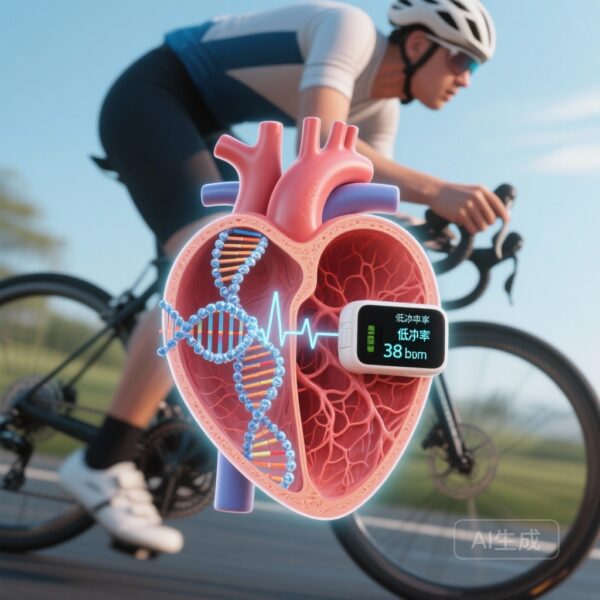
A comprehensive study of elite endurance athletes reveals that resting bradycardia (≤40 bpm) is common and driven by both fitness and a lower polygenic risk score for heart rate. These findings suggest that genetics may predispose individua

Mavacamten Significantly Reduces Myocardial Stress and Injury in Nonobstructive HCM: Insights From the ODYSSEY-HCM Trial
CardiologybiomarkersCardiology

Mavacamten Significantly Reduces Myocardial Stress and Injury in Nonobstructive HCM: Insights From the ODYSSEY-HCM Trial

By MedXY|Dec 24, 2025

While the ODYSSEY-HCM trial missed its primary functional endpoints, a new exploratory analysis reveals that mavacamten significantly reduces NT-proBNP and hs-cTnI levels in patients with nonobstructive hypertrophic cardiomyopathy, suggesti

High-Sensitivity Cardiac Troponin Risk Stratification Safely Accelerates ED Discharge and Improves 1-Year Outcomes
Cardiologyacute coronary syndromeCardiology

High-Sensitivity Cardiac Troponin Risk Stratification Safely Accelerates ED Discharge and Improves 1-Year Outcomes

By MedXY|Dec 24, 2025

A secondary analysis of the HiSTORIC trial reveals that using high-sensitivity cardiac troponin for risk stratification significantly reduces ED length of stay and increases safe discharge rates for low- and intermediate-risk patients, with

Long-Term Silicon Exposure Fails to Predict Coronary Artery Disease Severity or Systemic Inflammation
Cardiologyatherosclerosisbiomarkers

Long-Term Silicon Exposure Fails to Predict Coronary Artery Disease Severity or Systemic Inflammation

By MedXY|Dec 24, 2025

A pilot study evaluating hair silicon as a long-term mineral marker found no significant association between silicon concentrations and coronary artery disease (CAD) severity or inflammatory markers, suggesting silicon may be metabolically

Prev
4 / 5
12345
Next
Ask MedXY AI

Most popular

Intimate Health
Five Benefits for Women Continuing Sexual Activity After Menopause
Intimate Health
Why Some Women Have a Strong Sex Drive—And Why Men Shouldn't Worry About It
Nursing & care
How often should a couple have sex?
Intimate Health
Classic Intimacy Recommendations: How to Help Women Reach Orgasm and Enjoy Mutual Pleasure
Intimate Health
What Makes a Woman "Physiologically Addicted" Is Never Money, But These Two Relationship Qualities