MMedXYNews
Ask AIHomeVideos
MedXY AI/MedXY News/Section: Neurology
Neurology

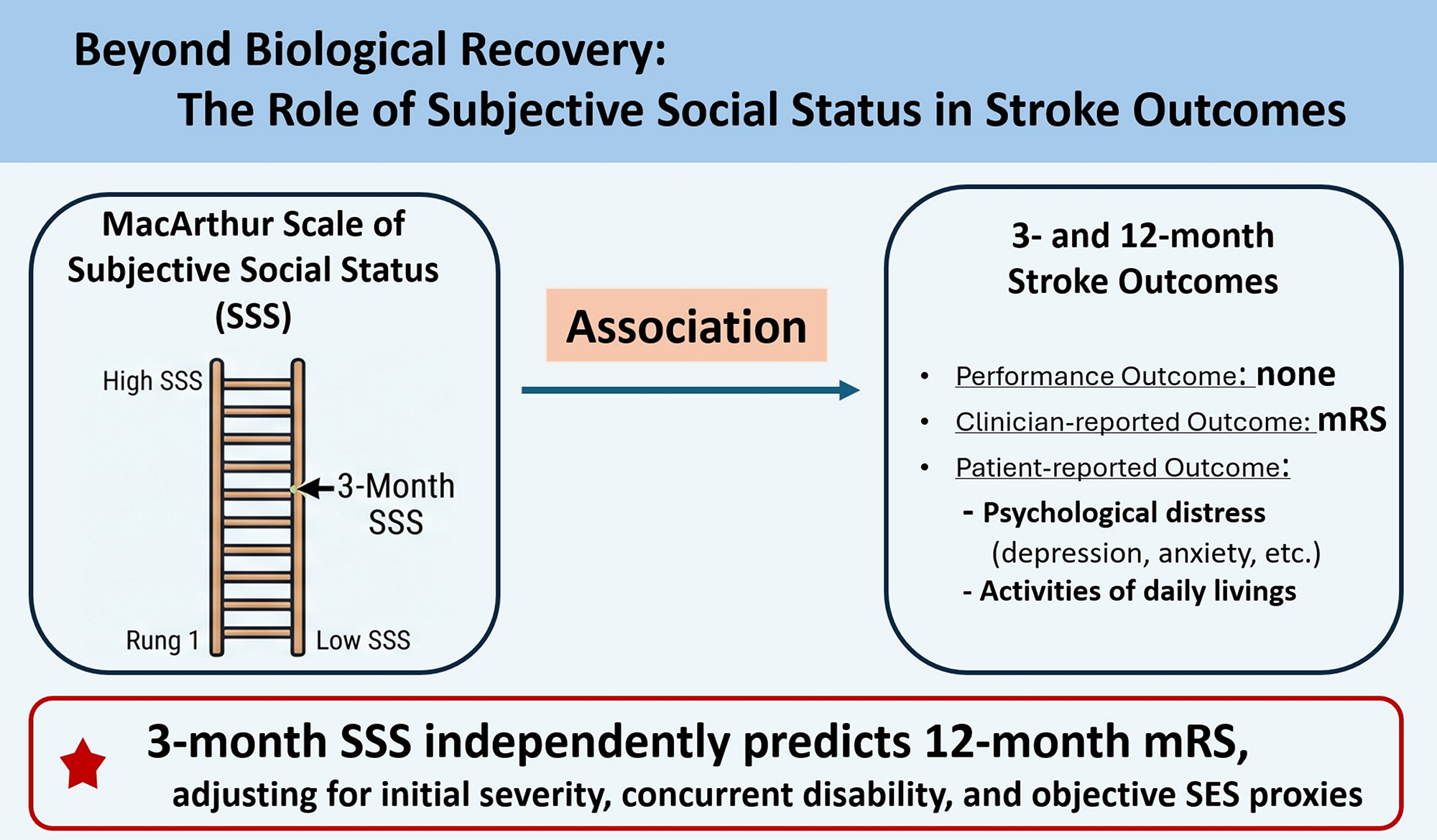
Subjective Social Status and Stroke Recovery: Insights from a Prospective Cohort Study

MedXY Editorial TeamOct 14, 2026
functional outcomespsychological distressstroke recoverysubjective social status

Introduction

Stroke remains a leading cause of long-term disability globally, with recovery influenced by a complex interplay of biological, medical, psychological, and social factors. While objective socioeconomic measures like income and education have been widely studied in relation to stroke outcomes, subjective social status (SSS)—how individuals perceive their own social standing—has received comparatively little attention in stroke research despite evidence suggesting its importance in broader health contexts.

Subjective social status reflects an individual’s internal perception of their relative social position within their community or society. Unlike traditional objective socioeconomic status (SES) metrics, which quantify measurable aspects such as educational attainment or employment status, SSS captures the nuanced sense of social rank, encompassing social respect, life opportunities, and perceived social standing. This personal perspective can influence health outcomes through psychosocial pathways including stress, mental health, health behaviors, and access to social support.
MedXY registered readers

Sign in free to continue reading

Create or use your MedXY account to unlock the complete article.

This article was created using several editorial tools, including AI, as part of the process. Human editors reviewed this content before publication.

Related articles

Unraveling SPDMLS: Gain-of-Function PLAAT4 Variants in Spinal Predominant Demyelinating Leukodystrophy

NeurologyNov 4, 2026

Exercise as a Cognitive Buffer in Midlife Women: Insights into Domain-Specific Effects and Modality Differences

NeurologyNov 3, 2026

Empowering Safer Mobility Behaviors to Prevent Falls in Parkinson’s Disease: Insights from Clinicians and Researchers

NeurologyNov 3, 2026
Loading comments...

Most read

  1. 01Intimate Health

    Five Benefits for Women Continuing Sexual Activity After Menopause

  2. 02Intimate Health

    Why Some Women Have a Strong Sex Drive—And Why Men Shouldn't Worry About It

  3. 03Nursing & care

    How often should a couple have sex?

  4. 04Cardiology

    Precision Medicine for Long QT Syndrome Type 2: Lumacaftor Corrects Trafficking Defects and Shortens QT Interval

  5. 05General Surgery

    Optimizing Postoperative Opioid Prescriptions After Intra-Abdominal Cancer Surgery: Comparing the 5x-Multiplier and 3-Tier Models

Go deeper with MedXY AI

Explore the evidence behind the news.

Ask AI
MedXY briefing

Stay informed

Medical news and research updates, delivered to your inbox.

© 2026 MedXY
Contact usAbout usPrivacy PolicyMedXY story