Highlight
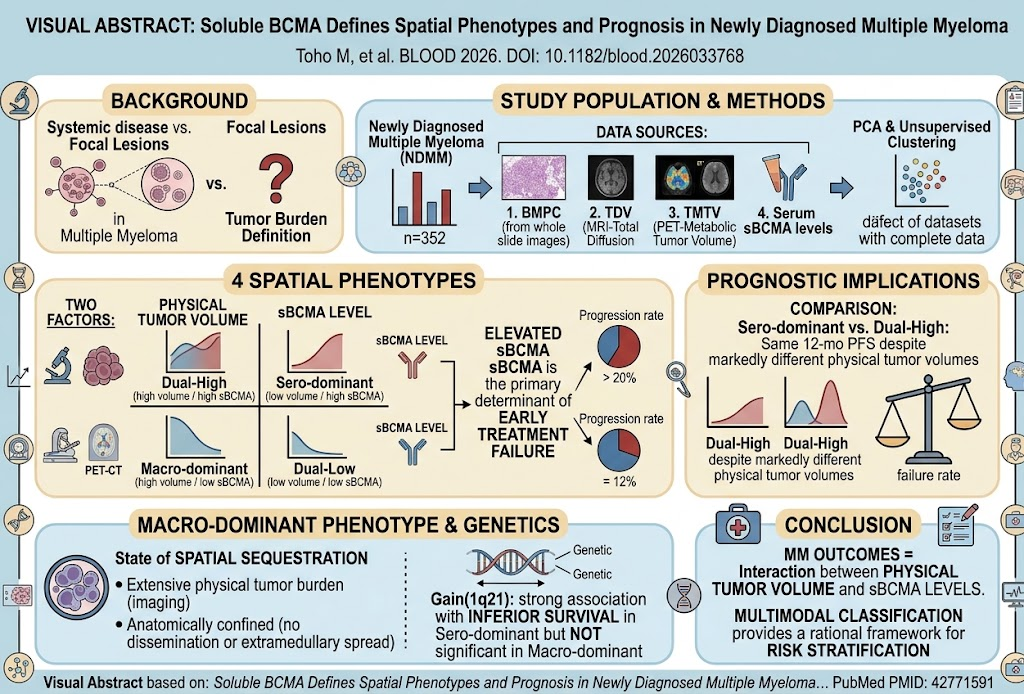
This study demonstrates that soluble B-cell maturation antigen (sBCMA) levels are a robust prognostic biomarker in newly diagnosed multiple myeloma (MM), outperforming conventional imaging assessments of tumor volume. Four distinct disease phenotypes defined by combinations of tumor volume and sBCMA levels reveal insights into disease biology, spatial tumor characteristics, and clinical outcomes.
Importantly, elevated sBCMA levels independently predict early treatment failure and poor progression-free survival (PFS), even in patients with low tumor volume. This underscores sBCMA as a vital biomarker for risk stratification beyond imaging modalities.