Introduction and Context
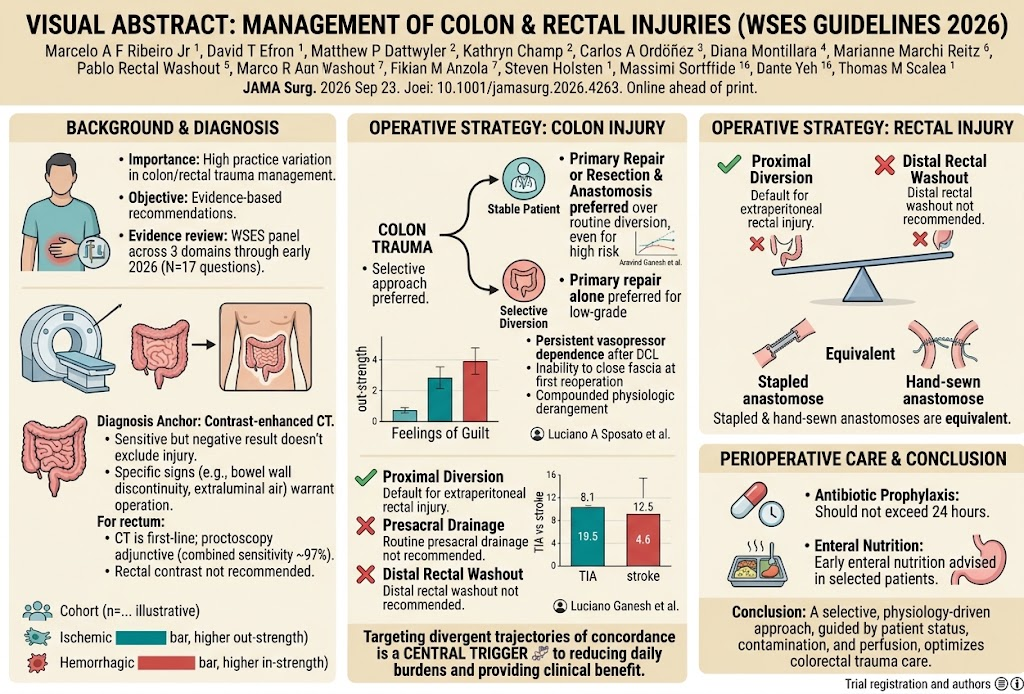
Traumatic injuries of the colon and rectum—whether from penetrating wounds (gunshots, stabbings) or blunt mechanisms (motor vehicle collisions, crush injuries)—present acute management challenges and historically have yielded wide variation in surgical practice. For decades, fecal diversion (colostomy) was commonly performed to avoid septic complications. Over recent decades, however, growing observational evidence and evolving surgical practice have shifted toward selective primary repair and anastomosis when patient physiology permits.
In September 2026 the World Society of Emergency Surgery (WSES) published an international, evidence-based consensus statement titled “Management of Colon and Rectal Injuries From Blunt and Penetrating Trauma.” The working panel prioritized 17 clinical questions across three domains—colon, rectum, and operative/ perioperative technical considerations—and used structured literature review, PRISMA reporting, and GRADE methodology to formulate recommendations (Ribeiro et al., JAMA Surgery, 2026). This consensus is notable for its explicit, physiology-driven approach: decisions are guided primarily by patient physiology, contamination, perfusion, and the ability to achieve fascial closure—not simply by the injured organ or single historical risk factors.