Highlights
Primary ACL reconstruction enables return to football competition in over half of athletes, with rates strongly influenced by pre-injury competitive level.
Long-term career sustainability post-RTC varies widely; top-level players sustain longer participation and accumulate more matches compared to lower-level peers.
Sex and age impact career longevity, with men and younger players generally maintaining longer post-ACLR football careers.
Neuromuscular deficits and psychological factors such as kinesiophobia coexist despite physical recovery, underscoring the need for integrative rehabilitation approaches.
Background
Anterior cruciate ligament rupture is a prevalent injury particularly in pivoting sports such as football, often requiring surgical reconstruction. While return to competition (RTC) after ACL reconstruction (ACLR) has received considerable attention, the extent to which athletes sustain their football careers over the long term following RTC remains inadequately described. Understanding career sustainability post-ACLR is critical for managing athlete expectations and optimizing rehabilitation and return-to-sport strategies.
Key Content
Nationwide Cohort Evidence on RTC and Career Sustainability
The recent decade-spanning study by Sandon et al. leveraging the Swedish Knee Ligament Registry and football match data (2026) represents a landmark large-scale investigation of RTC and career sustainability after primary ACLR in football players. In a cohort of 10,836 players, 58.5% achieved RTC, defined as participation in at least one official match post-surgery. RTC rates demonstrated a striking gradient across pre-injury competitive levels: 90.4% among top-level players versus only 35.9% at recreational levels (p < 0.001). These findings highlight that return likelihood is heavily modulated by baseline competition intensity.
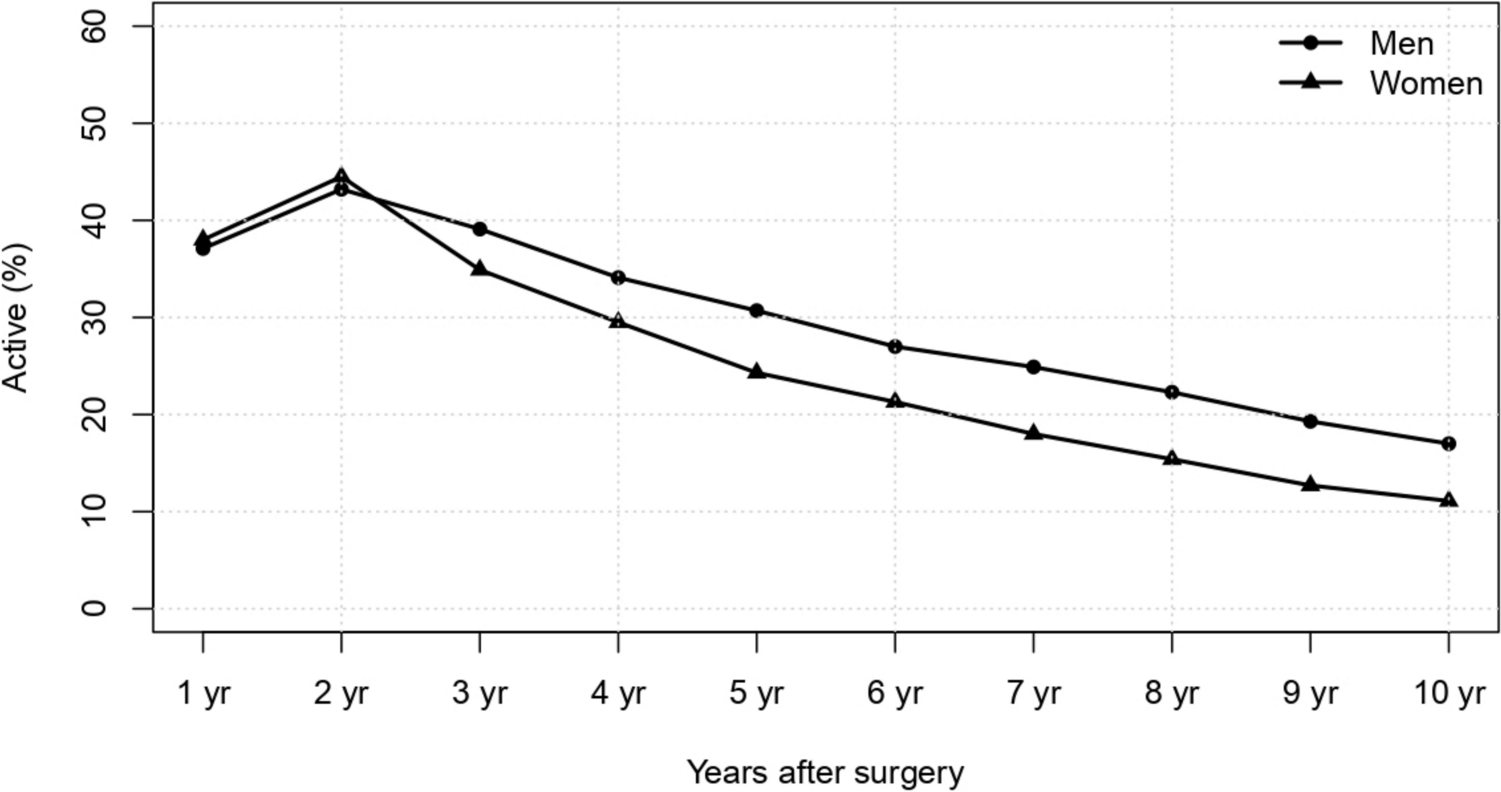
Career sustainability, quantified through post-RTC matches played and number of active seasons, was further evaluated in 4,749 players with at least three seasons of follow-up. The median number of matches played after return was 31 over a median of three seasons. Men tended to accumulate more matches (33 vs 29, p=0.017) and sustain activity for more seasons (four vs three, p<0.001) than women. Most notably, players at the top level showed robust career longevity with a median of 97 matches over five seasons, signaling significant retention in competitive football. Conversely, lower-level players had limited post-RTC participation (p<0.001).
Age effects were significant among men but not women, suggesting demographic and perhaps social factors interplay with physical recovery in determining sustained participation.
Neuromuscular and Psychological Factors Influencing Return to Sport
A retrospective cohort study by Sandon et al. (2026), analyzing isokinetic strength and psychological parameters in male soccer players after ACLR, revealed persistent quadriceps strength deficits on the operated limb at six months despite overall strength gains. These deficits correlated weakly with heightened kinesiophobia measured years later, implicating persistent neuromuscular inhibition and psychological barriers in return to competitive sport. The coexistence of physical deficits and high levels of fear despite a 91.7% RTS rate substantiates the multifactorial nature of return decisions.
Long-term Functional Outcomes and Graft Integrity
Data from long-term analyses (Thompson et al., 2021) underscore that slight residual laxity early post-ACLR (3 to 5 mm side-to-side anterior translation difference) increases risk of graft failure and shortens sports career duration dramatically (median 2 years vs 6 years in those with tight grafts; p=0.01). Furthermore, loose grafts were associated with higher revision rates, persistent laxity, and worse subjective knee scores over a 25-year follow-up, directly impacting long-term career sustainability.
Return to Play and Complications in Pivoting Sports
Earlier landmark cohort research by Lind et al. (2019) provides valuable context on the challenges associated with return to pivoting sports post-ACLR and long-term participation. While 83% returned to pivoting sports such as football, only 53% resumed their pre-injury sport level. Males enjoyed significantly longer sports careers than females (median 10 vs 4 years, p<0.001). Importantly, reinjury rates were substantial, including 28% contralateral ACL injuries in those returning to sport, indicating a persistent vulnerability that may curtail long-term participation.
Expert Commentary
The evidence collectively highlights that while primary ACLR substantially facilitates RTC—especially among higher-level players—it does not uniformly translate into sustained long-term career participation. The large nationwide study by Sandon et al. uniquely quantifies career sustainability using objective match participation metrics, revealing significant attrition post-return particularly among recreational players and women.
Neuromuscular impairments, such as persistent quadriceps strength asymmetry, may contribute to functional limitations and fear of reinjury, complicating return to preinjury performance levels. Psychological factors, notably kinesiophobia, remain prevalent long term, emphasizing the critical need for holistic biopsychosocial rehabilitation models.
Residual graft laxity is a potent determinant of graft failure and shorter career span, implying that surgical technique and early postoperative stability are pivotal for durable outcomes. This aligns with the mechanistic understanding that stable knee biomechanics are essential for safe participation in demanding pivoting sports.
Sex and age disparities in career sustainability warrant targeted strategies. Women demonstrate lower post-RTC match accumulation, which may be influenced by physiological, psychosocial, and support system differences. Age-related effects principally seen in men suggest that younger athletes might receive enhanced rehabilitation or possess greater physical resilience.
From a clinical perspective, reliance solely on RTC rates overestimates true sports reintegration success. Metrics encompassing longevity and volume of sport participation provide a more comprehensive evaluation of ACLR outcomes. Importantly, the risk of contralateral injuries and graft failures must be integrated into post-ACLR counseling and follow-up protocols.
The integration of updated clinical guidelines should emphasize individualized patient evaluation encompassing physical, psychological, and social factors. Rehabilitation regimens focused on restoring limb symmetry, neuromuscular control, and psychological readiness are essential for optimizing sustainable return.
Conclusion
Primary ACL reconstruction facilitates a high rate of return to competition in football players, particularly at the elite level. However, long-term participation post-return is variable and often limited, particularly among women and lower-level players. Neuromuscular deficiencies, psychological fear, and graft laxity critically influence career sustainability. Comprehensive rehabilitation programs addressing these multidimensional factors and rigorous longitudinal follow-up are imperative for improving long-term sport participation outcomes and athlete well-being after ACLR.
References
Sandon A, von Essen C, Farooq A, Forssblad M. Return to Competition and Career Sustainability After Primary ACL Reconstruction in Football: A Nationwide Cohort Study of Long-Term Participation. Sports Med. 2026 Oct 13. PMID: 42867625. https://pubmed.ncbi.nlm.nih.gov/42867625/
Sandon A, von Essen C, Carlson H, et al. Isokinetic Strength Recovery and Fear of Re-Injury After ACL Reconstruction in Male Soccer Players: A Retrospective Cohort Study. J Clin Med. 2026 Feb 4;15(3):1243. PMID: 41682922. https://pubmed.ncbi.nlm.nih.gov/41682922/
Thompson SM, Sundemo D, Alfredson H, et al. Effect of Early Residual Laxity After Anterior Cruciate Ligament Reconstruction on Long-term Laxity, Graft Failure, Return to Sports, and Subjective Outcome at 25 Years. Am J Sports Med. 2021 Apr;49(5):1227-1235. PMID: 33656379. https://pubmed.ncbi.nlm.nih.gov/33656379/
Lind M, Menhert F, Pedersen AB. Return to Play and Long-term Participation in Pivoting Sports After Anterior Cruciate Ligament Reconstruction. Am J Sports Med. 2019 Dec;47(14):3339-3346. PMID: 31633994. https://pubmed.ncbi.nlm.nih.gov/31633994/