Highlight
Advanced systemic mastocytosis (AdvSM) is predominantly driven by the KIT D816V mutation, making KIT inhibitors key therapeutic agents. This study demonstrates that genetic mutation burden and dynamic laboratory parameters during treatment with midostaurin or avapritinib robustly predict overall survival (OS). Early reduction in KIT D816V allele frequency and specific biochemical changes are linked to improved outcomes, enabling refined patient risk stratification and treatment optimization.
Study Background
AdvSM is a rare hematologic neoplasm characterized by pathological clonal proliferation of mast cells, with the vast majority (~95%) harboring the activating KIT D816V mutation. This mutation promotes uncontrolled mast cell growth and infiltration into various organs, resulting in systemic symptoms and organ dysfunction. Historically, AdvSM carries a poor prognosis, and therapeutic options have been limited. The advent of targeted KIT inhibitors, notably midostaurin and avapritinib, has improved response rates. However, predicting which patients will benefit most or have longer survival remains challenging. Understanding biological and laboratory predictors before and during therapy would assist clinicians in risk stratification and treatment individualization.
Study Design
This retrospective study analyzed 255 patients with AdvSM treated with either midostaurin (79 patients) or avapritinib (176 patients). Patients underwent baseline clinical, morphological, laboratory, and genetic assessment. Targeted sequencing profiled mutations in relevant genes including SRSF2, ASXL1, EZH2, RUNX1, and SETBP1, known to influence disease behavior. Dynamic monitoring of KIT D816V allele frequency was performed in peripheral blood. Additional laboratory parameters such as alkaline phosphatase (AP), serum albumin, hemoglobin, and platelet counts were tracked up to six months following therapy initiation. The investigators aimed to identify genetic and biochemical predictors for overall survival (OS) and clinical response.
Key Findings
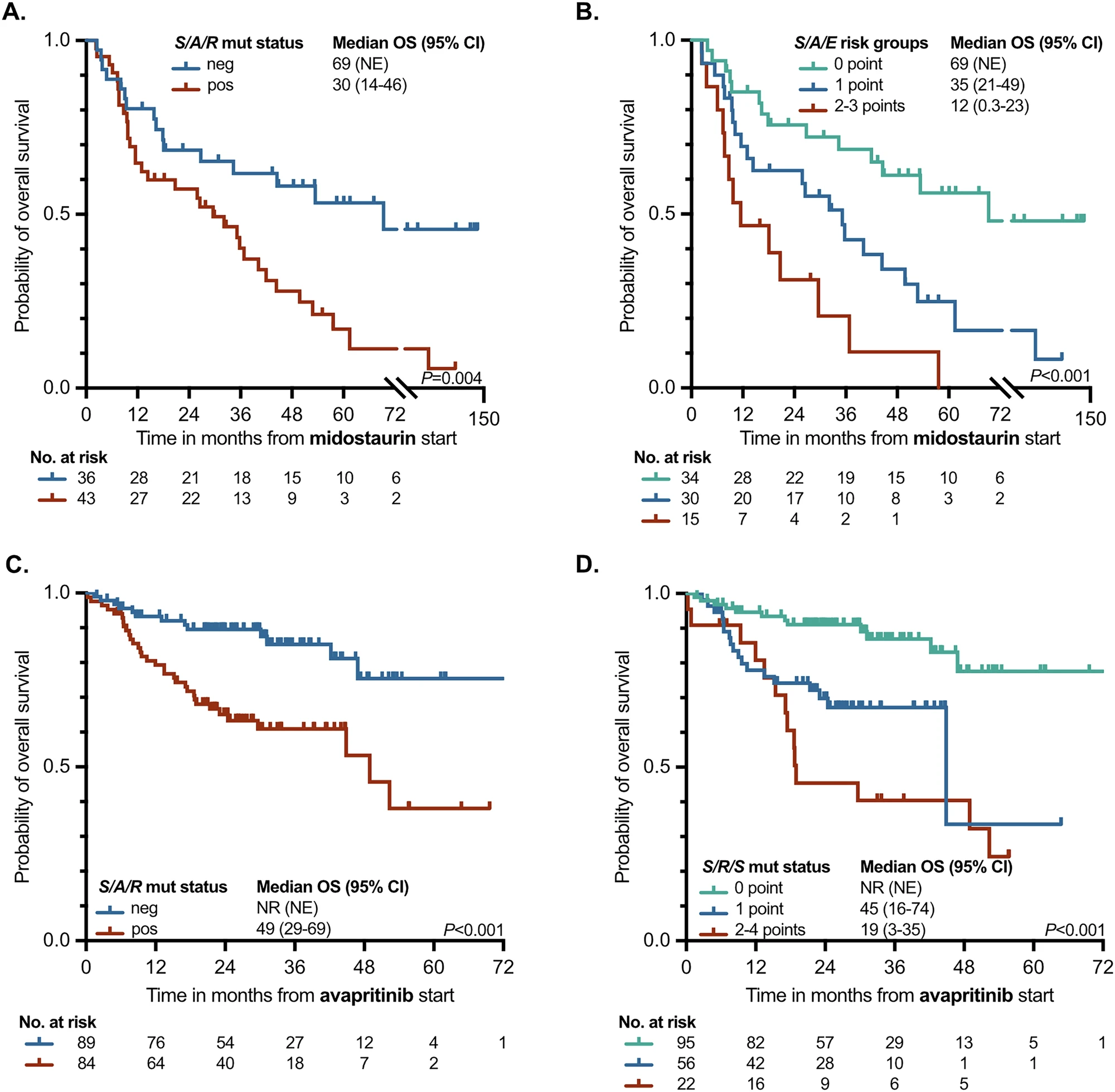
Genetic Risk Stratification: Distinct 3-tier risk classification systems incorporating mutation counts effectively predicted OS. For midostaurin-treated patients, mutations in SRSF2, ASXL1, and EZH2 were evaluated; whereas for avapritinib-treated patients, mutational status in SRSF2, RUNX1, and SETBP1 defined risk groups. Higher mutation counts correlated with poorer prognosis.
KIT D816V Allele Burden Dynamics: Avapritinib treatment was associated with a rapid and early decrease in the KIT D816V allele frequency. A reduction of ≥10% in peripheral blood allele burden by day 15 predicted improved OS, underscoring the importance of early molecular response in forecasting outcomes. Midostaurin-treated patients showed significant survival benefit with a ≥25% reduction in allele burden within 6 months.
Laboratory Markers and Clinical Correlates: Approximately 46–47% of patients treated with either midostaurin or avapritinib experienced an alkaline phosphatase (AP) flare—defined as a ≥25% increase in AP levels within three months of therapy start. This AP flare was paradoxically associated with prolonged OS, possibly reflecting an effective tumor lysis or immune response.
Additional Predictors: Normalization of serum albumin levels during avapritinib treatment and normalization of hemoglobin and platelet counts within six months of treatment were independently associated with better survival outcomes in multivariable models. These parameters reflect improvement in systemic disease burden and bone marrow function.
Clinical Outcomes: The combined predictive model employing baseline genetic profiling and serial monitoring of KIT mutation burden and laboratory parameters substantially enhances prognostication for patients with AdvSM on either midostaurin or avapritinib therapy.
Expert Commentary
These findings align with emerging evidence that integrating molecular genetics with dynamic disease monitoring can personalize treatment selection and evaluation. The 3-tier mutation-based risk classification offers a practical framework to identify patients at high risk for poor outcomes, guiding intensity of monitoring or consideration toward alternative or combination therapies. The early reduction in KIT D816V allele frequency, especially with avapritinib, suggests that swift molecular responses translate into survival benefits. The observed alkaline phosphatase flare phenomenon merits further investigation to clarify underlying biological mechanisms, which might inform biomarkers of response or novel therapeutic targets.
Nonetheless, limitations of the study include its retrospective design, heterogeneous patient population, and potential selection biases. Prospective validation in larger cohorts and incorporation of additional emerging biomarkers such as serum tryptase levels could further refine prognostic models. The role of minimal residual disease monitoring and integration with clinical symptom scoring remains a promising area for future research.
Conclusion
This comprehensive analysis confirms that genetic profiling combined with dynamic laboratory and molecular assessments provides powerful tools to predict clinical course and survival in AdvSM patients treated with KIT inhibitors. Early molecular response and selected laboratory markers serve as surrogates for treatment efficacy. Clinicians should incorporate these parameters to inform prognosis and tailor therapy, ultimately improving patient outcomes. Prospective studies are warranted to validate and expand these findings to other therapeutic contexts.
Funding and ClinicalTrials.gov
The original study was conducted by researchers including Lübke J, Gotlib J, DeAngelo DJ, and colleagues and was published in Leukemia in 2026. Specific funding sources and trial registration details were not provided in the summary and should be sought from the primary publication.
References
1. Lübke J, Gotlib J, DeAngelo DJ, et al. Predicting the clinical course of advanced systemic mastocytosis on treatment with avapritinib or midostaurin. Leukemia. 2026 Oct 9. PMID: 42855470.