Study Background
Physiotherapy is a key component of musculoskeletal care, traditionally accessed through physician referral in many healthcare systems, including Austria’s. Direct access, whereby patients consult physiotherapists without prior physician referral, has been shown internationally to improve timely management, reduce healthcare costs, and promote patient autonomy. However, in Austria, physiotherapy remains predominantly referral-based, with little legal framework supporting direct access. Exploring the perspectives of physiotherapists working in such a system can illuminate barriers and facilitators to direct access implementation, which remains an unmet need to optimize musculoskeletal healthcare delivery and patient outcomes.
Study Design
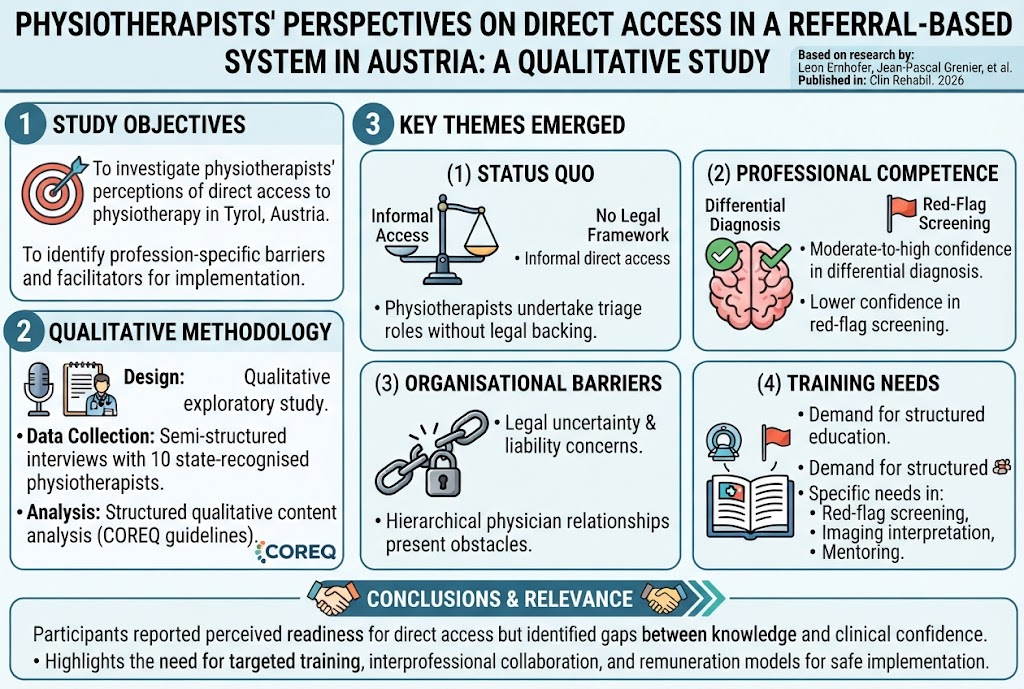
This qualitative exploratory study was conducted in Tyrol, Austria, targeting state-recognised physiotherapists in outpatient practices who manage musculoskeletal conditions. Ten practitioners (seven women, three men; mean age 30.9 years, SD 6.9), with professional experience ranging from 0.4 to 15 years across private, clinical, and rehabilitation settings, participated. Recruitment utilized purposive and snowball sampling to reflect diverse clinical backgrounds.
Researchers conducted semi-structured interviews to capture physiotherapists’ perceptions and experiences with direct access, including their perceived competencies, existing informal direct access practices, legal and organizational challenges, and training needs. Data were analyzed via structured qualitative content analysis, adhering to Consolidated Criteria for Reporting Qualitative Research (COREQ) standards to ensure methodological rigor.
Key Findings
Four interrelated themes emerged:
1. Status Quo of Informal Direct Access
Physiotherapists reported that informal direct access already occurs in practice despite lacking formal legal backing. They often act as first-contact providers, performing initial triage and management decisions without official referral pathways. However, this situation exists in a legal gray area that generates uncertainty.
2. Professional Competence and Confidence Levels
Participants expressed moderate to high confidence in differential diagnosis relating to musculoskeletal disorders but noted lower confidence in screening for red flags—serious conditions requiring referral. They recognized this gap as a critical limitation affecting patient safety in direct access settings.
3. Organizational Barriers
Several systemic obstacles were highlighted, including unclear legal responsibilities, concerns over professional liability, and traditionally hierarchical physician-physiotherapist relationships that limit autonomy and recognition. These factors contribute to resistance toward formalizing direct access pathways.
4. Training Needs
There was strong consensus on the need for enhanced, structured education focusing on red-flag screening, imaging interpretation, and ongoing mentoring programs. Participants viewed such training as essential to build clinical confidence and safely assume expanded roles.
Expert Commentary
The findings align with international experiences where transitional strategies emphasize competency-based education and interprofessional collaboration to implement direct access safely. Studies in countries with established direct access show improved patient satisfaction and healthcare efficiency, but also stress the importance of legal clarity and professional liability frameworks.
In Austria’s context, these results provide a roadmap for policy makers to consider staged reforms that strengthen physiotherapists’ diagnostic acumen and interpersonal dynamics with physicians. While clinicians demonstrate readiness, the gap between knowledge and practical confidence underscores the need for targeted upskilling.
Conclusion
This qualitative study of physiotherapists in Tyrol, Austria, reveals a complex interplay of informal direct access practice, professional competence, and organizational challenges within a predominantly referral-based health system. While physiotherapists show willingness and partial readiness to adopt direct access models, legal uncertainty, professional dynamics, and educational gaps remain critical barriers.
Addressing these issues through structured training programs, clear legislative frameworks, and fostering interprofessional cooperation may facilitate safe, equitable, and effective implementation of direct access in Austrian physiotherapy services. These steps promise to enhance patient-centered care in musculoskeletal health and serve as an evidence base for broader healthcare reforms.
References
Ernhofer L, Grenier JP. Physiotherapists' perspectives on direct access in a referral-based system in Austria - A qualitative study. Clin Rehabil. 2026 Oct 10:2692155261493268. doi: 10.1177/02692155261493268. Epub ahead of print. PMID: 42858051.