A fresh outbreak of mpox has surfaced in Guinea-Bissau—the country's first recorded cases—bringing the viral infection back into the global spotlight. Since 2022, nearly 190,000 laboratory-confirmed cases have been recorded across 145 countries, underscoring how a pathogen once largely confined to specific endemic areas in Africa continues to challenge international public health boundaries.
Outbreak Update: Disproportionate Burden on Children
In this latest outbreak, the United Nations Children’s Fund (Unicef) reported that out of 46 suspected cases, half (23 cases) were children under the age of 15, with the vast majority under four years old.
Medical specialists emphasize that young children face a significantly higher risk of severe disease and death from mpox compared to healthy adults. Epidemiologists and clinical experts point out that close daily physical contact among children and their parents, often exacerbated by crowded living conditions, provides an ideal pathway for transmission. In resource-limited settings with fragile healthcare infrastructure, data may also reflect health-seeking behaviors, as families frequently prioritize medical care for ill children. Crucially, the confirmed cases in Guinea-Bissau show no documented links to one another, pointing to undetected chains of community transmission.
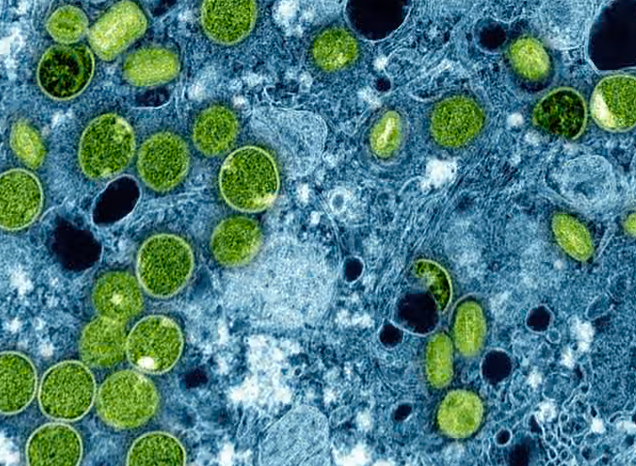
A colourised electron microscope image shows Mpox virus particles
How to Prevent Mpox Infection
Mpox spreads predominantly through close, personal, skin-to-skin contact (including sexual contact, hugging, and kissing), direct exposure to contaminated materials (such as bedding, clothing, and towels), and prolonged face-to-face interaction via respiratory droplets. To curb individual risk and arrest transmission, public health guidelines emphasize four key measures:
Vaccination
Pre-Exposure Prophylaxis (PrEP): The World Health Organization (WHO) recommends a two-dose vaccination regimen for high-risk populations, including individuals with frequent potential exposure or active sexual networks where transmission is occurring.
Post-Exposure Prophylaxis (PEP): Individuals who have had direct, close contact with a confirmed or suspected case should receive a vaccine dose as early as possible (ideally within four days of exposure) to prevent disease onset or reduce symptom severity.
Minimizing Crowded and Unprotected Physical Contact
Limit unprotected physical contact in crowded, poorly ventilated environments where close skin contact cannot be avoided.
Avoid sexual contact, kissing, or sharing sleeping quarters with individuals showing unexplained skin lesions, blisters, rashes, or systemic flu-like symptoms.
Maintain physical distance and adhere to local public health advisories during active community outbreaks.
Rigorous Hygiene and Environmental Sanitation
Practice frequent hand hygiene using soap and running water, or apply alcohol-based hand rub when soap is unavailable.
Avoid sharing personal items such as bedding, towels, clothing, and eating utensils.
Thoroughly clean and disinfect surfaces, linens, and objects handled by anyone suspected of carrying the virus.
Avoiding Contact with Wildlife
In regions where the virus is endemic, avoid direct handling of wild animals—particularly rodents and non-human primates.
Ensure all meat products are cooked thoroughly, and avoid handling or consuming bushmeat.
Treatment Realities and Global Distribution Hurdles
Therapeutic options remain limited: clinical trials examining the antiviral drug tecovirimat against Clade I mpox showed no statistically significant efficacy over a placebo, though comprehensive, supportive clinical care markedly reduces mortality rates.
A central obstacle in stopping the virus remains equitable resource distribution. While high-income nations maintain adequate vaccine reserves, the low-income regions facing the highest transmission pressures continue to experience acute shortages. Health agencies are establishing expanded emergency stockpiles to accelerate vaccine deployment to newly affected zones. Global experts reiterate that vaccines cannot work in isolation; robust community surveillance, prompt diagnostic testing, contact tracing, and patient isolation remain fundamental to halting the spread.