Melatonin’s Impact on Glucose Metabolism: Risk Amplified by MTNR1B Diabetes Variant
Highlight
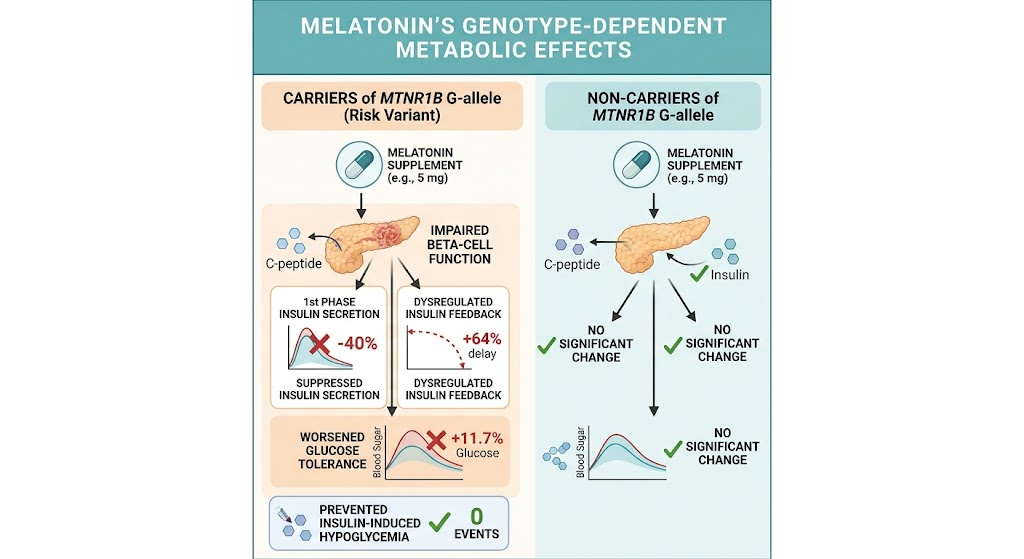
This randomized crossover study reveals that 5 mg oral melatonin impairs glucose tolerance and disrupts insulin dynamics in healthy individuals carrying the MTNR1B G-allele diabetes risk variant. Key findings include a 40% suppression of glucose-stimulated first-phase beta-cell responsivity and dysregulated insulin negative feedback, leading to reduced early C-peptide responses and impaired glucose tolerance exclusively in risk carriers. Melatonin also prevented insulin-induced hypoglycemia in these individuals, highlighting critical genotype-dependent metabolic effects.
Study Background
Melatonin, a hormone regulating circadian rhythm, has experienced a substantial increase in use over recent decades as a sleep aid. However, emerging genetic evidence links variants in the melatonin receptor 1B gene (MTNR1B), particularly the G-allele, with an increased risk of type 2 diabetes. This association raises concerns about potential adverse effects of melatonin supplementation on glucose metabolism. Understanding melatonin’s impact on beta-cell function, insulin secretion phases, and peripheral insulin sensitivity, especially in genetically predisposed individuals, is clinically important for personalized medicine approaches to diabetes prevention and management.
Study Design
The study enrolled 21 healthy European-ancestry adults, stratified into 10 carriers of the MTNR1B G-allele diabetes risk variant and 11 noncarriers. It utilized a randomized, double-blind, placebo-controlled, crossover design. Each participant underwent two 5-day laboratory protocols in random order separated by washout periods. Participants received either 5 mg oral melatonin or placebo. Glucose and insulin dynamics were extensively evaluated using insulin-modified intravenous glucose tolerance tests coupled with minimal-model analyses to quantify beta-cell responsivity in both first and second phases and insulin sensitivity. The study also assessed beta-cell negative feedback by exogenous insulin and monitored hypoglycemia incidence during insulin administration.
Key Findings
Glucose Tolerance and Beta-Cell Responsivity
Melatonin administration significantly worsened glucose tolerance in MTNR1B G-allele carriers, evidenced by an 11.7% increase in glucose levels (95% CI 1.0–22.3%, Padj < 0.05) compared to placebo. This decline in tolerance was not observed in noncarriers. Early C-peptide responses, reflecting insulin secretion, were diminished by 19.2% (95% CI −33.9 to −1.2%, Padj < 0.05) in carriers under melatonin.
First-Phase Insulin Secretion Impairment
In carriers, a marked 40% reduction (95% CI −52.4 to −24.3%, Padj = 0.0003) was found in glucose-stimulated first-phase beta-cell responsivity—a critical period of insulin secretion immediately following glucose exposure responsible for rapid glucose clearance.
Dysregulated Insulin Feedback and Second-Phase Secretion
Melatonin also delayed insulin-induced negative feedback on the second-phase insulin secretion rate by 64.3% (95% CI 23.1–119.2%, Padj = 0.001) in carriers, indicating altered beta-cell responsiveness to circulating insulin levels and impaired regulatory control.
Hypoglycemia Prevention in Risk Carriers
Notably, melatonin prevented exogenous insulin-induced hypoglycemia events in carriers (0 events with melatonin vs. 7 with placebo, P = 0.001), which may be linked mechanistically to impaired insulin feedback inhibition and altered glucose homeostasis.
Noncarriers Showed No Significant Metabolic Disturbances
Across all analyses, noncarriers did not exhibit significant changes in glucose tolerance, insulin secretion phases, or feedback regulation under melatonin versus placebo, underscoring the genotype-dependent nature of melatonin’s effects.
Expert Commentary
This study elucidates key pathophysiological mechanisms by which melatonin signaling impacts glucose metabolism in the context of a well-established diabetes risk allele. The pronounced suppression of first-phase insulin secretion and altered insulin feedback inhibition offer mechanistic insight into why MTNR1B variant carriers are predisposed to dysglycemia under melatonin influence.
These findings advocate for cautious use of melatonin supplements in individuals genetically susceptible to type 2 diabetes. Personalized approaches integrating genetic screening for MTNR1B variants may be critical for safe melatonin utilization and diabetes risk mitigation.
Although the crossover design and rigorous metabolic phenotyping strengthen the conclusions, generalizability may be limited by the healthy, European-ancestry sample and relatively small cohort size. Future studies should address diverse populations, chronic melatonin exposure, and long-term diabetes outcomes.
Conclusion
In summary, melatonin impairs glucose tolerance primarily through blunted first-phase insulin secretion and disrupted insulin negative feedback in MTNR1B diabetes risk variant carriers. This genotype-dependent effect calls for precision medicine strategies in melatonin use and a deeper understanding of circadian hormone influences on metabolic disease.
Funding and Clinical Trials Registration
Details regarding funding sources and clinical trial registration were not provided within the primary article.
References
Qian J, Stefanovski D, Andersen PAK, et al. Melatonin Impairs Glucose Tolerance, First-Phase Insulin Secretion, and Insulin Feedback Inhibition; Interaction With MTNR1B Diabetes Risk Variant. Diabetes Care. 2026;49(8):1498-1506. PMID: 42346809. https://pubmed.ncbi.nlm.nih.gov/42346809/
This article was created using several editorial tools, including AI, as part of the process. Human editors reviewed this content before publication.