We use cookies

Our website uses essential cookies and, with your consent, additional cookies to measure performance and improve our services. Cookie Policy.

You can change your choice at any time.

MMedXYNews
HomeVideos
MedXY AI/MedXY News/Section: Infectious Diseases

Long-Term Healthcare Utilization After COVID-19: Varied Patterns Based on Initial Infection Severity
MedXY Editorial Team•Sep 1, 2026•Infectious Diseases
hospitalizationlong-term outcomeshealthcare utilizationCOVID-19

Highlight

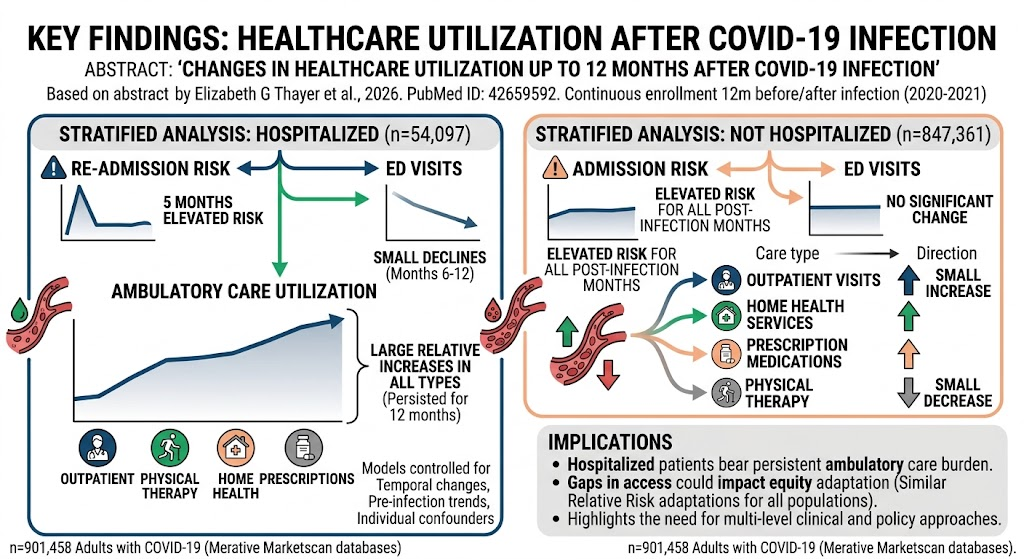
– COVID-19 infection leads to sustained increases in healthcare utilization up to 12 months post-infection, with marked differences based on initial disease severity.
– Hospitalized COVID-19 patients experienced elevated hospital readmissions for five months, significant increases in outpatient and ancillary care, and decreased emergency department visits after six months.
– Non-hospitalized patients exhibited modest increases in hospital admissions and outpatient care, small rises in home health use and prescriptions, with stable emergency department use and slight declines in physical therapy.
– These findings underscore the importance of tailored, long-term care strategies to meet diverse healthcare needs of COVID-19 survivors.

Study Background

MedXY registered readers

Sign in free to continue reading

Create or use your MedXY account to unlock the complete article.

This article was created using several editorial tools, including AI, as part of the process. Human editors reviewed this content before publication.

Related articles

Open language-specific specialty feeds and department pages.

Hospitalization Burden and Outcomes in Congenital Adrenal Hyperplasia Across the Lifespan: Insights from a Swiss Population-Based Cohort StudyThis study reveals that individuals with Congenital Adrenal Hyperplasia (CAH) experience early, frequent, and complex hospitalizations with higher risk of severe outcomes, especially in infancy, compared to non-CAH patients, emphasizing theSep 12, 2026Long-Term Benefits of Quantitative Flow Ratio-Guided PCI: Insights from the 5-Year FAVOR III China TrialThe FAVOR III China trial demonstrates that QFR-guided percutaneous coronary intervention significantly reduces major adverse cardiac events over 5 years, mainly by decreasing myocardial infarction and ischemia-driven revascularization compSep 11, 2026Long-Term Comparative Outcomes of Bilateral versus Single Internal Thoracic Artery Grafts in Coronary Bypass SurgeryThis analysis of a randomized trial finds no survival benefit at 15 years for bilateral versus single internal thoracic artery grafting in coronary bypass surgery, highlighting the need for further trials to clarify the multiple arterial grSep 6, 2026
Loading comments...
MedXY briefing

Get the free newsletter

Evidence-led clinical news, trends, and analysis—delivered to your inbox.

Ask MedXY AI

Most popular

Intimate Health
Five Benefits for Women Continuing Sexual Activity After Menopause
Intimate Health
Why Some Women Have a Strong Sex Drive—And Why Men Shouldn't Worry About It
Nursing & care
How often should a couple have sex?
Intimate Health
Classic Intimacy Recommendations: How to Help Women Reach Orgasm and Enjoy Mutual Pleasure
Intimate Health
What Makes a Woman "Physiologically Addicted" Is Never Money, But These Two Relationship Qualities
© 2026 MedXY
Contact usAbout usPrivacy PolicyMedXY story
Charcot Neuro-Osteoarthropathy in Diabetes: High Risk of Hospitalization, Amputation, and Mortality Revealed by Regional Cohort Study
Charcot neuro-osteoarthropathy (CNO) in people with diabetes is linked to frequent emergency hospitalizations, substantial risk of limb amputation, and reduced survival, highlighting urgent need for intensified multidisciplinary care.
Sep 5, 2026
Gestational Diabetes Mellitus: Insights from 25 Years of Research on Early Risk, Prevention, and Long-Term OutcomesA 25-year synthesis of research on gestational diabetes mellitus revealing early metabolic alterations, prevention strategies, optimized treatments, and lifelong consequences for mothers and offspring.Sep 5, 2026
Receipt of Pharmacotherapy and Healthcare Utilization Among US Adults with Alcohol or Opioid Use Disorder: Insights from 2022-2023 National DataFew US adults with alcohol or opioid use disorder reported addiction pharmacotherapy use in 2022-2023. Pharmacotherapy receipt was linked to increased healthcare utilization, underscoring the need for early outpatient intervention strategieSep 3, 2026