Liver, Portal, and Systemic Thyroid Hormone Alterations in End-Stage MASH: Distinct Diagnostic and Prognostic Roles for T3/rT3 Ratio and T4
Highlights
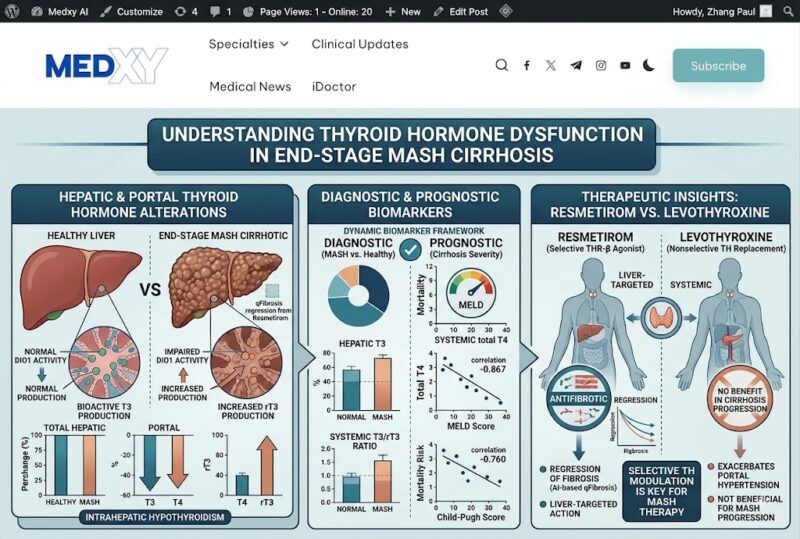
- End-stage MASH cirrhosis demonstrates markedly reduced hepatic and systemic T3 and T4 with elevated systemic reverse T3 (rT3), indicating impaired hepatic deiodinase activity and intrahepatic hypothyroidism.
- The hepatic T3 concentration and systemic T3/rT3 ratio robustly discriminate MASH from healthy liver, highlighting their complementary diagnostic value as functional biomarkers of thyroid hormone metabolism in MASH.
- Within established cirrhosis, systemic total T4 correlates inversely with established severity scores (MELD and Child-Pugh), positioning T4 as a potent biomarker for disease progression and prognosis.
- Therapeutic advances such as resmetirom, a selective thyroid hormone receptor β agonist, demonstrate antifibrotic efficacy in non-cirrhotic MASH; however, levothyroxine use in MASH shows no clear benefit in cirrhosis progression, suggesting the importance of selective TH modulation.
Background
MedXY registered readers
Sign in free to continue reading
Create or use your MedXY account to unlock the complete article.
This article was created using several editorial tools, including AI, as part of the process. Human editors reviewed this content before publication.