Intraoperative Bradycardia During Suspension Microlaryngeal Surgery: Incidence, Risk Factors, and Management of Vasovagal Events
Study Background and Clinical Context
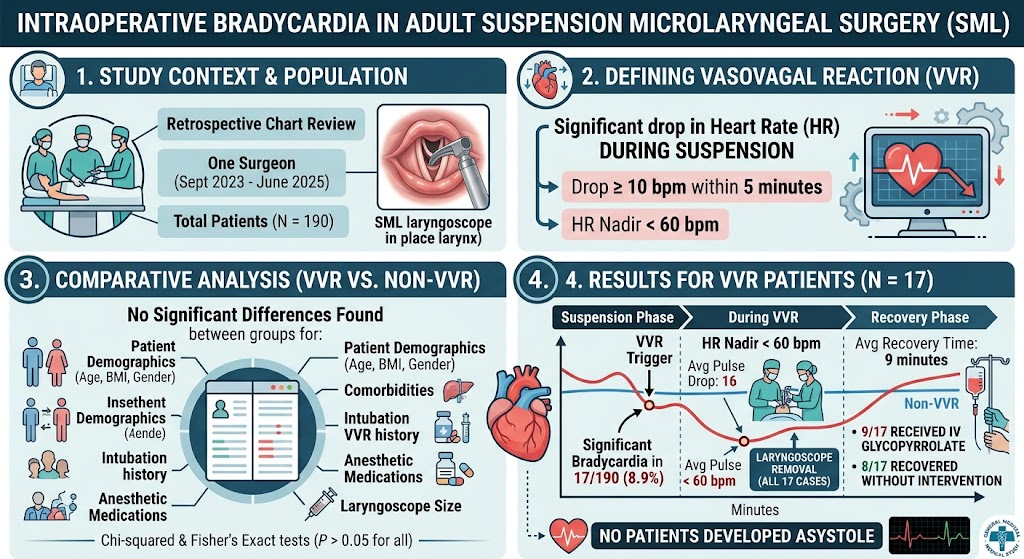
Suspension microlaryngoscopy (SML) is a commonly performed procedure in otolaryngology used to visualize and intervene in the larynx under general anesthesia. Despite its frequent use, intraoperative complications related to autonomic nervous system responses are not well characterized. Bradycardia during SML can be induced by vasovagal reflexes, potentially leading to significant morbidity if not promptly identified and managed. Understanding the incidence, risk factors, and effective treatment for vasovagal events (VVR) during SML is essential for improving patient safety and perioperative outcomes.
Study Design
Sign in free to continue reading
Create or use your MedXY account to unlock the complete article.
This article was created using several editorial tools, including AI, as part of the process. Human editors reviewed this content before publication.