Highlight
Inducible laryngeal obstruction (ILO) occurs in approximately 20% of patients with hypermobile Ehlers-Danlos syndrome (hEDS) and hypermobility spectrum disorders (HSD).
Patients with ILO experience significantly increased voice, cough, and swallowing difficulties compared to those without ILO.
Mast cell activation symptoms and gastroesophageal reflux disease (GERD) are more prevalent in hEDS and HSD patients with ILO.
Chronic cough, dysphagia, and elevated mast cell activation symptom burden independently predict the presence of ILO, informing multidisciplinary assessment strategies.
Study Background
Hypermobile Ehlers-Danlos syndrome (hEDS) and hypermobility spectrum disorders (HSD) are connective tissue disorders commonly characterized by joint hypermobility, chronic pain, and often multisystemic manifestations. Beyond musculoskeletal symptoms, significant otolaryngological manifestations may complicate disease burden, including voice alterations, swallowing difficulty (dysphagia), pathological cough, and gastroesophageal reflux disease (GERD). Inducible laryngeal obstruction (ILO) is a functional laryngeal disorder marked by inappropriate vocal cord closure during respiration, leading to airflow limitation, chronic cough, and voice symptoms. This is particularly relevant in hypermobile patients, whose connective tissue laxity may predispose to laryngeal dysfunction. Additionally, mast cell (MC) activation—a condition involving exaggerated immune cell mediator release—has been implicated in symptom complexity, possibly exacerbating airway and gastrointestinal symptoms in this population.
Given these overlapping features, the identification of clinical predictors for ILO among hypermobile patients is crucial for timely diagnosis and multidisciplinary management, aiming to reduce morbidity and improve quality of life. This study addresses the epidemiology and clinical associations of ILO in a large cohort of patients with hEDS and HSD, focusing on symptomatic burden and mast cell activation parameters.
Study Design
This retrospective cohort study analyzed 2,162 patients diagnosed with hEDS (n=507) or HSD (n=1,655) according to the 2017 diagnostic criteria. Patients were evaluated at the Mayo Clinic Florida EDS Clinic between November 2019 and June 2025. The study population was stratified based on results of ILO screening protocols into ILO-positive and ILO-negative groups.
Data collected included self-reported symptoms pertaining to voice, cough, swallowing, gastrointestinal issues—specifically gastroesophageal reflux disease (GERD)—and mast cell activation-related complaints. Mast cell activation was assessed via composite scores derived from an 18-item allergy-related symptom questionnaire designed to reflect systemic mast cell activity.
Primary endpoints included the prevalence of ILO in hEDS and HSD populations and associations between ILO status and the spectrum of reported symptoms. Secondary analyses involved logistic regression to identify independent predictors of ILO.
Key Findings
ILO prevalence was 23.1% in the hEDS group and 17.1% in the HSD group, underscoring a substantial burden in hypermobile populations.
Patients screening positive for ILO showed significantly increased prevalence of voice issues, chronic cough, and swallowing problems compared to ILO-negative counterparts (all p ≤ 0.007). Both hEDS and HSD patients with ILO also had a significantly higher incidence of GERD (hEDS: 55.6% vs. 40.9%, p=0.004; HSD: 55.8% vs. 42.2%, p<0.0001), indicating a notable overlap between airway and upper gastrointestinal dysfunction.
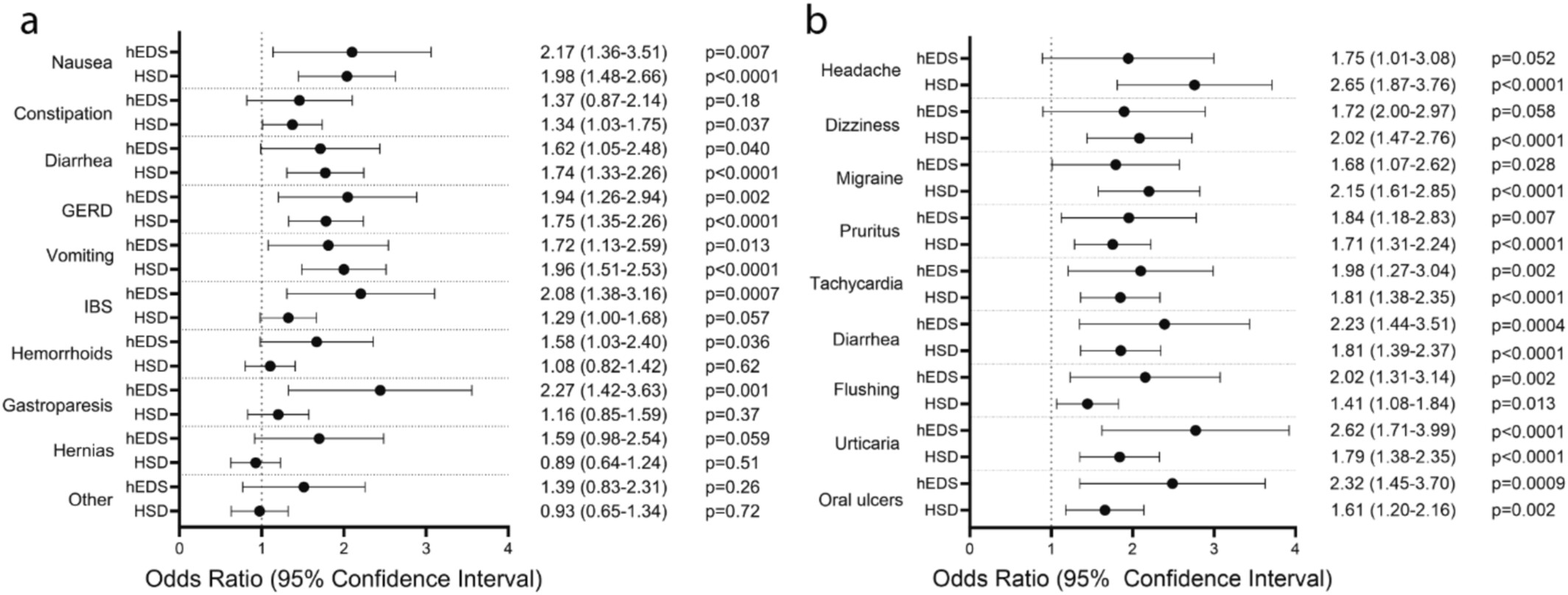
Notably, patients with ILO reported markedly more allergy-related symptoms tied to mast cell activation than those without ILO, reflected in elevated MC symptom scores (all p < 0.0001). This suggests systemic MC activation as a potential contributing factor to laryngeal and airway hypersensitivity.
Multivariate logistic regression identified chronic cough, dysphagia, and increased mast cell symptom burden as the strongest independent predictors of ILO in both hEDS and HSD cohorts. These findings persisted after controlling for potential confounders, suggesting robustness.
Expert Commentary
This large-scale study provides robust evidence that ILO is a frequent comorbidity in hypermobile patients, correlating with a heightened burden of voice, cough, swallowing difficulties, and gastrointestinal reflux symptoms. The observed association with mast cell activation symptoms expands current understanding of the inflammatory and immune modulation potentially underlying laryngeal hypersensitivity in this population.
Clinicians managing hEDS and HSD should be vigilant to the presence of ILO, particularly when patients report chronic cough and dysphagia alongside systemic allergic symptoms. The data support integrating multidisciplinary approaches involving otolaryngology, allergy/immunology, gastroenterology, and speech therapy to comprehensively assess and treat these complex interactions.
Limitations include the retrospective design and reliance on self-reported symptom questionnaires which may introduce reporting bias. Prospective studies with objective laryngeal visualization (e.g., laryngoscopy during symptomatic episodes) and mast cell biomarker assessments are warranted to validate and refine these findings.
Conclusion
Inducible laryngeal obstruction is a prevalent and clinically impactful condition among patients with hypermobile Ehlers-Danlos syndrome and hypermobility spectrum disorders. Chronic cough, dysphagia, and mast cell activation symptoms independently predict ILO, highlighting key clinical red flags.
Routine multidisciplinary laryngeal assessment including evaluation of airway function and mast cell-mediated symptomology is recommended to optimize diagnostic accuracy and therapeutic outcomes. Enhanced awareness of this comorbidity can lead to targeted interventions, reducing symptom burden and improving quality of life in this challenging patient population.
Funding and clinicaltrials.gov
The publication does not specify funding sources or clinical trial registry information.
References
1. Menton SM, Fairweather D, Wilson FC, et al. Inducible Laryngeal Obstruction in Hypermobile Patients. Laryngoscope. 2026 Oct 11. doi:10.1002/lary.XXXXX. [PMID:42860825]
2. Malfait F, Francomano C, Byers P, et al. The 2017 international classification of the Ehlers–Danlos syndromes. Am J Med Genet C Semin Med Genet. 2017;175(1):8–26.
3. Belafsky PC, Postma GN, Koufman JA. Validity and reliability of the Eating Assessment Tool (EAT-10). Ann Otol Rhinol Laryngol. 2008;117(12):919-924.
4. Johansson A, Zigmond M, Molderings GJ, et al. Mast cell activation syndrome: a concise practical guide for diagnostic workup and therapeutic options. J Investig Allergol Clin Immunol. 2019;29(3):186-196.
5. Vertigan AE, et al. Multidisciplinary approach and treatment of inducible laryngeal obstruction. Expert Rev Respir Med. 2019;13(5):503-511.