Fetal Growth Restriction and Risk of Superimposed Preeclampsia in Women with Chronic Hypertension: Implications for Clinical Surveillance
Highlight
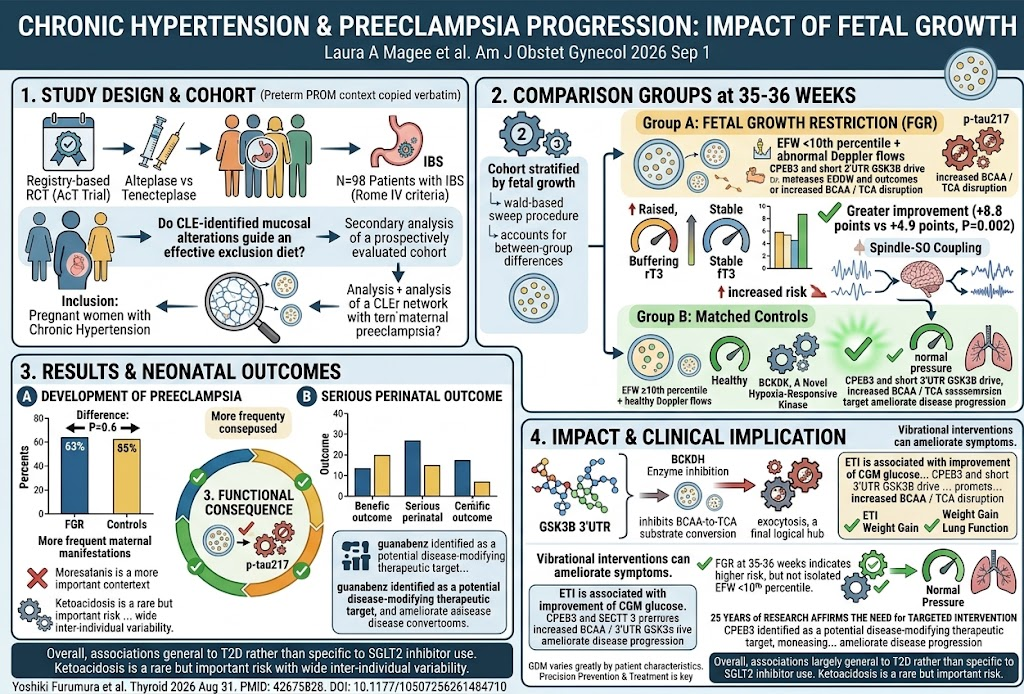
- Among women with chronic hypertension, fetal growth restriction (FGR) at 35-36 weeks gestation associates with a higher risk of progression to superimposed preeclampsia.
- FGR cases exhibited earlier delivery, increased labor induction, cesarean rates, and more frequent neonatal Intensive Care Unit admissions.
- Isolated small estimated fetal weight (<10th percentile) without abnormal Doppler studies did not predispose to heightened preeclampsia risk.
- Enhanced maternal and fetal monitoring strategies should be considered for hypertensive pregnancies complicated by FGR.
Background and Clinical Context
Chronic hypertension affects a significant proportion of pregnant women globally and is a well-recognized risk factor for adverse maternal and perinatal outcomes, including superimposed preeclampsia and fetal growth restriction (FGR). Preeclampsia, characterized by hypertension and end-organ dysfunction during pregnancy, has multifaceted etiologies, and distinguishing superimposed preeclampsia from chronic hypertension complications remains challenging. The identification of uteroplacental dysfunction, manifested as impaired fetal growth or abnormal fetal Doppler indices, raises the clinical question whether such findings in chronic hypertensive women signal imminent maternal preeclampsia or a separate entity attributable to chronic hypertension itself. Clarifying this nosological distinction bears significant implications for surveillance intensity and management timing to optimize maternal and neonatal outcomes.
Study Design and Methods
This secondary analysis drew on a prospectively collected cohort of 1258 singleton pregnancies complicated by chronic hypertension. Participants underwent routine fetal ultrasound assessment between 35+0 and 36+6 weeks, which included estimated fetal weight (EFW) and advanced Doppler assessments of uterine, umbilical, and middle cerebral arteries. Cases were defined as fetuses with EFW 95th percentile, umbilical artery pulsatility index >95th percentile, or middle cerebral artery pulsatility index <5th percentile. Controls had EFW ≥10th percentile.
The primary outcome was progression to superimposed preeclampsia, defined traditionally by new-onset proteinuria after 20 weeks or by expanded criteria per the 2019 ACOG and 2021 ISSHP guidelines. Propensity score matching (1:2 ratio) was employed to control for confounders such as maternal age, BMI, race/ethnicity, smoking, parity, lupus status, conception mode, and prior obstetric history. Matching balance was assessed by standardized mean differences. Secondary outcomes included labor induction, cesarean delivery rates, timing from ultrasound to delivery, gestational age at birth, birthweight percentile, neonatal unit admission, and composite neonatal adverse outcomes.
Key Findings
Of the total cohort, 167 (13.3%) fetuses were growth-restricted (cases), with 64 (38.3%) demonstrating abnormal Doppler parameters qualifying as FGR. Overall, 234 women (18.6%) developed superimposed preeclampsia.
After propensity score matching, baseline maternal characteristics were well balanced between cases and controls, enhancing statistical validity.
– FGR cases (EFW <10th percentile plus abnormal Dopplers) had significantly increased risk of superimposed preeclampsia irrespective of diagnostic criteria used. This group also had more frequent labor inductions, higher cesarean section rates, and delivered an average 1.7 weeks earlier compared with controls.
– Neonates from the FGR group more commonly had birthweights <10th percentile and higher admissions to neonatal intensive care, yet there was no significant difference in composite neonatal adverse outcomes.
– Cases without FGR (EFW <10th percentile but normal Dopplers) did not show increased progression to preeclampsia but were delivered slightly earlier (0.7 weeks) and had a modestly shorter interval from ultrasound to delivery compared to respective controls.
These findings highlight the distinctive prognostic importance of Doppler-confirmed FGR in this population.
Expert Commentary
The distinction between fetal growth restriction with placental insufficiency indicators and mere small-for-gestational-age (SGA) fetuses in chronic hypertension is crucial. Doppler abnormalities reflect underlying uteroplacental insufficiency and hypoxia, pathophysiological hallmarks linked to endothelial dysfunction and maternal systemic inflammation that precipitate preeclampsia. This study reinforces the paradigm that clinical surveillance and intervention strategies need to be tailored based on comprehensive fetal assessment rather than fetal size alone.
The use of propensity score matching strengthens internal validity by accounting for confounding variables; however, the retrospective secondary analysis design may limit causal inference. Further, the study focuses on late third trimester assessments, leaving open the question of whether earlier identification of FGR could better inform preeclampsia risk stratification and prophylactic interventions such as low-dose aspirin or closer monitoring.
Current guidelines from ACOG and ISSHP increasingly emphasize non-proteinuric criteria for preeclampsia diagnosis, which this study adopted for outcome definitions, representing contemporary clinical practice. The absence of increased neonatal composite adverse outcomes despite higher preterm deliveries among FGR cases may reflect effective perinatal care, but long-term infant outcomes warrant further study.
Conclusion and Clinical Implications
In pregnant women with chronic hypertension, the presence of fetal growth restriction confirmed by abnormal fetal Doppler parameters at 35-36 weeks gestation markedly increases the likelihood of progression to superimposed preeclampsia. Conversely, isolated small estimated fetal weight without Doppler abnormalities does not indicate elevated preeclampsia risk. These findings underscore the importance of incorporating fetal Doppler studies into routine late-third-trimester evaluation of hypertensive pregnancies to guide risk stratification and optimize timing of delivery and maternal-fetal surveillance.
Future research should investigate the predictive utility of earlier gestational age assessments and explore tailored management algorithms. Clinicians should integrate these findings into practice to improve prognostication and outcomes in this high-risk population.
Funding and Registration
The original study was published by Magee et al. in the American Journal of Obstetrics and Gynecology (2026). The article does not disclose specific funding sources or clinical trial registration. Further reference may be found at https://pubmed.ncbi.nlm.nih.gov/41997519/.
References
1. Magee LA, Chatzakis C, Syngelaki A, Akolekar R, von Dadelszen P, Nicolaides KH. In women with chronic hypertension, does fetal growth restriction increase progression to maternal preeclampsia? Am J Obstet Gynecol. 2026 Apr 15;235(3):677-685. PMID: 41997519.
2. American College of Obstetricians and Gynecologists. Task Force on Hypertension in Pregnancy. Hypertension in pregnancy. Obstet Gynecol. 2013;122(5):1122-31.
3. International Society for the Study of Hypertension in Pregnancy (ISSHP). The Management of Hypertension in Pregnancy. Pregnancy Hypertens. 2021;23:1-33.
4. Resnik R. Intrauterine growth restriction. Obstet Gynecol. 2002;99(3):490-6.
5. Baschat AA. Fetal growth restriction – from observation to intervention. J Perinat Med. 2010;38(3):239-46.
This article was created using several editorial tools, including AI, as part of the process. Human editors reviewed this content before publication.