We use cookies

Our website uses essential cookies and, with your consent, additional cookies to measure performance and improve our services. Cookie Policy.

You can change your choice at any time.

MMedXYNews
HomeVideos
MedXY AI/MedXY News/Section: news

Determinants of Endothelial Cell Density One Year After DMEK: Insights from the Diabetes Endothelial Keratoplasty Study
MedXY Editorial Team•Aug 4, 2026•news
Fuchs endothelial corneal dystrophyDMEKDonor Tissue QualityEndothelial Cell Densitycorneal transplantation

Highlight

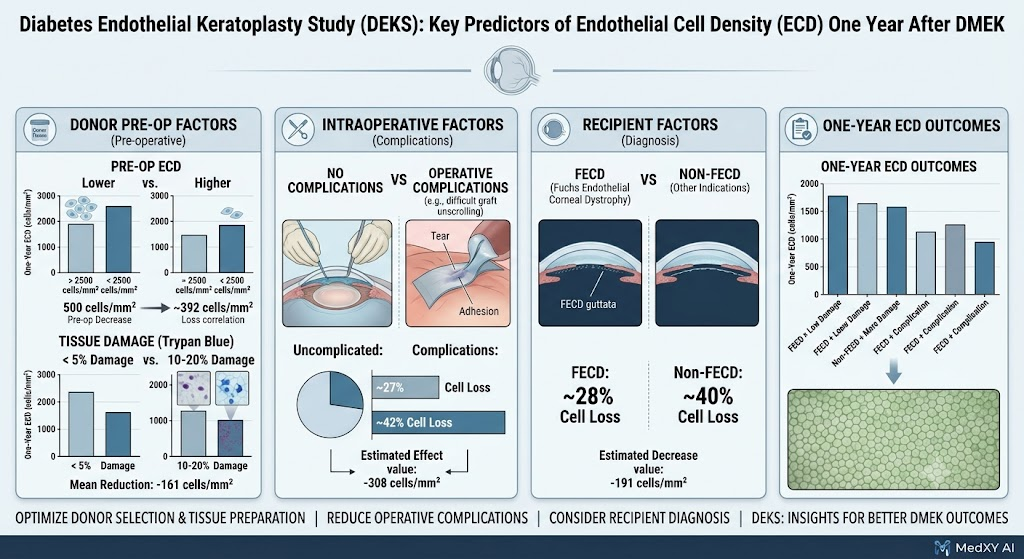
The Diabetes Endothelial Keratoplasty Study (DEKS) identified preoperative donor endothelial cell density (ECD), donor endothelial cell damage assessed via trypan blue staining, the recipient’s diagnosis, and intraoperative complications as significant predictors of endothelial cell density at one year following Descemet membrane endothelial keratoplasty (DMEK).

Higher endothelial cell loss correlated with increased donor endothelial cell damage, non-Fuchs endothelial corneal dystrophy (FECD) recipient diagnoses, and operative complications. These findings emphasize the importance of meticulous donor tissue preparation and operative technique to optimize long-term graft endothelial survival.

MedXY registered readers

Sign in free to continue reading

Create or use your MedXY account to unlock the complete article.

This article was created using several editorial tools, including AI, as part of the process. Human editors reviewed this content before publication.

Related articles

Open language-specific specialty feeds and department pages.

Determinants of One-Year Success in Descemet Membrane Endothelial Keratoplasty: Insights from the Diabetes Endothelial Keratoplasty StudyThis article examines factors influencing the one-year success rate of DMEK in treating corneal endothelial dysfunction, highlighting the impact of operative complications and donor-recipient variables based on findings from the Diabetes EnAug 2, 2026Ripasudil After DSO in Fuchs Endothelial Corneal Dystrophy: A Randomized Trial Signals a New Path to Corneal RecoveryA phase 2 randomized trial found that topical ripasudil after DSO improved endothelial cell density, sped edema clearance, and reduced rescue therapy in FECD, especially with QID dosing.Jun 19, 2026Genomic Risk Profiling May Help Predict Which Patients With Fuchs Endothelial Corneal Dystrophy Progress to KeratoplastyA 2026 Ophthalmology study suggests that combining CTG18.1 expansion testing with a FECD-specific polygenic risk score can improve prediction of keratoplasty risk across independent cohorts.May 27, 2026
Loading comments...
MedXY briefing

Get the free newsletter

Evidence-led clinical news, trends, and analysis—delivered to your inbox.

Ask MedXY AI

Most popular

Intimate Health
Five Benefits for Women Continuing Sexual Activity After Menopause
Intimate Health
Why Some Women Have a Strong Sex Drive—And Why Men Shouldn't Worry About It
Nursing & care
How often should a couple have sex?
Intimate Health
Classic Intimacy Recommendations: How to Help Women Reach Orgasm and Enjoy Mutual Pleasure
Intimate Health
What Makes a Woman "Physiologically Addicted" Is Never Money, But These Two Relationship Qualities
© 2026 MedXY
Contact usAbout usPrivacy PolicyMedXY story
Donor Diabetes Status Does Not Compromise DMEK Outcomes: 1-Year Results from the DEKS Randomized Clinical Trial
The Diabetes Endothelial Keratoplasty Study (DEKS) confirms that donor diabetes status has no clinically significant impact on 1-year graft success rates or endothelial cell loss after Descemet membrane endothelial keratoplasty (DMEK), faci
Jan 10, 2026