Highlight
- The CONKO-007 trial compared induction chemotherapy plus chemoradiotherapy (CRT) with chemotherapy alone in initially unresectable pancreatic cancer.
- Overall R0 resection rates did not significantly differ between CRT (25%) and chemotherapy arms (18%).
- Among patients who proceeded to surgery, CRT significantly improved R0 resections (69.4% vs 50.0%) and overall resection quality.
- Overall survival was not improved by CRT; however, surgical resection itself was associated with significantly longer survival.
Study Background and Disease Burden
Pancreatic cancer remains one of the deadliest malignancies worldwide, with a 5-year overall survival rate below 10%. Only a minority of patients present with tumors amenable to upfront surgical resection, which offers the best chance for long-term disease control. A substantial subset presents with locally advanced, unresectable tumors due to vascular involvement or disease extent. In recent years, induction chemotherapy regimens such as FOLFIRINOX have been used to downstage these tumors to enable subsequent surgical resection, termed conversion therapy. However, the optimal approach after induction chemotherapy—including whether to add chemoradiotherapy (CRT)—has been uncertain, especially regarding achieving complete tumor removal with negative margins (R0 resection) and improving survival.
Study Design
The CONKO-007 trial was an investigator-initiated, open-label, multicenter, phase III randomized clinical trial conducted in Germany. In total, 525 patients with unresectable pancreatic tumors were enrolled, of whom 495 received induction chemotherapy: 402 with FOLFIRINOX and 93 with gemcitabine. After three months of induction chemotherapy, patients without progression (n=336) were randomized to continue the same chemotherapy regimen (n=167) or to receive chemoradiotherapy (CRT) combining 50.4 Gy radiation with concurrent gemcitabine (n=169). A central surgical panel reassessed tumor resectability, and surgery was recommended when feasible. The trial originally aimed to evaluate overall survival but shifted the primary endpoint to overall R0 resection rate due to slow accrual. Median follow-up reached 76 months. Secondary endpoints included R0 resection rate in the surgically treated subgroup and overall survival.
Key Findings
The primary endpoint—overall R0 resection rate—did not reach statistical significance between the two arms: 25% (43 of 169) in the CRT group versus 18% (30 of 167) in the chemotherapy-only group (P=0.113). The rate at which surgery was performed was comparable between groups (P=0.91). However, among patients who underwent surgery, CRT significantly increased R0 resections to 69.4% compared with 50.0% in the chemotherapy-alone arm (P=0.04). Additionally, parameters evaluating the quality of resection margins favored CRT (P=0.02), indicating better tumor clearance in those treated with chemoradiotherapy.
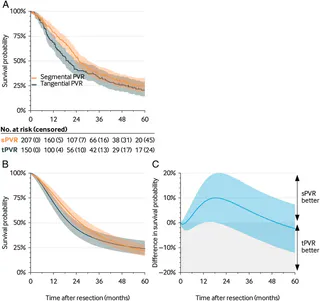
Despite these improvements in resection margin status with CRT, no statistically significant difference emerged in overall survival (hazard ratio [HR] 0.937; 95% confidence interval [CI], 0.747–1.174; P=0.57) in the intention-to-treat population. Importantly, patients who underwent surgery had markedly improved survival compared with those who did not (HR 0.525; 95% CI, 0.408–0.676; P<0.001), underscoring the critical role of surgical resection in prognosis.
No new safety signals were reported beyond expected chemoradiotherapy and chemotherapy toxicities. The study did not delineate detailed adverse event profiles in this report.
Expert Commentary
The CONKO-007 trial represents one of the largest randomized assessments of adding CRT following effective induction chemotherapy in locally advanced unresectable pancreatic cancer. Its rigorous design, including centralized radiologic and surgical reassessments, strengthens the validity of its findings.
The lack of an overall survival benefit despite improved margin-negative resections after CRT may reflect multiple factors, including the heterogeneous biology of pancreatic cancer, micrometastatic disease, and possibly insufficient sample size or follow-up to detect subtle survival differences. The improvement in R0 resections suggests that CRT contributes to better local tumor control, which is clinically meaningful given the high rates of local recurrence in pancreatic cancer.
Current NCCN and other international guidelines acknowledge the value of induction chemotherapy in locally advanced pancreatic cancer but remain cautious regarding routine CRT due to inconsistent data. CONKO-007 provides high-level evidence that CRT may be a valuable adjunct to optimize surgical outcomes in selected patients, potentially influencing future guideline updates.
Limitations include the trial’s open-label nature, changes in primary endpoint during the study, and the relatively small subgroup of surgically resected patients limiting power for survival endpoints. Further research could focus on biomarkers predicting CRT responsiveness and integrating novel systemic agents.
Conclusion
In patients with initially unresectable pancreatic cancer responsive to induction chemotherapy, the addition of chemoradiotherapy does not significantly increase the overall R0 resection rate or improve survival in the entire treated population. However, CRT significantly enhances the likelihood of achieving margin-negative (R0) resection among those who undergo surgery, indicating improved local tumor control. Surgical resection remains the pivotal factor associated with prolonged survival, emphasizing the importance of multimodal treatment strategies aiming at conversion to resectability. Future investigations should refine patient selection criteria and optimize treatment sequencing to maximize clinical benefit in this challenging malignancy.
References
Fietkau R, Ghadimi M, Grützmann R, Wittel UA, Jacobasch L, Uhl W, Croner RS, Bechstein WO, Neumann UP, Waldschmidt D, Boeck S, Moosmann N, Reinacher-Schick AC, Golcher H, Adler W, Semrau S, Lubgan D, Kallies A, Hecht M, Tischoff I, Tannapfel A, Frey B, Oettle H; CONKO Study Group. Benefit of Chemoradiotherapy Versus Chemotherapy After Induction Therapy for Conversion of Unresectable Into Resectable Pancreatic Cancer: The Randomized CONKO-007 Trial. J Clin Oncol. 2025 Aug 13:JCO2401502. doi: 10.1200/JCO-24-01502. Epub ahead of print. PMID: 40802908.
Von Hoff DD, Ervin T, Arena FP, et al. Increased Survival in Pancreatic Cancer with nab-Paclitaxel plus Gemcitabine. N Engl J Med. 2013;369(18):1691-1703.
Tempero MA, Malafa MP, Al-Hawary M, et al. Pancreatic Adenocarcinoma, Version 2.2021, NCCN Clinical Practice Guidelines in Oncology. J Natl Compr Canc Netw. 2021 Nov;19(4):439-457.