Highlights
High official development assistance (ODA) funding correlates with substantial reductions in all-cause and under-5 mortality in low- and lower-middle-income countries.
Wealth redistribution policies, including wealth taxes and crypto taxes on ultra-wealthy individuals, demonstrate potential to avert millions of deaths despite ongoing ODA funding declines.
Integrating redistribution strategies with existing development frameworks supports United Nations Sustainable Development Goals, particularly for health equity.
Country-level microsimulation models provide robust forecasting tools to inform policy planning and international aid strategies through 2030.
Background
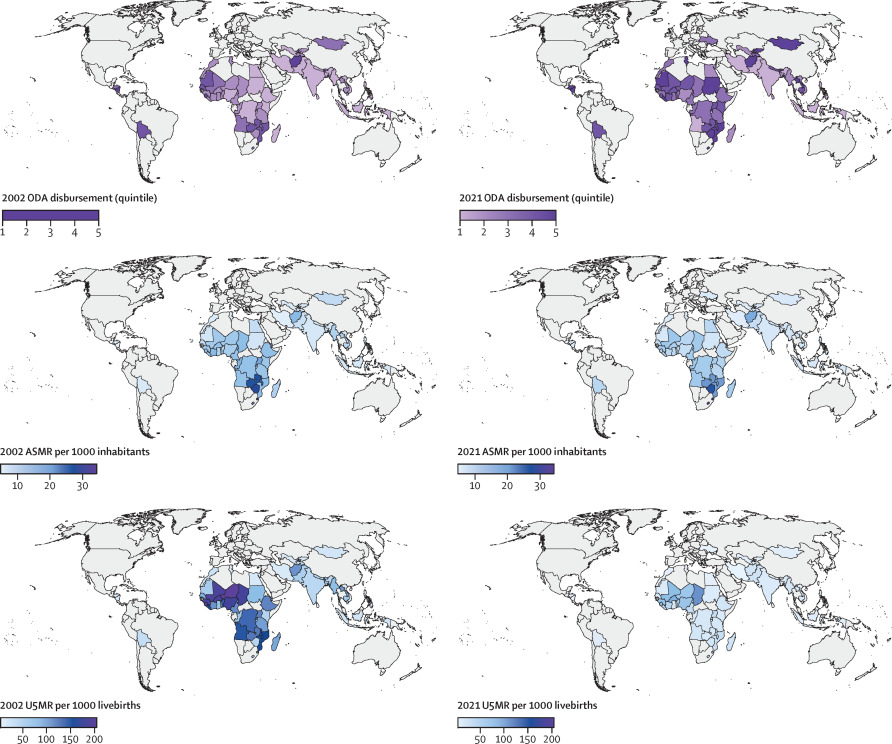
The global landscape of humanitarian and development assistance has experienced a notable decline in official development assistance (ODA) funding amid escalating wealth concentration and widening socioeconomic disparities. This juxtaposition underscores a paradox where the capacity to fund global health improvements weakens while disparities grow. ODA plays a critical role in financing health programs and social determinants of health across 59 low- and lower-middle-income countries (LLMICs), where reductions in aid can translate into adverse mortality outcomes, predominantly in vulnerable populations such as children under five.
Recognition of this crisis has spurred calls from recent multilateral agreements to explore non-traditional mechanisms, such as domestic wealth redistribution policies, to sustain or enhance funding for development goals. Given the uneven global wealth distributions—with a rising ultra-high-net-worth (UHNW) population—considering fiscal redistribution strategies is crucial to counteract the negative health consequences induced by ODA defunding.
Key Content
Evidence from Retrospective Analyses (2002-2021)
The primary evidence base arises from a rigorous retrospective evaluation spanning nearly two decades of ODA impact on health outcomes. Using high-quality longitudinal panel data from 59 LLMICs, Sibils et al. (2026) applied two-way fixed-effects Poisson regression models to quantify the association between per-capita ODA and mortality outcomes, adjusting for demographic, socioeconomic, and health system factors.
Key findings demonstrated that compared to baseline ODA funding levels, high-level ODA exposure was linked to a 24% reduction in age-standardized all-cause mortality (RR 0.76; 95% CI 0.67-0.87) and a 33% reduction in under-5 mortality (RR 0.67; 95% CI 0.50-0.89). These findings were consistent across multiple sensitivity analyses and triangulated using complementary data sources, supporting robustness and causal interpretations.
Forecasting the Impact of Wealth Redistribution Policies (2026-2030)
Building on this foundation, microsimulation models were utilized to evaluate ten distinct wealth redistribution policies tailored to national contexts of the studied countries. Policies included moderate taxes on cryptocurrencies held by the affluent, and wealth taxes on the UHNW individuals. These scenario analyses modeled mortality outcomes under alternative policy implementations against a counterfactual scenario of continued ODA reductions.
Projected outcomes indicated that all evaluated policies could substantially reduce mortality by 2030:
A 3% crypto tax on the top 10,000 crypto holders could avert approximately 6.6 million deaths overall (95% uncertainty interval [UI] 4.88-8.37 million), including about 1.31 million under-5 deaths.
The most impactful measure—a 3% wealth tax on UHNW individuals—was forecast to avert nearly 29.5 million deaths overall (95% UI 20.3-38.6 million), with 3.46 million under-5 deaths averted.
These projections emphasize that wealth redistribution policies can serve as effective fiscal tools to buffer against health losses triggered by declining international aid.
Integration and Policy Implications
Mechanistically, wealth redistribution addresses root causes of health inequalities by reallocating financial resources, thereby sustaining social services, including healthcare infrastructure and preventive interventions. These mechanisms align with behavioral economics and social determinants of health frameworks, recognizing that income and wealth are potent determinants of access and quality of health care and nutrition.
The studied redistribution interventions also reflect ongoing international discourse on innovative financing for development, including domestic resource mobilization and global wealth taxation concepts endorsed by bodies like the United Nations and G20.
This integrated modeling approach represents a methodological advance by coupling epidemiologic impact evaluations with economic microsimulations, thereby bridging macroeconomic policies and health outcomes in forecasting models.
Expert Commentary
The findings robustly support the premise that ODA reductions exacerbate mortality risk, notably in vulnerable subpopulations such as children under 5 years. This underscores the imperative for alternative financing models. Wealth redistribution policies have historically faced political and economic challenges, including resistance from affluent stakeholders; however, advances in tax policy implementation and international cooperation over digital assets provide promising frameworks.
While wealth taxes yield higher mortality benefits, the moderate yet politically feasible options like crypto taxes still offer substantial health gains, reflecting a pragmatic spectrum of policy choices. Importantly, the study adjusts rigorously for confounding factors, including health system metrics and demographic changes, enhancing internal validity.
Limitations include inherent uncertainties in long-term forecasting, potential variations in policy uptake and compliance, and country-specific political contexts affecting implementation. Nonetheless, the convergence of multiple analytical methods and extensive sensitivity analyses enhances confidence in the conclusions.
From a translational perspective, leveraging these findings calls for greater dialogue between global health policymakers, finance ministries, and international development bodies to operationalize wealth redistribution as part of a comprehensive response to ODA defunding.
Conclusion
The synthesis of retrospective evaluations and forecasting models firmly positions wealth redistribution policies as viable and impactful strategies to mitigate the detrimental health effects of declining official development assistance. By averting millions of deaths, particularly among children under five, these fiscal interventions can propel progress towards the Sustainable Development Goals amidst shifting global aid landscapes.
Future research should extend to assessing implementation pathways, evaluating socio-political acceptability, and refining microsimulation models to incorporate dynamic global economic trends and emerging health challenges.
References
Sibils GB, Anderle RVR, da Silva AF, et al. Wealth redistribution policies to mitigate the impact of development assistance defunding: a retrospective evaluation and forecasting analysis up to 2030. Lancet. 2026;408(10562):1346-1360. doi:10.1016/S0140-6736(26)00345-7. PMID: 42705250.
World Health Organization. Global Health Observatory data repository. https://www.who.int/data/gho
United Nations. Financing for Development in the Era of COVID-19 and Beyond. Report of the Inter-agency Task Force on Financing for Development. 2021.
OECD. Tax Policies for Inclusive Growth. OECD Tax Policy Studies. 2024.