We use cookies

Our website uses essential cookies and, with your consent, additional cookies to measure performance and improve our services. Cookie Policy.

You can change your choice at any time.

MMedXYNews
HomeVideos
MedXY AI/MedXY News/Tag: chronic kidney disease
MedXY News
EnglishTag

chronic kidney disease

Ask MedXY AI
type 2 diabetesclinical trialheart failureimmunotherapyobesitycardiovascular riskatrial fibrillationbiomarkerscritical careclinical trialsHypertensionartificial intelligenceCardiologyoncologypublic healthtype 1 diabetesdiabetesMortalityAlzheimer's diseasecardiovascular diseasebreast cancerepidemiology

Latest news

Tag

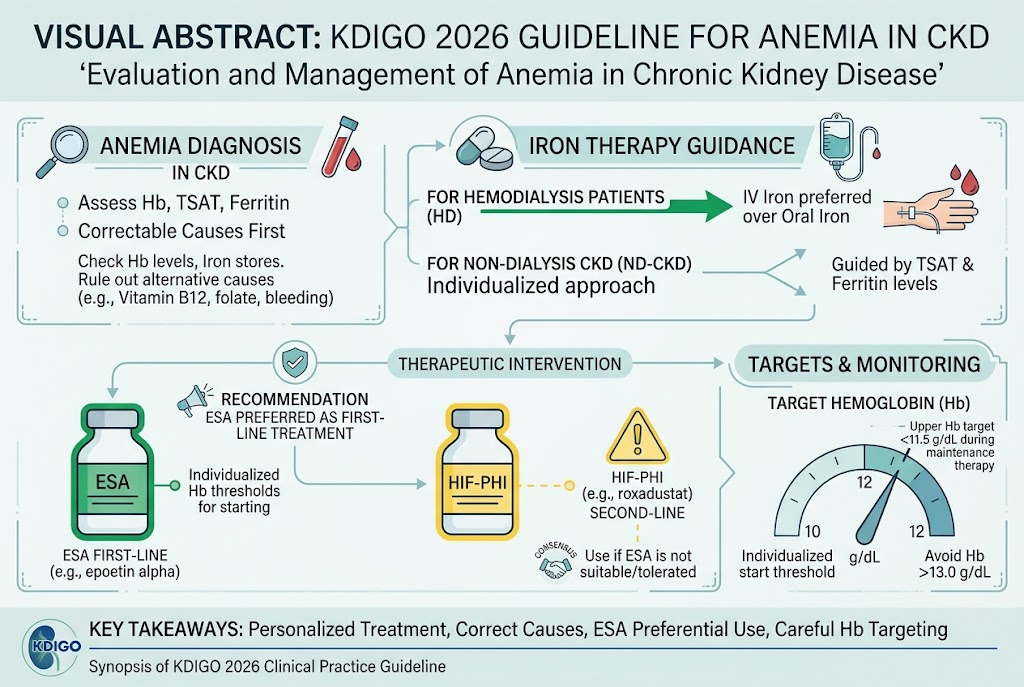
KDIGO 2026 on Anemia in CKD: Key Recommendations and Practical Guidance for Clinicians
Internal Medicineiron therapyerythropoiesis-stimulating agents

KDIGO 2026 on Anemia in CKD: Key Recommendations and Practical Guidance for Clinicians

By MedXY|Sep 18, 2026

KDIGO 2026 updates anemia care in CKD: evidence-based thresholds for iron therapy, preference for IV iron on hemodialysis, ESA-first approach over HIF-PHIs, individualized Hb initiation, and an ESA maintenance upper Hb target <11.5 g/dL.
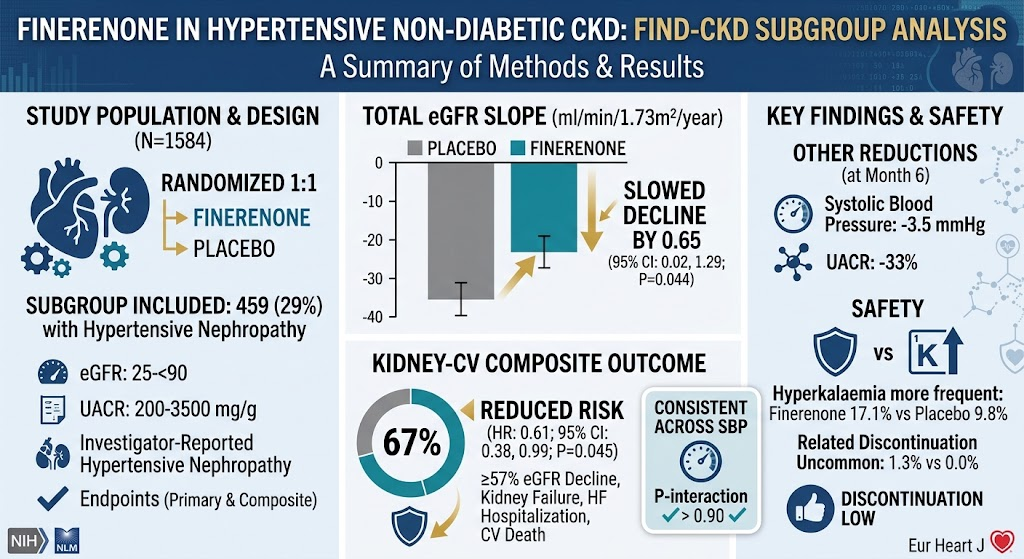
Finerenone in Hypertensive Non-Diabetic Chronic Kidney Disease: Evidence from the FIND-CKD Subgroup Analysis
CardiologyfinerenoneHypertensive Nephropathy

Finerenone in Hypertensive Non-Diabetic Chronic Kidney Disease: Evidence from the FIND-CKD Subgroup Analysis

By MedXY|Sep 3, 2026

Finerenone significantly slows kidney function decline and reduces cardiovascular risk in hypertensive non-diabetic CKD patients, with manageable safety profiles, supporting its therapeutic role beyond diabetes.

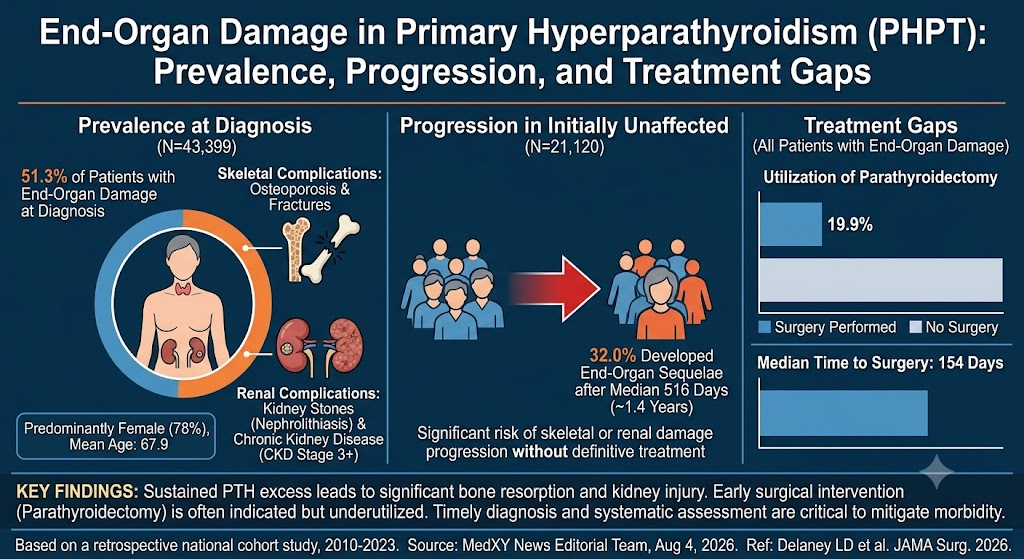
End-Organ Damage in Primary Hyperparathyroidism: Prevalence, Progression, and Treatment Gaps in a National Cohort
Diabetes & EndocrinologyPrimary hyperparathyroidismosteoporosis

End-Organ Damage in Primary Hyperparathyroidism: Prevalence, Progression, and Treatment Gaps in a National Cohort

By MedXY|Aug 4, 2026

A nationwide cohort study reveals that two-thirds of patients with primary hyperparathyroidism exhibit end-organ damage at diagnosis or during follow-up, yet few receive parathyroidectomy, underscoring missed opportunities to reduce morbidi

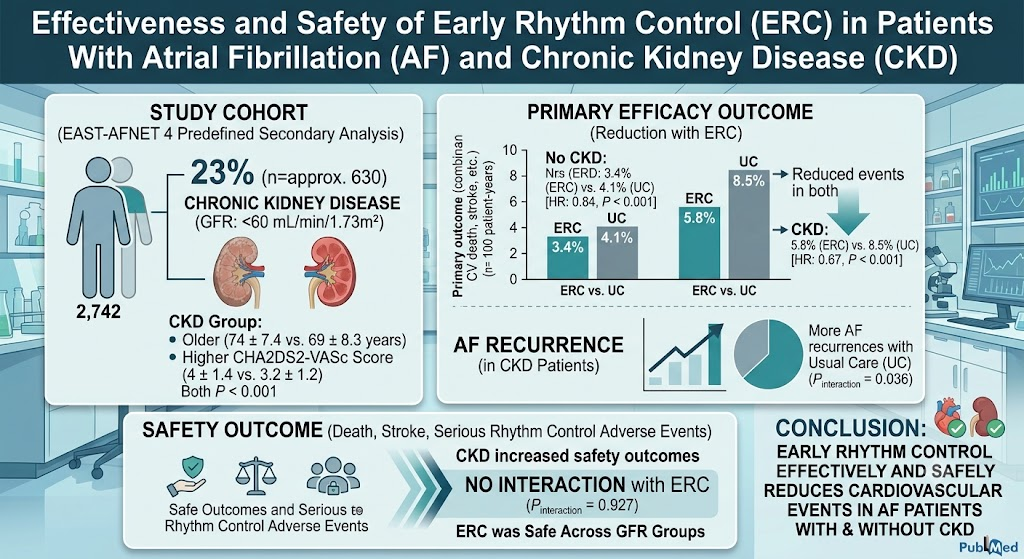
Early Rhythm Control Reduces Cardiovascular Events in Atrial Fibrillation Patients With Chronic Kidney Disease
Cardiologyatrial fibrillationchronic kidney disease

Early Rhythm Control Reduces Cardiovascular Events in Atrial Fibrillation Patients With Chronic Kidney Disease

By MedXY|Jul 28, 2026

A predefined subanalysis of EAST-AFNET 4 shows early rhythm control safely reduces cardiovascular events in recently diagnosed AF patients with CKD, with a trend toward greater benefit in this high-risk group.

Chronic Kidney Disease Worsens Short-Term Outcomes in Hospitalized Patients With Cirrhosis Across a Global Cohort
Gastroenterologyacute kidney injurychronic kidney disease

Chronic Kidney Disease Worsens Short-Term Outcomes in Hospitalized Patients With Cirrhosis Across a Global Cohort

By MedXY|Jun 7, 2026

In a large international prospective cohort of hospitalized patients with cirrhosis, chronic kidney disease was common, clustered with metabolic risk, and strongly associated with acute kidney injury, more decompensation, and higher in-hosp

Finerenone Shows Consistent Cardiovascular and Kidney Benefit Across CKM Syndrome Stages in Type 2 Diabetes and CKD
Cardiologychronic kidney diseasefinerenone

Finerenone Shows Consistent Cardiovascular and Kidney Benefit Across CKM Syndrome Stages in Type 2 Diabetes and CKD

By MedXY|Jun 7, 2026

A post hoc FIDELITY analysis suggests finerenone improves cardiovascular and kidney outcomes across CKM stages and may modestly shift patients toward CKM regression over time.

Proteinuria in Preeclampsia and Long-Term Risk of Maternal Kidney and Cardiovascular Disease
Nephrologycardiovascular diseasePregnancy

Proteinuria in Preeclampsia and Long-Term Risk of Maternal Kidney and Cardiovascular Disease

By MedXY|Aug 18, 2026

Higher proteinuria in preeclampsia was linked to greater long-term risk of maternal hypertension and chronic kidney disease, with overall increased risk of cardiovascular disease as well.

Tirzepatide vs dulaglutide: kidney outcomes in type 2 diabetes from SURPASS-CVOT
Diabetes & Endocrinologyalbuminuriachronic kidney disease

Tirzepatide vs dulaglutide: kidney outcomes in type 2 diabetes from SURPASS-CVOT

By MedXY|May 12, 2026

In a pre-specified exploratory analysis of SURPASS-CVOT, tirzepatide reduced major kidney events versus dulaglutide in people with type 2 diabetes and cardiovascular disease, mainly by lowering new macroalbuminuria and slowing eGFR decline.

Deciphering Healthcare Costs in Type 2 Diabetes and Incident CKD: A Latent Class Trajectory Analysis in Hong Kong
Clinical Updateschronic kidney diseasetype 2 diabetes

Deciphering Healthcare Costs in Type 2 Diabetes and Incident CKD: A Latent Class Trajectory Analysis in Hong Kong

By MedXY|Mar 28, 2026

A longitudinal study using Latent Class Analysis identifies four distinct phenotypes of T2D patients developing CKD, highlighting young-onset and middle-aged low-comorbidity groups as primary drivers of healthcare costs.

Healthcare Economic Trajectories in Type 2 Diabetes and Incident CKD: Insights from a Latent Class Analysis in Hong Kong
Clinical Updateschronic kidney diseaseLatent Class Analysis

Healthcare Economic Trajectories in Type 2 Diabetes and Incident CKD: Insights from a Latent Class Analysis in Hong Kong

By MedXY|Mar 22, 2026

This review analyzes a latent class trajectory study identifying four clinical phenotypes of T2D-related CKD, revealing that young-onset patients incur the highest longitudinal healthcare costs.

Interaction Between SGLT2 Inhibition and Dietary Sodium: Insights from the CREDENCE Trial Post Hoc Analysis
CardiologyCanagliflozinchronic kidney disease

Interaction Between SGLT2 Inhibition and Dietary Sodium: Insights from the CREDENCE Trial Post Hoc Analysis

By MedXY|Mar 15, 2026

This post hoc analysis of the CREDENCE trial reveals that low-normal sodium intake increases cardiovascular risk in T2D and CKD, a risk significantly mitigated by canagliflozin, while renal protection remains consistent across sodium intake

SGLT2 Inhibitors vs GLP-1 Receptor Agonists for Kidney Outcomes in Individuals With Type 2 Diabetes: A Comparative Effectiveness Review
Clinical Updateschronic kidney diseaseGLP-1RA

SGLT2 Inhibitors vs GLP-1 Receptor Agonists for Kidney Outcomes in Individuals With Type 2 Diabetes: A Comparative Effectiveness Review

By MedXY|Mar 15, 2026

This review synthesizes evidence comparing SGLT2 inhibitors and GLP-1 receptor agonists, highlighting a significant reduction in chronic kidney disease and acute kidney injury risks associated with SGLT2i initiation.

Precision Diagnostics in Alzheimer’s Disease: Optimizing Plasma p-tau217 Cutoffs for Patients with Comorbidities
Clinical UpdatesAlzheimer's diseasebiomarkers

Precision Diagnostics in Alzheimer’s Disease: Optimizing Plasma p-tau217 Cutoffs for Patients with Comorbidities

By MedXY|Mar 10, 2026

This review synthesizes evidence on the impact of kidney function, BMI, and anemia on plasma p-tau217 diagnostic accuracy, advocating for subgroup-specific cutoff strategies to improve clinical outcomes.

Renal Function and Metabolic Risk: Reduced eGFR Does Not Independently Increase DKA Risk in Type 1 Diabetes
Diabetes & Endocrinologychronic kidney diseasediabetic ketoacidosis

Renal Function and Metabolic Risk: Reduced eGFR Does Not Independently Increase DKA Risk in Type 1 Diabetes

By MedXY|Mar 7, 2026

A landmark 35-year analysis of DCCT/EDIC data demonstrates that a reduced estimated glomerular filtration rate (30–90 mL/min/1.73 m2) is not an independent risk factor for diabetic ketoacidosis, providing a clearer safety framework for the

Mechanistic Insights into APOL1-Mediated Hypertension: The STING-Endothelin 1 Axis as a Therapeutic Target
Cardiologychronic kidney diseaseHypertension

Mechanistic Insights into APOL1-Mediated Hypertension: The STING-Endothelin 1 Axis as a Therapeutic Target

By MedXY|Mar 2, 2026

This review synthesizes findings on how APOL1 risk variants (G2) drive hypertension and kidney damage through cell-specific mechanisms involving STING activation and endothelin-1 production, offering new precision medicine pathways for high

SGLT2 Inhibitors for All? Meta-Analysis Confirms Broad Clinical Benefits Regardless of Diabetes or Albuminuria Levels
Diabetes & Endocrinologyalbuminuriachronic kidney disease

SGLT2 Inhibitors for All? Meta-Analysis Confirms Broad Clinical Benefits Regardless of Diabetes or Albuminuria Levels

By MedXY|Feb 9, 2026

A large-scale meta-analysis reveals that SGLT2 inhibitors significantly reduce kidney disease progression, AKI, and hospitalizations in patients with CKD, independent of diabetes status or baseline albuminuria.

Beyond the Plate: Mediterranean Lifestyle as a Potent Shield Against Chronic Kidney Disease
Nephrologychronic kidney diseaselifestyle medicine

Beyond the Plate: Mediterranean Lifestyle as a Potent Shield Against Chronic Kidney Disease

By MedXY|Feb 5, 2026

A large-scale prospective study from the UK Biobank reveals that a comprehensive Mediterranean lifestyle—integrating diet, physical activity, and social connectivity—significantly reduces the risk of incident chronic kidney disease by up to

Holistic Mediterranean Lifestyle Linked to 35 Percent Lower Risk of Incident Chronic Kidney Disease
Nephrologychronic kidney diseasePreventive Nephrology

Holistic Mediterranean Lifestyle Linked to 35 Percent Lower Risk of Incident Chronic Kidney Disease

By MedXY|Feb 4, 2026

A large-scale prospective study from the UK Biobank reveals that high adherence to a Mediterranean lifestyle, including diet, physical activity, and social habits, significantly reduces the risk of developing chronic kidney disease over an

Beyond Insulin: GLP-1 and SGLT2 Inhibitor Combination Therapy Targets Obesity and Kidney Disease in Type 1 Diabetes
Diabetes & Endocrinologychronic kidney diseaseGLP-1 receptor agonists

Beyond Insulin: GLP-1 and SGLT2 Inhibitor Combination Therapy Targets Obesity and Kidney Disease in Type 1 Diabetes

By MedXY|Feb 4, 2026

A pilot study shows that combining GLP-1 analogues and SGLT2 inhibitors with lifestyle changes significantly reduces body weight and albuminuria in overweight Type 1 diabetes patients with CKD, though glycemic and blood pressure improvement

GLP-1 Receptor Agonists Significantly Reduce MACE Risk Across the CKD Spectrum, Yet Prescription Rates Remain Suboptimal
Diabetes & Endocrinologycardiovascular outcomeschronic kidney disease

GLP-1 Receptor Agonists Significantly Reduce MACE Risk Across the CKD Spectrum, Yet Prescription Rates Remain Suboptimal

By MedXY|Feb 3, 2026

Recent data highlights that GLP-1 receptor agonists (GLP1-RAs) reduce cardiovascular risk in patients with chronic kidney disease (CKD), yet real-world prescription rates remain alarmingly low despite these proven benefits across various st

1 / 3
123
Next
Ask MedXY AI

Most popular

Intimate Health
Five Benefits for Women Continuing Sexual Activity After Menopause
Intimate Health
Why Some Women Have a Strong Sex Drive—And Why Men Shouldn't Worry About It
Nursing & care
How often should a couple have sex?
Intimate Health
Classic Intimacy Recommendations: How to Help Women Reach Orgasm and Enjoy Mutual Pleasure
Intimate Health
What Makes a Woman "Physiologically Addicted" Is Never Money, But These Two Relationship Qualities
© 2026 MedXY
Contact usAbout usPrivacy PolicyMedXY story