We use cookies

Our website uses essential cookies and, with your consent, additional cookies to measure performance and improve our services. Cookie Policy.

You can change your choice at any time.

MMedXYNews
HomeVideos
MedXY AI/MedXY News/Tag: cardiogenic shock
MedXY News
EnglishTag

cardiogenic shock

Ask MedXY AI
type 2 diabetesclinical trialheart failureimmunotherapyobesitycardiovascular riskatrial fibrillationbiomarkerscritical careclinical trialsHypertensionartificial intelligenceCardiologyoncologypublic healthtype 1 diabetesdiabetesMortalityAlzheimer's diseasecardiovascular diseasebreast cancerepidemiology

Latest news

Tag

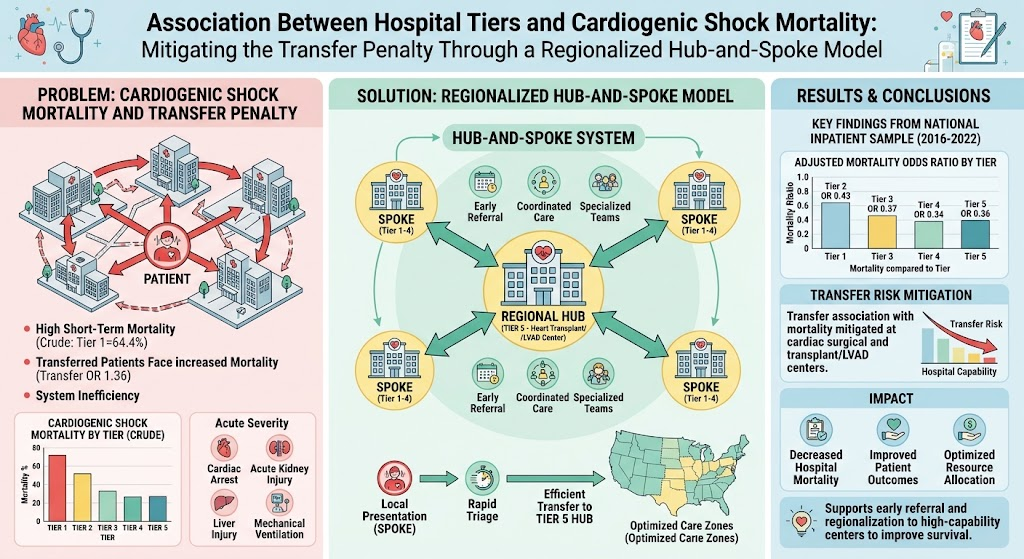
Reducing Mortality in Cardiogenic Shock: The Impact of Hospital Capability and Transfer Strategies
Cardiologyhospital tierstransfer risk

Reducing Mortality in Cardiogenic Shock: The Impact of Hospital Capability and Transfer Strategies

By MedXY|Sep 19, 2026

Higher hospital cardiac capability correlates with lower mortality in cardiogenic shock patients, and regionalized hub-and-spoke models mitigate the transfer penalty associated with patient instability.
Impact of Geographic Access on Mortality in Cardiogenic Shock: Insights from a Nationwide Korean Cohort
Cardiologyhospital arrival timeregional disparities

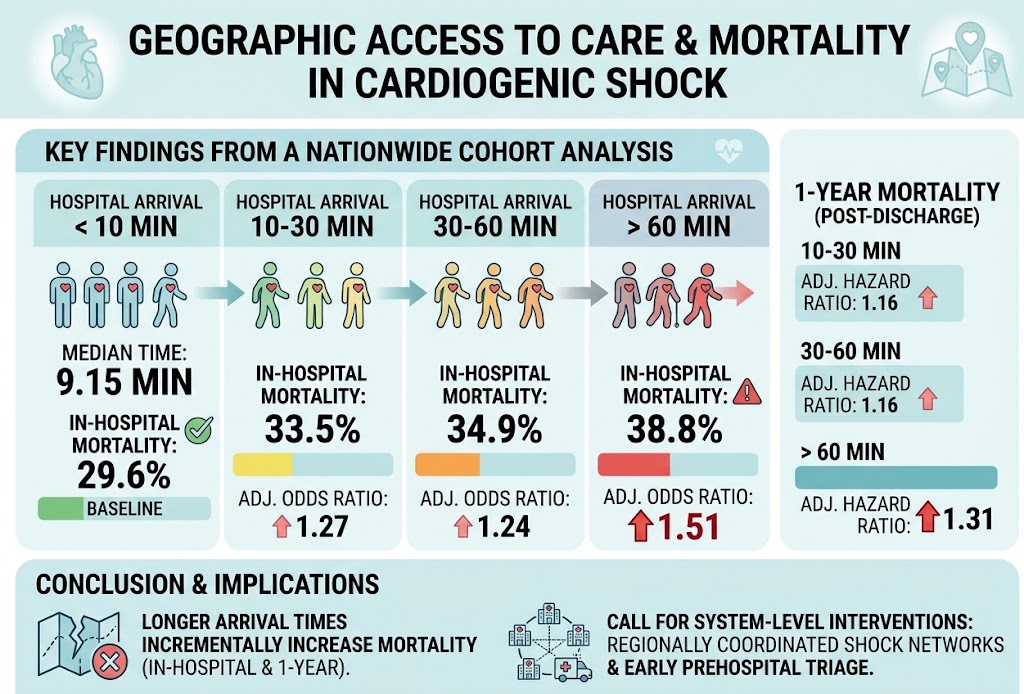
Impact of Geographic Access on Mortality in Cardiogenic Shock: Insights from a Nationwide Korean Cohort

By MedXY|Sep 5, 2026

Longer hospital arrival times significantly increase both in-hospital and long-term mortality in cardiogenic shock, highlighting the urgent need for regional care coordination and early triage.

Impact of Geographic Access on Mortality in Cardiogenic Shock: Insights from a Nationwide Korean Cohort
Cardiologykhả năng tiếp cận chăm sóchospital arrival time

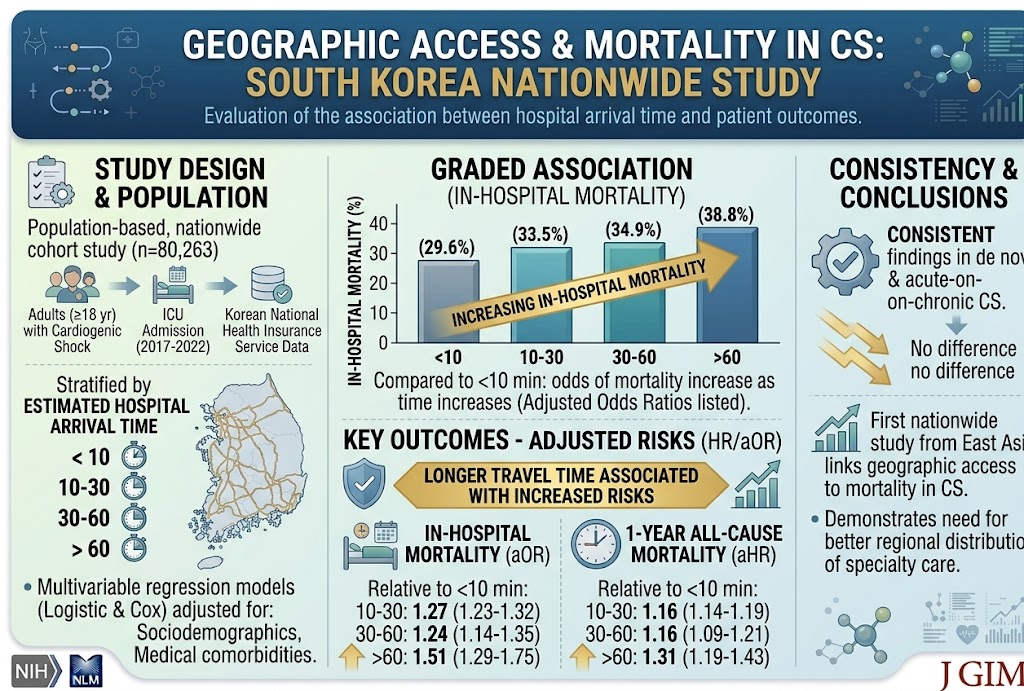
Impact of Geographic Access on Mortality in Cardiogenic Shock: Insights from a Nationwide Korean Cohort

By MedXY|Sep 3, 2026

A nationwide South Korean study reveals that longer hospital arrival times significantly increase both in-hospital and long-term mortality in patients with cardiogenic shock, emphasizing the need for improved regional healthcare coordinatio

Cardiogenic Shock Care Still Varies Widely Across CICUs, Especially in the Choice of Inodilators
Cardiologycardiogenic shockdobutamine

Cardiogenic Shock Care Still Varies Widely Across CICUs, Especially in the Choice of Inodilators

By MedXY|May 19, 2026

A large CCCTN analysis found major institutional and patient-level variation in vasoactive drug selection for cardiogenic shock, highlighting persistent evidence gaps in choosing dobutamine, milrinone, and other vasoactive therapies.

Circulatory Support Escalation in Cardiogenic Shock: Outcomes and Predictors of Success
Cardiologycardiogenic shockcirculatory support

Circulatory Support Escalation in Cardiogenic Shock: Outcomes and Predictors of Success

By MedXY|Apr 28, 2026

A multi-center study reveals that circulatory support escalation in cardiogenic shock is associated with higher mortality and complications, but certain patient factors can predict successful outcomes.

Transfer Before Support: Why Cardiogenic Shock Patients Referred from Regional Centers Face Higher Device-Related Complications
Cardiologycardiogenic shockdevice-related adverse events

Transfer Before Support: Why Cardiogenic Shock Patients Referred from Regional Centers Face Higher Device-Related Complications

By MedXY|Apr 15, 2026

A large observational study reveals that cardiogenic shock patients receiving temporary mechanical circulatory support at regional referral centers before transfer to hub centers experience significantly higher device-related adverse events

Etiology, Management, and Outcomes of Society for Cardiovascular Angiography and Interventions Stage B Cardiogenic Shock
Cardiologyacute kidney injurycardiogenic shock

Etiology, Management, and Outcomes of Society for Cardiovascular Angiography and Interventions Stage B Cardiogenic Shock

By MedXY|Mar 10, 2026

This clinical analysis of 500 patients identifies heart failure and arrhythmias as the primary causes of SCAI Stage B shock. Key findings highlight acute kidney injury and diuretic resistance as significant predictors of clinical deteriorat

The Warning Signs of Deterioration: Acute Kidney Injury and Diuretic Resistance in SCAI Stage B Cardiogenic Shock
Cardiologyacute kidney injurycardiogenic shock

The Warning Signs of Deterioration: Acute Kidney Injury and Diuretic Resistance in SCAI Stage B Cardiogenic Shock

By MedXY|Mar 1, 2026

A large-scale study reveals that 25% of patients with SCAI Stage B cardiogenic shock deteriorate clinically. Acute kidney injury and diuretic resistance are identified as critical, independent predictors of poor outcomes, emphasizing the ne

AKI and Diuretic Resistance: Identifying the High-Risk Phenotype in SCAI Stage B Cardiogenic Shock
Cardiologyacute kidney injurycardiogenic shock

AKI and Diuretic Resistance: Identifying the High-Risk Phenotype in SCAI Stage B Cardiogenic Shock

By MedXY|Mar 2, 2026

New research highlights that nearly a quarter of SCAI Stage B cardiogenic shock patients deteriorate. Acute kidney injury and diuretic resistance serve as critical early warning signs, providing clinicians a window for proactive interventio

Plasma Proteomics Unveils VEGFR1 as a High-Precision Prognostic Biomarker in Cardiogenic Shock
Cardiologybiomarkerscardiogenic shock

Plasma Proteomics Unveils VEGFR1 as a High-Precision Prognostic Biomarker in Cardiogenic Shock

By MedXY|Jan 18, 2026

A large-scale proteomic analysis identifies VEGFR1 as a significant, independent predictor of 180-day mortality in patients with cardiogenic shock, offering incremental prognostic value beyond traditional markers like serum lactate and SAPS

Refining Patient Selection for Microaxial Flow Pumps: The DanGer Shock-like Profile as a Survival Predictor in STEMI-CS
Cardiologycardiogenic shockImpella

Refining Patient Selection for Microaxial Flow Pumps: The DanGer Shock-like Profile as a Survival Predictor in STEMI-CS

By MedXY|Dec 31, 2025

This study validates the DanGer Shock trial criteria in a real-world registry, demonstrating that patients matching the trial’s profile have significantly better survival outcomes when treated with microaxial flow pumps compared to th

Beyond Survival: Unpacking the Hemodynamic and Metabolic Benefits of Microaxial Flow Pumps in STEMI-Related Cardiogenic Shock
Cardiologycardiogenic shockhemodynamics

Beyond Survival: Unpacking the Hemodynamic and Metabolic Benefits of Microaxial Flow Pumps in STEMI-Related Cardiogenic Shock

By MedXY|Dec 31, 2025

Recent substudies from the DanGer Shock trial demonstrate that microaxial flow pumps significantly improve hemodynamics, accelerate lactate clearance, and reduce vasopressor needs in STEMI-related cardiogenic shock, though sex-specific outc

Beyond the DanGer Shock Trial: Real-World Outcomes and Risk Stratification in Impella-Treated Patients
Cardiologycardiogenic shockImpella

Beyond the DanGer Shock Trial: Real-World Outcomes and Risk Stratification in Impella-Treated Patients

By MedXY|Dec 31, 2025

This article analyzes recent J-PVAD registry data, evaluating the real-world applicability of the DanGer shock trial criteria and prognostic factors for ECPELLA in acute myocardial infarction-related cardiogenic shock, emphasizing the neces

Conservative vs Liberal Post‑Oxygenator Targets on VA‑ECMO: Feasibility Concerns and No Early Biomarker Benefit in a Pilot RCT
Cardiologycardiogenic shockoxygenation

Conservative vs Liberal Post‑Oxygenator Targets on VA‑ECMO: Feasibility Concerns and No Early Biomarker Benefit in a Pilot RCT

By MedXY|Dec 12, 2025

A pilot multicenter RCT comparing conservative vs liberal post-oxygenator oxygen targets during VA-ECMO for cardiogenic shock found the conservative approach difficult to maintain (target achieved 33% of time) and no difference in biomarker

VA‑ECMO Raises Bleeding and Vascular Complications but Does Not Mediate 30‑Day Mortality in Infarct‑Related Cardiogenic Shock
Cardiologybleedingcardiogenic shock

VA‑ECMO Raises Bleeding and Vascular Complications but Does Not Mediate 30‑Day Mortality in Infarct‑Related Cardiogenic Shock

By MedXY|Dec 9, 2025

A mediation analysis of the randomized ECLS‑SHOCK trial found that VA‑ECMO increased moderate–severe bleeding and vascular complications but these events did not statistically mediate 30‑day mortality in patients with acute myocardial infar

Levosimendan Does Not Shorten Time to VA‑ECMO Weaning in Severe Cardiogenic Shock: Results of the LEVOECMO Randomized Trial
Cardiologycardiogenic shockVA-ECMO

Levosimendan Does Not Shorten Time to VA‑ECMO Weaning in Severe Cardiogenic Shock: Results of the LEVOECMO Randomized Trial

By MedXY|Dec 9, 2025

In the LEVOECMO randomized trial (n=205), early levosimendan did not reduce time to successful VA‑ECMO weaning or improve 60‑day mortality versus placebo; ventricular arrhythmias were more frequent with levosimendan.

Systolic Blood Pressure as a Key Modifier of Survival Benefit from Microaxial Flow Pump Therapy in Infarct-Related Cardiogenic Shock: Insights from the DanGer Shock Trial
Cardiologycardiogenic shockmicroaxial flow pump

Systolic Blood Pressure as a Key Modifier of Survival Benefit from Microaxial Flow Pump Therapy in Infarct-Related Cardiogenic Shock: Insights from the DanGer Shock Trial

By MedXY|Oct 9, 2025

This post hoc analysis of the DanGer Shock trial reveals that low systolic blood pressure at treatment initiation markedly enhances survival benefit from microaxial flow pump support in infarct-related cardiogenic shock.

C-Reactive Protein as a Prognostic Biomarker in Infarct-Related Cardiogenic Shock: Insights from the ECLS-SHOCK Trial
Cardiologyacute myocardial infarctioncardiogenic shock

C-Reactive Protein as a Prognostic Biomarker in Infarct-Related Cardiogenic Shock: Insights from the ECLS-SHOCK Trial

By MedXY|Oct 3, 2025

Elevated CRP levels independently predict short-term mortality in acute myocardial infarction complicated by cardiogenic shock, with extracorporeal life support showing no survival benefit regardless of CRP levels or admission timing.

Ask MedXY AI

Most popular

Intimate Health
Five Benefits for Women Continuing Sexual Activity After Menopause
Intimate Health
Why Some Women Have a Strong Sex Drive—And Why Men Shouldn't Worry About It
Nursing & care
How often should a couple have sex?
Intimate Health
Classic Intimacy Recommendations: How to Help Women Reach Orgasm and Enjoy Mutual Pleasure
Intimate Health
What Makes a Woman "Physiologically Addicted" Is Never Money, But These Two Relationship Qualities
© 2026 MedXY
Contact usAbout usPrivacy PolicyMedXY story