Highlight
Large cohort study compares pregnancy outcomes between biologic-exposed and unexposed psoriasis patients.
Biologic exposure during pregnancy did not increase risk of adverse pregnancy outcomes (APOs).
Lower odds of spontaneous abortion and gestational diabetes were observed in biologic-exposed patients.
Findings support the relative safety of biologic therapy for managing psoriasis during pregnancy.
Study Background
Psoriasis is a chronic inflammatory skin disease often requiring systemic therapies, including biologic agents targeting specific immune pathways. Managing psoriasis during pregnancy poses clinical challenges, as controlling disease activity needs to be balanced with ensuring fetal safety. Biologics, particularly tumor necrosis factor-alpha (TNF-α) inhibitors, are increasingly used but pregnancy safety data remain limited. Concerns about potential risks such as spontaneous abortion, gestational diabetes, fetal malformations, and other adverse pregnancy outcomes (APOs) have contributed to clinical hesitancy.
Prior to this study, evidence on the real-world safety of biologics in pregnant psoriasis patients was primarily from small case series or registries, often lacking control groups or comprehensive risk adjustment. This gap leaves clinicians and patients uncertain regarding the risks and benefits of continued biologic therapy during pregnancy.
Study Design
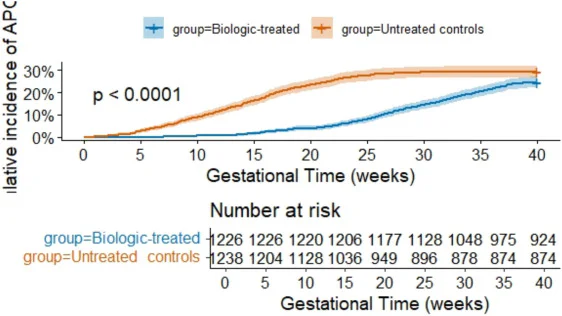
This was a retrospective cohort study involving females aged 15 to 49 years diagnosed with psoriasis. The study compared pregnancy outcomes of 1226 biologic-exposed patients with those of 1238 unexposed psoriasis controls. Exposure was defined as biologic therapy administration during pregnancy; however, detailed trimester-specific exposure duration was not fully characterized.
The biologics included primarily TNF-α inhibitors, with limited power to analyze other biologic subclasses separately. The primary endpoint was the occurrence of any adverse pregnancy outcome, which included spontaneous abortion, gestational diabetes mellitus (GDM), and other APOs.
Key Findings
The study reported a statistically significant lower rate of any APO in biologic-exposed pregnancies compared to unexposed controls (24.1% vs 30.0%), with an odds ratio (OR) of 0.76 (95% confidence interval [CI], 0.64-0.89; P = .0013). Specific findings included:
Spontaneous abortion occurred less frequently in biologic-exposed patients (8.40%) than unexposed controls (10.90%), corresponding to an OR of 0.75 (95% CI, 0.57-0.98; P = .0406).
Gestational diabetes mellitus incidence was notably lower in the biologic group (4.16%) compared to controls (7.43%) with an OR of 0.54 (95% CI, 0.38-0.77; P = .00054).
No other individual adverse pregnancy outcomes showed increased risk related to biologic exposure.
Expert Commentary
These findings add valuable real-world evidence supporting the relative safety of biologic therapies during pregnancy in women with psoriasis. The observed lower odds of spontaneous abortion and gestational diabetes are intriguing and may reflect improved disease control and reduced systemic inflammation conferred by biologics, potentially contributing to better pregnancy health.
However, limitations include the retrospective design and possible confounding factors inherent in observational studies. The inability to precisely quantify trimester-specific exposure also restricts insight into timing-dependent risks. Moreover, limited numbers of patients exposed to non-TNF-α biologics preclude definitive conclusions about differences among biologic subclasses.
Current clinical guidelines cautiously endorse biologic use during pregnancy when benefits outweigh potential risks, especially for moderate to severe psoriasis inadequately controlled by other agents. This study reinforces the importance of individualized risk-benefit discussions between patients and providers.
Conclusion
This large cohort study demonstrates that exposure to biologic therapies in pregnant women with psoriasis does not increase the risk of adverse pregnancy outcomes. Instead, data suggest potential protective effects against spontaneous abortion and gestational diabetes. These findings support the continued use of biologics in pregnancy when clinically indicated, emphasizing the need for personalized management and further prospective research to confirm safety across different biologic agents and exposure windows.
Funding and ClinicalTrials.gov
The study does not specify funding sources or clinical trial registration numbers. Further transparency concerning funding and prospective trial registrations would strengthen future investigations.
References
Bar D, Pavlotsky F, Barzilai A, Yinon Y, Baum M. Pregnancy outcomes in patients with biologic-exposed psoriasis: A large cohort study of real-world safety. J Am Acad Dermatol. 2026 Jun;95(4):996-1003. PMID: 42250726.
Kimball AB, et al. Safety of biologics during pregnancy for psoriasis: A systematic review. J Am Acad Dermatol. 2021;85(3):691-700.
Yinon Y, et al. Management of psoriasis in pregnancy. Clin Dermatol. 2016;34(1):29-36.
ULEZHI, et al. Immune-mediated inflammatory diseases and adverse pregnancy outcomes: a systematic review. Rheumatology (Oxford). 2023 May;62(5):2020-2031.