Highlight
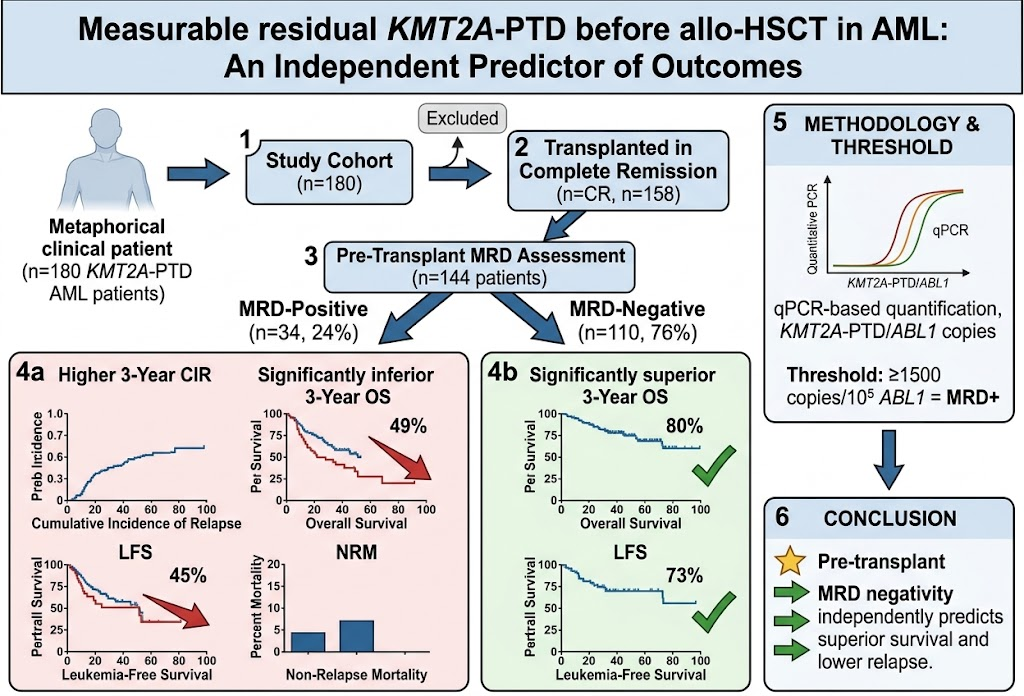
This study demonstrates that measurable residual disease (MRD) positivity defined by KMT2A partial tandem duplication (KMT2A-PTD) before allogeneic hematopoietic stem cell transplantation (allo-HSCT) in acute myeloid leukemia (AML) is associated with significantly worse overall survival (OS). Specifically, MRD-positive patients had markedly inferior 3-year OS compared to MRD-negative patients (49% vs. 80%). This investigation supports the utility of pre-transplant KMT2A-PTD quantification as an important prognostic tool.
KMT2A-PTD remains a relevant and actionable molecular marker for MRD assessment in AML, a disease with heterogeneous genetic and prognostic profiles. The study underscores the importance of integrating sensitive molecular diagnostics in transplantation decision-making and post-transplant management.